

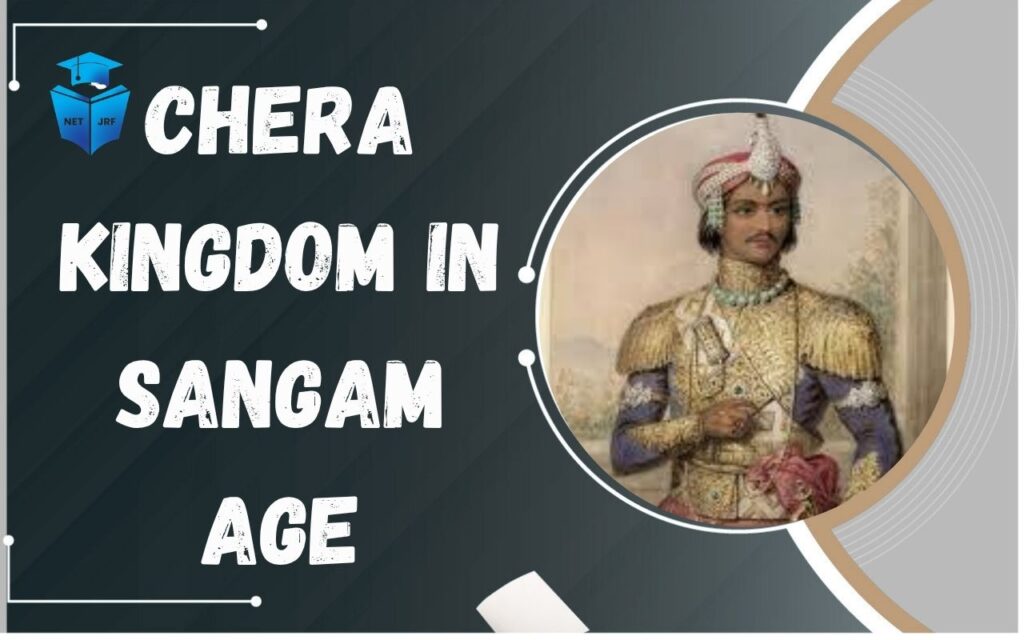
The Chera kingdom in Sangam age was one of the three major Tamil powers of ancient South India. It played an important role in trade, culture, literature, and political development during early historic times. Along with the Cholas and Pandyas, the Cheras shaped the history of the southern region. The Chera kingdom in Sangam age existed mainly in present-day Kerala and parts of western Tamil Nadu. It was famous for spice trade, especially pepper, which connected it with foreign regions like Rome.

Chera kingdom in Sangam age Background
The Chera kingdom in Sangam age is known mainly from Sangam literature, inscriptions, and foreign accounts. Sangam texts give valuable information about rulers, society, and economy.
Sources of Information
We learn about this kingdom from different sources:
- Sangam literature like Pathitrupathu and Akananuru
- Greek and Roman accounts such as Pliny’s writings
- Archaeological findings
- Coins and inscriptions
These sources together help us understand the Chera kingdom in Sangam age in a detailed way.
Geographical Location of Chera Kingdom
The Chera kingdom in Sangam age was located in the western part of South India.
Key regions:
- Present Kerala
- Western Tamil Nadu
- Malabar Coast
This region had fertile land, rivers, and access to sea routes. Because of this, the Chera kingdom in Sangam age became a major center of trade.
Chera Dynasty Important Rulers
The Chera kingdom in Sangam age had several powerful rulers who contributed to its growth.
1. Uthiyan Cheralathan
- Considered one of the earliest rulers
- Known for expanding territory
2. Nedum Cheralathan
- Famous for military strength
- Fought against enemies including Cholas
3. Senguttuvan Chera
- Most popular ruler
- Known as Red Chera
- Linked with Pattini cult (Kannagi worship)
Political Structure of Chera Kingdom in Sangam Age
The Chera kingdom, located in western Tamilakam (modern Kerala), had a well-organized monarchical system that combined central authority with local governance. This system allowed the Chera rulers to maintain stability, manage resources, and protect trade interests.
Monarchical System
- The Chera kingdom was ruled by a hereditary king, who held supreme power.
- The king’s responsibilities included:
- Administration of the kingdom
- Oversight of justice and law enforcement
- Organization and leadership of the military
- Management of trade and foreign relations
Support System for the King
- The king was assisted by ministers and advisors, who provided guidance on:
- Administrative matters
- Economic policies
- Military campaigns
- Diplomatic decisions
- These officials ensured that the king’s decisions were implemented efficiently across the kingdom.
Local Administration
- Regional chiefs managed local areas under the king’s authority.
- Their duties included:
- Collecting revenue
- Maintaining law and order
- Supervising village administration
- Supporting the king in wars and defense
- Villages enjoyed some autonomy, with elders and local heads handling day-to-day affairs, reflecting early forms of decentralized governance.
Maintaining Authority
- Chera kings maintained their power and control through:
- A strong military with infantry, cavalry, and war elephants
- Alliances with local chiefs and neighboring kingdoms
- Oversight of trade routes and strategic ports, which ensured economic stability
- This combination of centralized monarchy and local administrative support allowed the Chera kingdom to remain stable and prosperous despite external and internal challenges.
Chera Kingdom Economy
The Chera kingdom in Sangam age had a strong economy based on agriculture and trade.
Agriculture
- Rice cultivation was common
- Use of rivers and rainfall
- Coconut, spices also grown
Trade
Trade was the backbone of the Chera kingdom in Sangam age.
Key trade features:
- Export of pepper, spices, ivory
- Trade with Romans
- Ports like Muziris were important
Roman gold coins found in Kerala show active trade. This makes the Chera kingdom in Sangam age very important in economic history.

Society in Chera Period
The Chera kingdom in Sangam age had a structured society.
Social features:
- Divided into different groups based on occupation
- Role of warriors, farmers, traders
- Women had respected position
Sangam texts show that society in the Chera kingdom in Sangam age was active and culturally rich.
Chera Kingdom Culture and Religion
The Chera kingdom in Sangam age had a vibrant cultural life.
Religion
- Worship of nature
- Local deities like Murugan
- Influence of Jainism and Buddhism
Cultural Practices
- Festivals and rituals
- Music and dance
- Hero worship
Religion and culture played a key role in shaping the identity of the Chera kingdom in Sangam age.
Chera Kingdom Literature of Sangam Age
The Chera kingdom in Sangam age contributed greatly to Tamil literature.
Important texts:
- Pathitrupathu (focus on Chera rulers)
- Ettuthokai
- Pattuppattu
These works describe kings, battles, and society. Literature is a major source for studying the Chera kingdom in Sangam age.
Chera Kingdom in Sangam Age
The Chera kingdom was one of the major Tamil dynasties alongside the Cholas and Pandyas. It occupied the western part of Tamilakam, roughly corresponding to modern Kerala, and was strategically located along the Malabar coast, which helped it become a hub of trade, culture, and political power.
Trade Relations with Rome
One of the most distinctive features of the Chera kingdom was its international trade with the Roman world:
- Exports: Black pepper, ivory, spices, and fine textiles were shipped to Rome and other Mediterranean regions.
- Imports: Roman gold coins, wine, and luxury goods entered the Chera kingdom.
- Maritime connections: Roman ships regularly visited Chera ports, confirming strong foreign trade links.
This trade brought immense wealth, strengthening the kingdom’s economy and giving it political and military leverage.
Ports and Urban Centers
Trade stimulated urban growth in the Chera kingdom:
- Major ports:
- Muziris: The most famous port, serving as the center of Indo-Roman trade.
- Tondi: Another important port supporting regional and overseas commerce.
- These ports became hubs of economic activity, encouraging the growth of towns and marketplaces along the coast.
- Urban centers fostered cultural exchange, attracting scholars, merchants, and artisans.
Military System
The Chera kingdom maintained a strong and well-organized army to protect its territory and trade interests:
- Components of the army: Infantry, cavalry, and war elephants.
- Purpose:
- Protect the kingdom from invasions.
- Maintain control over trade routes.
- Engage in frequent conflicts with neighboring Cholas and Pandyas.
The military strength helped the Chera kings assert authority and expand influence in the region.
Administration System
The Chera kingdom had a decentralized administrative structure, balancing central authority with local governance:
- King as supreme authority: Oversaw law, taxation, military, and foreign relations.
- Local chiefs: Played a crucial role in managing regions, collecting revenue, and maintaining law and order.
- Village-level administration: Villages handled day-to-day affairs with guidance from elders or local heads.
This structure ensured efficient governance across the kingdom while allowing local autonomy.
The Chera kingdom in the Sangam Age combined strategic geography, trade, military strength, and effective administration:
- Trade: Connections with Rome brought wealth and international recognition.
- Ports and cities: Muziris and Tondi facilitated commerce and urban development.
- Military: Strong army ensured protection and authority.
- Administration: Decentralized governance enabled smooth functioning from king to village level.
Together, these factors made the Chera kingdom a politically stable, economically prosperous, and culturally vibrant power in ancient South India.
Join UGC NET Offline Coaching in Jaipur
Comparison with Cholas and Pandyas
the place of the Chera kingdom in Sangam age among other powers.
| Feature | Cheras | Cholas | Pandyas |
| Region | Kerala | Tamil Nadu | South Tamil Nadu |
| Trade | Strong Roman trade | Maritime power | Pearl trade |
| Famous Ruler | Senguttuvan | Karikala | Nedunjeliyan |
Decline of Chera Kingdom
The Chera kingdom, one of the three major Tamil dynasties during the Sangam Age, experienced a gradual decline due to internal and external pressures:
Internal Conflicts
- Succession disputes and rivalries within the royal family weakened central authority.
- Local chiefs (Velir) sometimes acted independently, reducing the king’s control over regions.
- Political instability affected governance and military effectiveness.
External Invasions
- Repeated invasions from neighboring kingdoms like the Cholas and Pandyas challenged Chera supremacy.
- Control over trade routes and ports was contested, affecting economic prosperity.
Rise of Other Powers
- As the Cholas and Pandyas became stronger, the Cheras gradually lost their political dominance.
- Economic and military competition reduced their influence in the region.
Over time, the Chera kingdom’s political importance declined, and it no longer played a central role in regional politics.
Historical Significance of Chera Kingdom
Even though their political power waned, the Cheras made lasting contributions to culture, trade, and literature:
Development of Trade Networks
- Chera ports facilitated internal and overseas trade, especially with Rome and Southeast Asia.
- Exported goods included spices, ivory, and textiles, strengthening economic and cultural links.
Growth of Tamil Literature
- Chera kings were patrons of poets and scholars.
- Many Sangam literary works were composed under their support, preserving Tamil heritage.
Enroll UGC NET Offline Classes in Jaipur
Cultural Exchange with Foreign Regions
- Contact with foreign traders encouraged exchange of ideas, art, and technology.
- This cultural interaction influenced local crafts, architecture, and maritime practices.
The Chera kingdom in Sangam age represents a rich phase of South Indian history marked by trade, culture, and strong political systems. Its connection with foreign regions, especially Rome, shows its global importance.

Chera kingdom in Sangam age FAQs

Where was the Chera Kingdom located?
The Cheras ruled present-day Kerala and parts of western Tamil Nadu. Their lands included fertile river valleys and the Malabar Coast, enabling agriculture and maritime trade.
Who were the important Chera rulers?
Notable rulers included Uthiyan Cheralathan, Nedum Cheralathan, and Senguttuvan (Red Chera), famous for military strength, cultural patronage, and linking with the Pattini cult.
How was the Chera administration organized?
The king held supreme power with ministers advising on governance, trade, and military. Local chiefs managed regions, while village elders oversaw daily affairs and dispute Resolution.
What were the powers of Chera kings?
Chera kings controlled law, taxation, military, foreign relations, and trade. They maintained stability, defended the kingdom, and promoted culture and literature.