

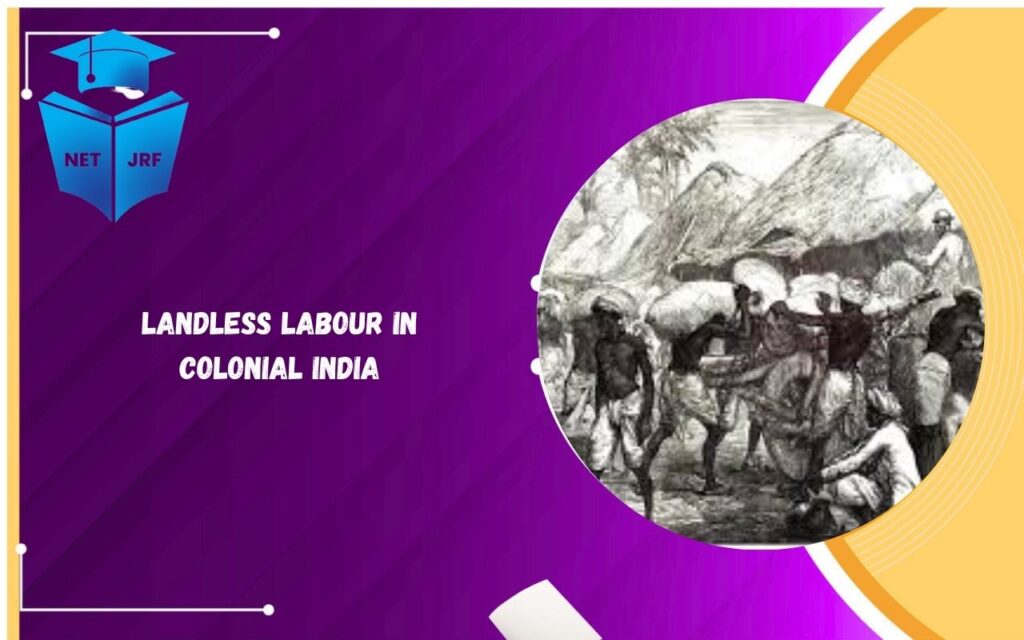
Landless Labour became one of the most visible social groups in rural India during British colonial rule. Large sections of peasants gradually lost control over land due to colonial land revenue systems, heavy taxation, rural indebtedness, and exploitation by landlords.
The rise of Landless Labour marked a major transformation in agrarian society. Earlier village communities often had collective access to land or customary rights, but British policies introduced private ownership, fixed taxation, and market-driven agriculture. These changes reshaped rural class relations and increased poverty among cultivators.

Landless Labour Meaning
Landless Labour refers to agricultural workers who do not own land and depend entirely on wage labour for survival. They work on the fields of landlords, rich peasants, or commercial farms.
Key Characteristics of Agricultural Labourers
- No Ownership of Agricultural Land
Agricultural labourers usually did not own land and worked on the fields of landlords or rich farmers. - Dependence on Wages
Their livelihood depended on daily or seasonal wages earned through farm work. - Vulnerability to Exploitation
Because of their weak economic position, they were often exploited by landlords through low wages and poor working conditions. - High Poverty and Social Marginalization
Agricultural labourers generally lived in poverty and occupied a lower social position in rural society.
Enroll UGC NET Mock Test Series
Agrarian Structure Before British Rule
Before colonial intervention, rural society in India operated through complex customary systems.
Main Features of Pre-Colonial Agrarian Structure
- Community Control of Resources
Village communities commonly shared natural resources such as forests, grazing lands, and water sources. These resources supported collective agricultural activities. - Revenue Based on Agricultural Produce
In most regions, rulers claimed a share of the agricultural produce as revenue rather than asserting complete ownership over land. - Role of Zamindars or Local Chiefs
Zamindars or local chiefs mainly acted as intermediaries who collected revenue from cultivators and passed it to the ruling authority. - Customary Rights of Cultivators
Farmers generally retained traditional or customary rights over the land they cultivated, which provided them with a certain level of security.
During the Mughal period, peasants paid revenue mainly based on agricultural produce rather than fixed cash taxation. This system provided some flexibility during droughts or crop failures.
However, colonial revenue policies disrupted these traditional arrangements.
British Land Revenue Policies
British administrators introduced several land settlement systems primarily to maximize revenue. These systems reshaped agrarian relations and indirectly increased Landless Labour.
Major Revenue Systems
| System | Year Introduced | Key Feature | Impact |
| Permanent Settlement | 1793 | Zamindars became landowners | Peasant exploitation increased |
| Ryotwari System | 1820 | Revenue collected directly from cultivators | Heavy tax burden on farmers |
| Mahalwari System | 1822 | Village community responsible for revenue | Periodic revenue revision |
The colonial state prioritized stable revenue collection rather than peasant welfare.
Permanent Settlement and Rise of Landlords
The Permanent Settlement introduced by Lord Cornwallis in 1793 transformed land relations in Bengal.
Features
- Zamindars Recognized as Landowners
Under the colonial revenue system, zamindars were officially recognized as the legal owners of large areas of agricultural land. - Fixed Annual Revenue Payment
Zamindars were required to pay a fixed amount of land revenue every year to the British government, regardless of agricultural conditions. - Confiscation for Non-Payment
If zamindars failed to pay the required revenue on time, the government could confiscate their land and auction it to recover the dues.
Consequences
- Increase in Rents
Zamindars often raised the rent demanded from peasants in order to meet their revenue obligations to the colonial government. - Inability to Pay Rent
Many cultivators were unable to pay these high rents, especially during periods of poor harvest or crop failure. - Loss of Land Ownership
Over time, several peasants lost control of their land and were forced to become tenants or agricultural labourers.
This process created a growing class of Landless Labour who depended on agricultural wages.
Ryotwari System and Peasant Burden
The Ryotwari system was introduced in Madras and Bombay presidencies.
Key Features
- Direct Relationship with the State
The Ryotwari system established a direct link between the government and individual cultivators, removing intermediaries like zamindars. - Periodic Revision of Revenue
Land revenue was assessed based on land quality and revised periodically to reflect changing conditions. - Recognition of Peasants as Landholders
Farmers were legally recognized as the owners of the land they cultivated, giving them formal rights. - High Revenue Demands
Despite direct ownership, peasants faced heavy revenue obligations, which often led to indebtedness and financial stress.

Impact on Peasants
- Dependence on Moneylenders
Many farmers borrowed money from moneylenders to pay land revenue or meet household needs. - Tax Obligation Despite Crop Failures
Even during poor harvests or crop failure, peasants were required to pay the full revenue, increasing financial pressure. - Loss of Land
Indebted farmers who could not repay loans often had to forfeit their land, leading to the rise of tenant farming and landless labourers.
Thus the number of Landless Labour increased even in regions where peasants were theoretically recognized as owners.
Mahalwari System and Village Responsibility
The Mahalwari system was introduced in northern India.
Main Characteristics
- Revenue Settlement with Villages
The system fixed land revenue collectively with entire village communities rather than individual farmers. - Role of Village Headmen
Village leaders were responsible for collecting and paying the revenue to the government, acting as intermediaries. - Land Assessment Based on Measurement and Soil
Taxes were determined by measuring land and assessing soil quality, ensuring revenue reflected agricultural potential.
Although this system aimed to preserve village autonomy, high revenue rates created severe hardship.
Many small farmers could not pay taxes regularly and lost their land. As a result, Landless Labour expanded in rural communities.
Landless Labour Growth Factors in Colonial India
The number of landless agricultural labourers increased significantly in India during colonial rule. British economic policies, revenue systems, commercialization of agriculture, and social changes weakened the traditional village economy. As a result, many peasants lost ownership of land and became labourers working on the fields of landlords.
| Cause | Explanation | Result |
| High land revenue | Heavy taxes imposed by colonial state | Farmers sold land |
| Rural indebtedness | Loans from moneylenders | Land transferred to creditors |
| Zamindari exploitation | High rents charged by landlords | Peasant dispossession |
| Commercialization of agriculture | Cash crops replaced subsistence farming | Economic instability |
| Population pressure | Fragmentation of land holdings | Rise of wage labour |
The growth of Landless Labour was therefore closely connected with colonial agrarian policies.
Economic Impact on Rural Society
The expansion of landless workers reshaped the rural economy.
Major Economic Effects
- Low Agricultural Wages
Farmers and laborers received very little payment for their work, keeping rural communities in poverty. - Unstable Seasonal Income
Many villagers depended on seasonal crops, which created irregular income and financial insecurity. - Increased Rural Migration
During off-seasons, peasants migrated to towns or cities in search of work, disrupting village life. - Deepened Poverty
The combined effects of low wages, debt, and unstable income worsened economic conditions for marginalized rural communities.
Many families depended entirely on agricultural labour for survival, strengthening the class of Landless Labour.
Enroll UGC NET Offline Classes in Jaipur
Social Impact of Landlessness
Landlessness was not just an economic issue; it also influenced social hierarchy.
Social Consequences
- Rise of Lower Caste Labourers
Many lower caste communities were forced to work as agricultural labourers, losing access to land ownership. - Increased Social Inequality
The gap between wealthy landlords and poor laborers widened, creating a rigid social hierarchy. - Weakening of Village Solidarity
Traditional support networks in villages declined as debt and exploitation created tensions. - Intensification of Rural Conflicts
Disputes over land, wages, and revenue demands led to frequent social conflicts in rural areas.
In many regions, Landless Labour lived in poor housing conditions with limited access to resources.
Sharecropping and Rural Labour
Another system that affected rural workers was sharecropping.
Bataidari System
In several regions, landowners allowed cultivators to farm land in return for sharing the produce.
Features of Tenant Farming
- Land Provision by Landowner
The landowner supplied the land for cultivation while retaining ownership rights. - Labour and Inputs by Tenant
The tenant contributed labour, seeds, and other necessary agricultural inputs for farming. - Division of Harvest
After harvest, the produce was shared between the landowner and tenant, usually according to pre-agreed terms.
However, sharecroppers often received a small share, which pushed many of them into Landless Labour conditions.
Peasant Movements Against Exploitation
Rural distress led to several agrarian protests.
Example: Bijolia Movement
The Bijolia movement in Rajasthan (1897–1941) protested excessive land revenue demands.
Peasants demanded:
- Reduction in taxes
- Relief from oppressive landlords
- Fair treatment by the state
Many participants belonged to poor farming communities or Landless Labour, highlighting the connection between agrarian distress and social protest.
Join UGC NET Coaching in Jaipur
Rural Migration and Survival Strategies
Because agricultural work was seasonal, labourers adopted multiple survival strategies.
Common Strategies
- Migration to towns during off-season
- Working in construction or plantations
- Borrowing money from landlords
- Temporary employment in other villages
Even with these strategies, Landless Labour remained economically vulnerable.
The emergence of Landless Labour in colonial India was not accidental. It resulted from structural changes introduced by British land revenue policies, commercialization of agriculture, and the rise of powerful landlord classes. Systems such as Permanent Settlement, Ryotwari, and Mahalwari transformed traditional village economies and pushed many peasants into wage labour.
Over time, Landless Labour became one of the largest sections of rural society, shaping social inequality, peasant movements, and agrarian politics.
Landless Labour in Colonial India FAQs

Why did landlessness increase during British rule?
Colonial revenue systems imposed heavy taxation on farmers. Many peasants could not pay these taxes, leading to debt and loss of land.
How did the Permanent Settlement affect peasants?
The system gave ownership rights to zamindars. Peasants became tenants who had to pay high rents, which increased rural poverty.
What was the role of moneylenders in rural areas?
Moneylenders provided loans to farmers for paying revenue taxes. When peasants could not repay debts, they lost their land.
How did commercialization of agriculture affect rural society?
Farmers were encouraged to grow cash crops instead of food crops. This made agriculture dependent on market prices and increased economic risks.
What is the Ryotwari system?
The Ryotwari system allowed the government to collect revenue directly from individual cultivators rather than landlords.
Why were peasant movements important in colonial India?
Peasant movements protested high taxation and exploitation. They helped bring attention to agrarian problems and influenced later reforms.