
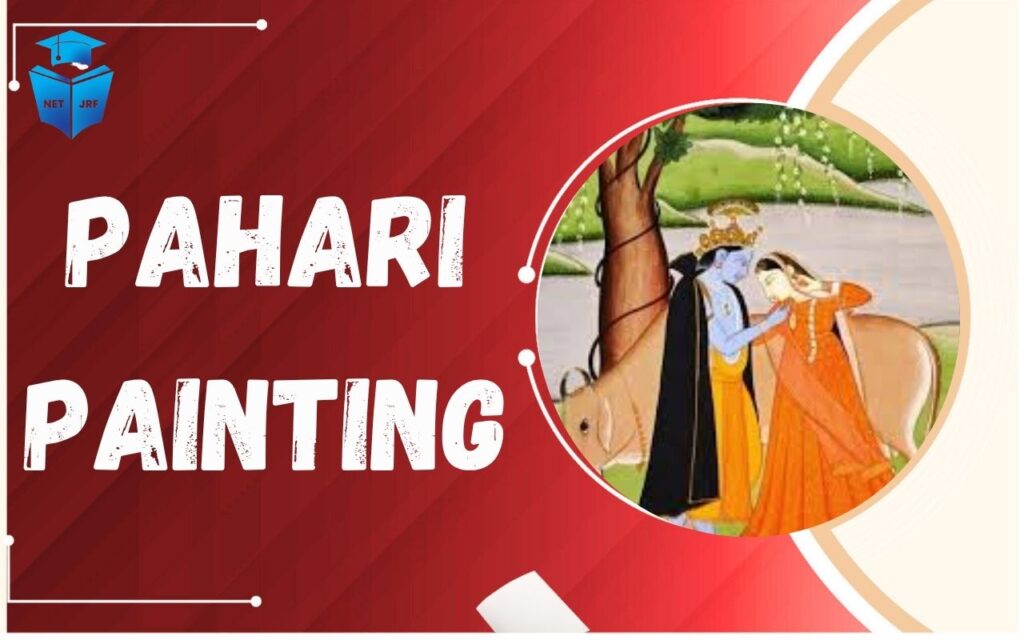

Pahari Painting serves as a breathtaking window into the cultural and spiritual life of the Western Himalayan foothills between the 17th and 19th centuries. This school of art creates a bridge between the grandeur of the Mughal court and the raw, devotional energy of local hill traditions. The term ‘Pahari’ itself originates from the word for hilly or mountainous regions, reflecting the geography where these masterpieces grew. Artists in these remote valleys developed a visual language that remains unmatched in its delicate beauty and emotional depth.

Understanding this tradition requires a look at the various hill states that nurtured it. These include centers like Basohli, Guler, Kangra, Kullu, and Chamba. Each center added its own flavor to the overarching style, yet they all shared a common thread of poetic lyricism. Pahari Painting Origins
The story of this art form begins in the high-altitude towns of the Western Himalayas. Historians note that the 17th century marked a turning point when local rulers began inviting artists to their courts.
- While some theories suggest that Mughal and Rajasthani influences sparked this movement, the result was entirely unique. The style did not just copy existing traditions; it transformed them into something that felt like the mountains themselves fresh, pure, and filled with light.
- Major centers of production emerged in states like Jammu and Himachal Pradesh. Basohli is often cited as the earliest center that developed a distinct pictorial language.
- From there, the art spread like a wildfire across the valleys, reaching places like Mankot, Nurpur, Mandi, and Bilaspur. Each location provided a different backdrop, influencing the palette and compositions used by the artists.
- One of the most fascinating aspects of this history is the role of political boundaries. Because boundaries between hill states were fluid, artists often moved from one court to another.
- This movement helped the style evolve and mature over two centuries. It eventually transitioned from the early flamboyant styles of the 17th century to the highly sophisticated Kangra phase by the mid-18th century.
Pahari Painting Core Elements
Artists who practiced Pahari Painting focused on creating a harmonious balance between nature and human emotion. They did not just paint what they saw; they painted the ideal versions of their subjects. For example, the female form in these paintings follows a specific prototype that emphasizes grace and beauty. Faces are often idealized, with soft features that convey a sense of calm and devotion.
- The use of color is another defining feature of this school. In the early stages, artists preferred bold, primary colors like warm yellows.
- As the style matured, the palette became more varied, introducing delicate pastel shades and bold expanses of white or grey. These colors were not just for show; they helped set the mood of the narrative, whether it was a scene of romantic longing or a divine epic.
- Compositionally, these works often use a relative viewpoint.
- This means the artist arranges the scene to guide the viewer’s eye through the story rather than following strict rules of 3D perspective.
- This approach allows for a more poetic and symbolic representation of space, making the paintings feel like a dream world.
Stylistic Features Summary:
- Idealized Figures: Artists created a specific prototype for the female face and form.
- Symbolic Colors: The use of primary colors evolved into refined pastel shades.
- Natural Landscapes: Hills, trees, and animals play a central role in the background.
- Poetic Narrative: Every painting tells a story, often based on famous Sanskrit texts.
Basohli School Beginning
The Basohli school represents the earliest and most vibrant phase of the hill tradition. Under the patronage of Prince Kirpal Pal (1678–1695), this style flourished and set the standard for others to follow. Basohli artists used a bold and flamboyant approach that caught the eye immediately.
- They favored strong primary colors, especially warm yellows, which gave the paintings a sunny and energetic feel.
- One of the most unique techniques used in Basohli was the application of beetle wings. Artists would use tiny, shiny green particles from these wings to mimic the look of emeralds in jewelry.
- They also used raised white paint to represent pearls, adding a tactile texture to the flat surface of the paper.
- This level of detail shows how much the patrons valued luxury and craftsmanship.
- The themes in Basohli were often intense and emotional. The “Rasamanjari” by Bhanu Datta was a particularly favorite text. In the late 17th century, the artist Devida created a famous series of these paintings for Kirpal Pal.
- These works capture the nuances of human emotions, showing that the hill artists were masters of psychological depth as well as visual beauty.
Enroll UGC NET Mock Test Series
The Guler School Transition
As we move into the 18th century, a significant shift occurred in Guler.
- This phase is often called the Guler–Kangra phase because it paved the way for the later Kangra style. Under Raja Govardhan Chand (1744–1773), Guler became a major artistic center.
- The artists here began to move away from the bold vitality of Basohli toward a more refined and elegant style.
- This period saw the rise of the legendary artist Pandit Seu and his sons, Manak and Nainsukh.
- Their contributions changed the course of Indian art forever. Around 1730, Manak painted a set of the Gita Govinda that still showed some Basohli elements but hinted at a newer, softer direction.
- This experimentation was a key feature of the Guler school, as artists looked for ways to make their work more naturalistic.
- The Guler style is marked by a certain subdued elegance. The lines became thinner and more rhythmic, and the colors became more sophisticated.
- This transition was not accidental; it was driven by the influx of new styles and the creative genius of specific artist families who served as the style bearers for the region.

The Genius of Nainsukh and His Family
Nainsukh is perhaps the most famous name associated with the hill tradition. He moved away from his family home in Guler to work for Balwant Singh of Jasrota. Nainsukh’s work is characterized by its incredible detail and unique sense of portraiture.
- He did not just paint his patron in formal settings; he captured Balwant Singh in various daily activities, creating a detailed visual record of his life.
- Nainsukh had a very distinct palette. He loved using delicate pastel shades and large areas of white or grey, which gave his paintings a cool and calm atmosphere.
- His ability to capture the personality of his subjects made him a pioneer in Indian miniature art.
- He treated every face as a unique landscape of expression, moving away from the more standardized faces of the earlier period.
- The legacy of Pandit Seu’s family continued through Nainsukh’s sons and nephews, such as Khushala, Fattu, and Gaudhu.
- These artists worked in various courts, including that of Raja Prakash Chand. By carrying their family’s signature style across different states, they ensured that the refined Guler-Kangra tradition became the dominant form of art in the hills.
Kangra School
By the 1780s, the Guler style had matured into what we now call the Kangra School. This is often considered the golden age of the hill states’ art. Kangra paintings are famous for their refined naturalism and poetic lyricism.
- The artists achieved a level of delicacy that makes the figures look almost weightless. The landscapes are no longer just backgrounds; they are lush, detailed environments that breathe life into the scenes.
- The themes in Kangra art often revolve around the love of Radha and Krishna.
- These stories allowed artists to explore the full range of romantic and devotional feelings. The female figures in Kangra art are particularly celebrated for their grace.
- They have long, flowing lines and soft, expressive eyes that convey deep emotion without being loud or aggressive.
- Despite its sophistication, the Kangra school still carried the influence of its predecessors. Even as it became the standard for beauty, elements of the earlier Basohli and Guler traditions remained visible in the work of artists in Chamba and Kullu.
- This shows that the evolution of art in the hills was a continuous process of growth rather than a series of disconnected events.
Pahari Painting Themes
The artists of the Himalayas were deeply inspired by Sanskrit literature and Hindu epics. These texts provided the narrative backbone for thousands of paintings. The Ramayana, for instance, was a favorite text in Basohli and Kullu. A specific set of paintings known as the “Shangri” paintings (named after a place associated with the Kullu royal family) showcases various scenes from this epic.
These paintings depict a wide range of emotions and actions. You might see Rama in exile, performing acts of charity, or experiencing deep emotional turmoil. In one famous painting, Rama and Lakshmana journey with Sage Vishvamitra. The artists often included animals in these scenes to add depth and a sense of wonder to the story.
Other popular themes included:
- Gita Govinda: This text explores the divine love between Krishna and the Gopis.
- Bhagvata Purana: It focuses on the life and adventures of Lord Krishna.
- Ragamala: These paintings represent various musical modes or ‘ragas’ through visual imagery.
- Rasamanjari: A text that classifies different types of heroes and heroines in romantic settings.
Pahari Painting Sub-Styles
To better understand how this tradition changed over time, we can compare the two most prominent schools.
| Feature | Basohli School | Kangra School |
| Time Period | Late 17th to early 18th century | Late 18th to 19th century |
| Primary Palette | Bold primary colors (Warm Yellows) | Delicate pastels, whites, and greys |
| Key Characteristics | Flamboyant, vibrant, bold vitality | Refined naturalism, poetic lyricism |
| Special Techniques | Use of beetle wings and raised paint | Fine lines and soft facial features |
| Famous Patron | Raja Kirpal Pal | Raja Sansar Chand (often associated) |
Timeline of Significant Rulers and Artists
The development of these styles was closely tied to specific individuals who provided the necessary support and vision.
| Era/Date | Key Figure | Role/Contribution |
| 1678–1695 | Raja Kirpal Pal | Patron of the early Basohli style |
| 1694–1695 | Artist Devida | Created the famous Rasamanjari series |
| 1695–1743 | Raja Dalip Singh | Supported the early painting tradition in Guler |
| 1730 | Artist Manak | Painted the Gita Govinda in the transitional style |
| 1744–1773 | Raja Govardhan Chand | Key patron of the Guler–Kangra phase |
| Mid-18th Century | Artist Nainsukh | Famous for unique portraiture and pastel palette |
| Late 18th Century | Sons of Manak/Nainsukh | Spread the mature Kangra style to other courts |
Join UGC NET Offline Classes in Jaipur
Steps in the Artistic Evolution
The transformation of art in the hills followed a logical progression that historians have mapped out over time.
- Emergence in Basohli: The journey begins with the bold and vibrant “pictorial language” of the 17th century.
- Patronage under Kirpal Pal: Royal support helps define the initial flamboyant style.
- The Guler Transition: Artists like Pandit Seu begin experimenting with more refined techniques in the early 1700s.
- The Rise of Family Lineages: The Seu family becomes the primary “style bearers,” moving between different hill states.
- Refined Naturalism: Under patrons like Govardhan Chand, the style becomes more elegant and subdued.
- The Mature Kangra Phase: By the 1780s, the style reaches its peak of poetic beauty and naturalism.
- Widespread Expansion: The refined style spreads to Chamba, Kullu, and beyond, influenced by the moving artist families.

Key Students
- Geographic Scope: The art originated in the Western Himalayas between the 17th and 19th centuries.
- Style Bearers: B.N. Goswamy argued that families (like Pandit Seu’s) were more important than specific regions in defining style.
- Unique Materials: Basohli artists used beetle wings to represent emeralds.
- Central Themes: The Ramayana, Gita Govinda, and Rasamanjari were the most common literary sources.
- Naturalism: The later Kangra style is prized for its refined and poetic representation of nature and human figures.
Best UGC NET Offline Coaching in Jaipur
Conclusion
The history of Pahari Painting is a testament to the enduring power of creativity and patronage. From the bold, vibrant strokes of Basohli to the soft, lyrical lines of Kangra, this tradition captured the soul of the Himalayas. The artists did not just document the lives of kings; they brought sacred epics to life and created a new standard for beauty in Indian art. Their use of color, their attention to natural detail, and their ability to convey complex emotions ensure that these works remain relevant today. As we look to the future, the study of these miniatures continues to provide valuable insights into the cultural heritage of India, reminding us of a time when art and nature existed in perfect harmony.