

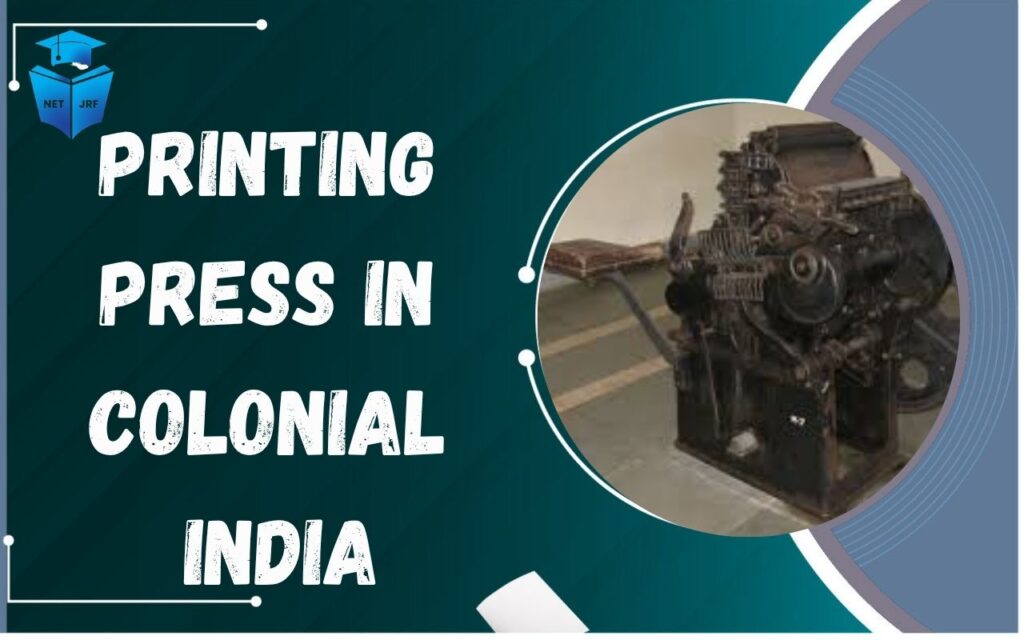
The Printing Press played a decisive role in the emergence of modern journalism in colonial India. It helped spread information, social reform ideas, political awareness, and nationalist thought among people.

- Before the introduction of print technology, communication relied mostly on oral traditions and handwritten manuscripts. These methods limited the spread of knowledge. With the arrival of print technology, information began to circulate widely through books, newspapers, and pamphlets.
- During the nineteenth century, newspapers became powerful tools for expressing public opinion. Reformers, intellectuals, and political leaders used print media to discuss social issues and criticize colonial policies.
Join UGC NET Foundation Course
Origin Print Culture in India
The history of modern journalism in India began in the late eighteenth century. Printing technology was first introduced by European missionaries and traders, who used it primarily for religious literature and official communication.
- Soon, Indian intellectuals recognized the power of the printed word as a tool for education, reform, and social awareness. They started publishing newspapers, journals, and periodicals that discussed social, political, and cultural issues, reaching a wider audience than oral communication could.
- Over time, the printing press played a transformative role in Indian society. It promoted literacy, encouraged public debate, and raised political consciousness, laying the foundation for modern journalism and an informed civil society.
The Printing Press in Colonial India
The Printing Press became an important instrument for spreading ideas and information during British rule. Newspapers, magazines, and pamphlets started reaching educated urban communities.
- Print media allowed people to read about social reforms, political debates, and international events.
- This created a new culture of informed discussion.
- Journalists began to challenge social customs and criticize colonial administration. Through editorials and articles, print media encouraged people to participate in public life.
Early Development of Newspapers
The first newspapers in India appeared during the late eighteenth century. These early publications were mainly started by Europeans living in India.
Important Early Newspapers
| Newspaper | Year | Founder |
| Bengal Gazette | 1780 | James Augustus Hickey |
| Calcutta Gazette | 1784 | Government publication |
| Madras Courier | 1785 | European publishers |
| Bombay Herald | 1789 | British editors |
These publications represent the early phase of The Printing Press in colonial India.
Expansion of Indian-Owned Press
During the nineteenth century, Indian intellectuals began establishing their own newspapers. These publications focused on social reform, education, and political awareness.
Indian newspapers encouraged discussion about:
- Social reform movements
- Women’s education
- Economic exploitation under colonial rule
- Cultural revival
- Nationalist politics
As a result, The Printing Press became a powerful medium for expressing Indian public opinion.
The Printing Press and Growth of Newspapers
The Printing Press contributed to the expansion of journalism.
| Period | Key Development |
| Late 18th century | First newspapers published |
| Early 19th century | Expansion of missionary printing |
| Mid 19th century | Indian-owned newspapers emerged |
| Late 19th century | Rise of nationalist journalism |
Role of Journalism in Social Reform
Journalism became a powerful tool for social reform in colonial India. Reformers used newspapers and journals to inform the public about social problems and promote progressive ideas. By reaching a wide audience, journalism helped spread awareness and encourage debate on critical social issues.

Key Reform Topics Discussed in Newspapers:
- Abolition of Sati – Critiquing the practice and advocating for its ban.
- Widow Remarriage – Supporting the rights of widows to remarry.
- Women’s Education – Promoting literacy and learning opportunities for girls.
- Caste Discrimination – Challenging rigid caste hierarchies and social exclusion.
- Social Modernization – Encouraging reforms that aligned society with modern values and equality.
These discussions helped create awareness about social issues, particularly in urban India, and encouraged communities to rethink traditional practices.
Join UGC NET Offline Classes in Jaipur
Growth of Vernacular Press
In the nineteenth century, newspapers started to appear in regional Indian languages, expanding the reach of journalism beyond the English-speaking elite. This development allowed ordinary people across towns and villages to access news, social debates, and reformist ideas.
Important Vernacular Newspapers
- Samachar Darpan – One of the earliest Bengali newspapers, focused on social and cultural issues.
- Amrita Bazar Patrika – Published in Bengali and later in English, it became influential in nationalist and reformist discourse.
- Kesari – A Marathi newspaper founded by Bal Gangadhar Tilak, promoting political awareness and social reform.
- The Hindu – An English-language paper that also influenced vernacular journalism and public debate.
Significance of Vernacular Journalism
Vernacular newspapers played a key role in spreading nationalist and reformist ideas. They connected intellectual debates with ordinary readers, encouraging participation in discussions on social reform, education, and political issues.
Major Vernacular Newspapers
These newspapers illustrate the growing influence of The Printing Press in colonial society.
| Newspaper | Language | Significance |
| Samachar Darpan | Bengali | Early vernacular newspaper |
| Kesari | Marathi | Nationalist journalism |
| Amrita Bazar Patrika | Bengali / English | Political criticism |
| The Hindu | English | Influential nationalist paper |
The Printing Press and Nationalist Movement
The rise of nationalism in India is closely connected with the expansion of journalism. Newspapers became platforms for expressing nationalist ideas.
Journalists discussed topics such as:
- Political rights
- Economic exploitation
- Colonial policies
- Self-government
Through editorials and articles, newspapers inspired people to support the freedom movement.
Many nationalist leaders also worked as journalists or editors.
The Printing Press therefore played a critical role in mobilizing public opinion.
Colonial Press Restrictions
The colonial government often tried to control newspapers that criticized British rule. Authorities introduced several laws to regulate print media.
Important Press Laws
- Censorship regulations
- Licensing systems
- Vernacular Press Act (1878)
- Press Act (1910)
These laws attempted to restrict the influence of The Printing Press on nationalist politics.
Despite these restrictions, journalists continued to publish articles that challenged colonial authority.
Early Press vs Nationalist Press
The Printing Press evolved from a colonial communication tool into a nationalist platform.
| Feature | Early Colonial Press | Nationalist Press |
| Ownership | Mostly European | Indian editors |
| Content | Commercial information | Political criticism |
| Language | Mainly English | English and regional languages |
| Purpose | Information sharing | Political awareness |
Impact of Journalism on Public Life in Colonial India
The development of journalism in colonial India helped create a new public sphere where educated readers could discuss social and political issues. Newspapers and journals became platforms for debate, education, and the exchange of ideas, influencing public opinion and social consciousness.
Key Impacts of Journalism
- Growth of Political Awareness – Newspapers informed readers about national issues, colonial policies, and reform movements, encouraging civic participation.
- Expansion of Literacy – The demand for newspapers and journals contributed to increased literacy, as more people learned to read to access news and ideas.
- Spread of Reform Ideas – Print media promoted discussions on women’s education, abolition of harmful customs, caste equality, and social modernization.
- Development of Modern Public Debate – Journalism provided a forum for intellectual discussions, critiques, and dialogues, shaping opinions on social and political reforms.
Through the printing press and widespread journalism, ideas that were once confined to elite circles reached a broader audience, helping to create an informed and engaged society. The press played a critical role in shaping public opinion and promoting social and political change in colonial India.
The development of journalism in colonial India demonstrates the powerful influence of The Printing Press on society and politics. Print technology allowed information to spread rapidly and encouraged public debate on social reform and political rights. Newspapers played a major role in shaping nationalist consciousness and mobilizing public opinion against colonial rule.
Importance for UGC NET
For students preparing for UPSC and UGC NET examinations, the development of journalism provides insight into the formation of modern political consciousness in India.
Best UGC NET Offline Classes in Jaipur
Key exam themes include:
- Rise of public opinion
- Growth of nationalist journalism
- Colonial press regulations
- Role of vernacular newspapers
Understanding these themes helps explain how media influenced social and political change.

The Printing Press FAQs

2 Which was the first newspaper published in India
Bengal Gazette, started in 1780 by James Augustus Hickey, became the first newspaper published in India.
3 How did journalism contribute to social reform
Journalists used newspapers to discuss social problems such as child marriage, caste discrimination, and women’s education.
4 Why did the colonial government restrict newspapers
Authorities feared that newspapers could spread nationalist ideas and encourage political resistance against colonial rule.
5 How did vernacular newspapers influence society
Vernacular newspapers reached regional audiences and helped spread political awareness beyond English-speaking elites.