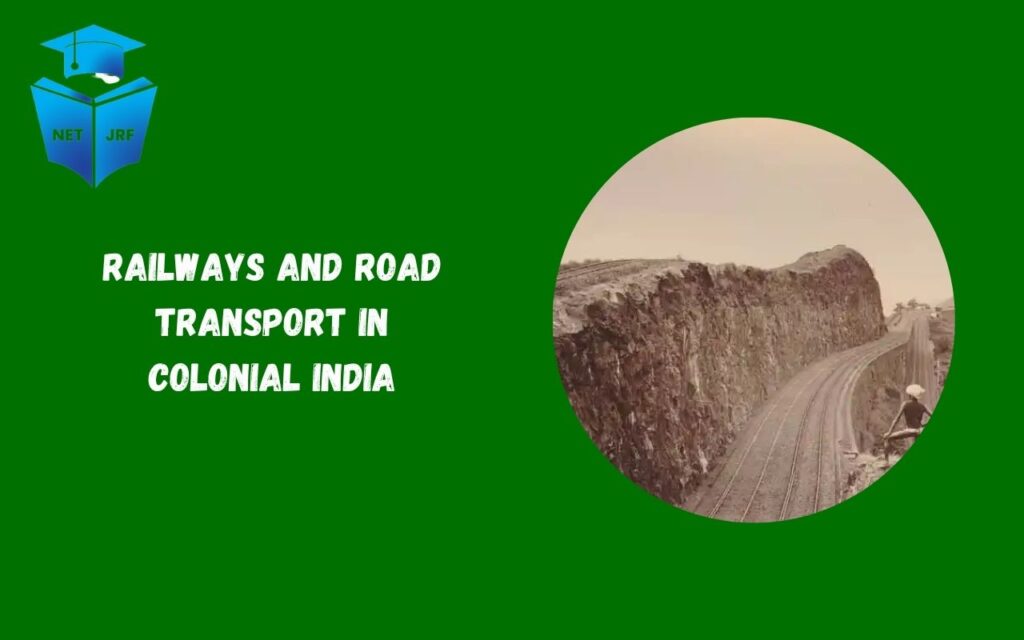
Railways and Road Transport, played a crucial role in shaping the colonial economy of India under British rule. British administrators invested heavily in transport infrastructure to strengthen trade networks, move troops quickly, and facilitate the export of raw materials.
The development of Railways and Road Transport, transformed communication, mobility, and economic integration across the Indian subcontinent. Although these systems modernized transportation, their primary objective remained the economic interests of the British Empire.

History of Transport in India
Before colonial rule, transportation in India depended mainly on traditional systems.
Before colonial rule, transportation in India was mainly traditional and slow. People used animals, rivers, and simple roads for travel and trade. These systems worked for local and regional trade, but they did not connect the entire country efficiently.
1. Bullock Carts for Land Travel
Bullock carts were the most common means of land transport in pre-colonial India. They were pulled by oxen or bulls and used to carry people, agricultural goods, and trade items from villages to nearby markets. Although reliable, bullock carts moved very slowly and could travel only short distances in a day.
2. River Navigation for Trade
Rivers were important routes for transportation and commerce. Traders used boats and small ships to transport goods such as grain, textiles, spices, and timber along major rivers like the Ganga, Yamuna, and Brahmaputra. River transport was cheaper and easier for carrying heavy goods compared to land routes.
3. Caravan Routes for Long-Distance Commerce
For long-distance trade, merchants often traveled in caravans, which were groups of traders moving together with camels, horses, or pack animals. Caravan routes connected important trading centres and helped protect merchants from theft or attacks during long journeys.
4. Local Roads Connecting Villages
Villages and towns were connected by simple dirt roads or paths. These roads allowed local travel and small-scale trade between nearby markets. However, they were often poorly maintained and difficult to use during rainy seasons.
Overall Situation
These traditional transport systems supported regional trade and local economic activities, but they lacked large-scale connectivity across the subcontinent. During the nineteenth century, the introduction of railways and improved road transport under British rule transformed transportation in India and connected distant regions more effectively.
Early Development of Railways
The introduction of railways in India marked a major technological shift during the nineteenth century. Before railways, transportation mainly depended on bullock carts, river boats, and caravan routes, which were slow and limited in distance. Railways introduced a faster and more efficient system of transport.
Introduction Railways in India
The introduction of railways in India was a major technological change during the colonial period. Railways made transportation faster, cheaper, and more reliable than traditional systems like bullock carts and river boats. They played an important role in connecting different regions of the country.
1. First Railway Line (1853)
The first railway line in India opened in 1853 between Bombay (Mumbai) and Thane. This historic train journey covered about 34 kilometers and marked the beginning of railway transport in India.
2. Rapid Expansion after the 1850s
After the success of the first railway line, railway construction expanded quickly across India during the 1850s and 1860s. New railway lines connected major cities and important economic regions.
3. Financing by British Private Companies
Initially, railway construction was financed by British private companies. These companies invested money with the support and guarantee of the British colonial government, which ensured them fixed profits.
4. Connection of Major Regions
By the late nineteenth century, railways and improved road transport connected major commercial cities, ports, and resource-producing regions. This helped move raw materials, agricultural goods, and manufactured products more efficiently across the country.
Enroll UGC NET Foundation Course
Objectives Behind Railway Development
British authorities developed transport systems mainly for economic and political purposes.
-
Main Objectives
-
-
- The British government developed railways and road transport in India mainly to serve their economic and political interests. These transport systems helped them control the country and expand trade.
-
-
Export Raw Materials
-
-
- India was a major supplier of raw materials such as cotton, jute, tea, coal, and indigo. Railways helped transport these resources from interior regions to ports so they could be exported to industries in Britain.
-
-
Import Manufactured Goods
-
-
- Transport networks also helped bring manufactured goods from Britain into Indian markets. Railways and roads made it easier to distribute these goods across different parts of India.
-
-
Strengthen Administrative Control
-
-
- India was a vast country, so the British needed efficient transport to manage administration. Railways allowed government officials to travel and communicate quickly between regions.
-
-
Ensure Quick Military Movement
-
- Transport systems helped the British move troops, weapons, and supplies rapidly. This was important for controlling rebellions and maintaining colonial authority.
- These goals explain why Railways and Road Transport became central to colonial economic planning.

Railways and Road Transport, Infrastructure Development
Railways and road transport played an important role in the development of infrastructure during the colonial period.
| Infrastructure | Period | Purpose | Impact |
| Railways | 1850s onward | Trade transport | National connectivity |
| Roads | 19th century | Local transport | Rural access |
| Ports | Colonial era | Export goods | Global trade |
| Telegraph lines | 19th century | Communication | Administrative efficiency |
Expansion of Railway Network
Railway construction expanded rapidly during the late nineteenth century.
-
Key Features of Expansion
-
-
- The expansion of railways in colonial India had several important features that helped connect different regions and support economic activities.
-
-
Connection of Major Cities
-
-
- Major railway lines were built to connect important colonial cities such as Bombay (Mumbai), Calcutta (Kolkata), and Madras (Chennai). These cities were major commercial and administrative centers.
-
-
Extension to Interior Agricultural Regions
-
-
- Railway tracks were extended into interior rural and agricultural areas. This allowed agricultural products like cotton, wheat, and rice to be transported easily to markets and ports.
-
-
Link Between Mines, Plantations, and Ports
-
- Railways connected mining areas and plantations (such as coal mines, tea, and coffee plantations) directly to seaports. This made it easier to export raw materials to Britain and other international markets.
- The expansion of Railways and Road Transport, allowed the British to integrate India’s economy with global markets.
Enroll UGC NET Offline Classes in Jaipur
Economic Impact on Trade
Transport infrastructure greatly changed trade patterns and improved the movement of goods.
Major Economic Effects
-
Faster Transportation of Goods
-
-
- Railways made it possible to transport goods much faster than traditional methods like bullock carts. Products could reach markets and ports in a shorter time.
-
-
Lower Transport Costs
-
-
- Rail transport reduced the cost of moving goods over long distances. This made trade more efficient and profitable for merchants and companies.
-
-
Expansion of Internal Markets
-
-
- Railways connected different regions of India. This allowed goods produced in one area to be sold in other regions, which helped expand internal markets.
-
-
Increased Export of Agricultural Products
-
- Railways made it easier to transport agricultural products such as cotton, wheat, jute, and tea to ports. From there, these products were exported to international markets, especially Britain.
Through these changes, Railways and Road Transport, strengthened colonial economic structures.
Role in Agricultural Commercialization
Transport systems helped expand commercial agriculture.
-
Important Changes
-
-
- The development of railways and roads in colonial India had a major impact on agriculture, encouraging the growth of commercial farming.
-
-
Shift to Cash Crops
-
-
- Farmers began growing cash crops like cotton, jute, and tea instead of only food crops. These crops were in demand for export to Britain and other countries.
-
-
Faster Movement to Ports
-
-
- Transport systems allowed agricultural goods to be moved quickly from farms to ports, reducing spoilage and increasing profits.
-
-
Connection to Regional and International Markets
-
- Railways and roads linked local markets with regional and international trade networks, enabling farmers to sell their produce beyond their villages.
- The growth of Railways and Road Transport, therefore encouraged commercialization of agriculture.
Economic Impact of Transport Development
| Sector | Impact |
| Agriculture | Expansion of cash crop cultivation |
| Trade | Faster movement of goods |
| Industry | Access to raw materials |
| Employment | Jobs in railway construction |
These developments highlight how Railways and Road Transport reshaped the colonial economy.
Development of Road Transport
Although railways dominated long-distance travel, roads remained important.
-
Major Road Projects
-
-
- During the colonial period, the British developed several important road projects to improve transportation and administration.
-
-
1. Grand Trunk Road Expansion
-
-
- The Grand Trunk Road, one of the oldest and longest roads in India, was expanded and improved to connect major cities and trade centers. It became a vital route for commerce and travel.
-
-
2. Regional Highways Connecting Villages
-
-
- The British built regional roads to link villages with towns and markets. These roads helped farmers and traders transport goods more efficiently.
-
-
3. Military Roads for Troop Movement
-
- Special military roads were constructed to allow quick movement of troops and supplies, helping the British maintain control over distant regions.
- Road infrastructure complemented Railways and Road Transport, by connecting rural areas with railway stations.
Join UGC NET Offline Coaching in Jaipur
Social Impact of Transport Systems
Transportation development changed social interactions across India.
Social Changes
-
Increased Mobility of People
-
-
- Transport systems made it easier for people to travel long distances, whether for work, trade, or personal reasons.
-
-
Migration for Employment
-
-
- Many people moved from rural areas to cities, plantations, and industrial centers in search of jobs, leading to labor mobility.
-
-
Cultural Exchange Between Regions
-
-
- Faster travel connected different parts of India, encouraging exchange of ideas, languages, and cultural practices between regions.
-
-
Expansion of Urban Centres
-
- Improved transport helped towns and cities grow, as markets, administrative centers, and industries developed around transport hubs.
- The spread of Railways and Road Transport, therefore influenced social life as well as economic structures.

Administrative Advantages
Improved transport systems helped the colonial government maintain better control over different regions of India. They enabled faster movement of officials, troops, and information, which strengthened administrative efficiency and political authority.
Administrative Benefits
-
Faster Communication Between Provinces
-
-
- Transport systems allowed government officials to send messages, reports, and orders quickly across different regions.
-
-
Quick Movement of Military Forces
-
-
- Railways and roads enabled the rapid deployment of troops to control rebellions or maintain law and order.
-
-
Efficient Tax Collection
-
-
- Officials could collect taxes and transport revenue more efficiently from distant villages and towns.
-
-
Improved Governance Networks
-
- Better connectivity strengthened the colonial administrative system, making governance more organized and effective.
- These benefits demonstrate how Railways and Road Transport supported imperial control.
Transport Before and During Colonial Period
| Feature | Pre-Colonial India | Colonial India |
| Transport technology | Animal carts river boats | Railways modern roads |
| Trade speed | Slow regional trade | Fast long-distance trade |
| Administrative control | Limited | Strong centralized control |
| Market integration | Regional markets | National market |
Criticism by Nationalist Leaders
Indian nationalist thinkers criticized colonial transport policies.
While railways and roads modernized transport in India, many critics argued that these systems primarily served British interests rather than Indian needs.
-
Infrastructure Favored British Interests
-
-
- Transport networks were designed to move goods and resources for the benefit of Britain, not to develop the Indian economy.
-
-
Facilitated Export of Raw Materials
-
-
- Railways made it easier to transport cotton, jute, coal, and other raw materials from interior regions to ports for export.
-
-
Profits Benefited British Investors
-
-
- Railway construction was financed by British companies, and guaranteed returns ensured that profits went mainly to Britain rather than India.
-
-
Reinforced Economic Exploitation
-
- Although transport systems modernized India, they also strengthened colonial economic control and reinforced the exploitation of Indian resources and labor.
The development of Railways and Road Transport, represented one of the most significant infrastructural changes during British rule in India. Railways connected distant regions, expanded trade networks, and facilitated the movement of goods and people across the subcontinent.
Railways and Road Transport in Colonial India FAQs

2. When was the first railway introduced in India?
The first railway line in India opened in 1853 between Bombay (Mumbai) and Thane. This marked the start of modern rail transport in India, connecting cities and enabling faster movement of people and goods.
3. Why did the British build railways in India?
The British built railways to serve their economic and political interests:
- Export raw materials (cotton, jute, coal) to Britain.
- Transport imported goods from Britain across India.
- Move troops quickly to control rebellions.
- Strengthen administrative control over distant provinces.
4. How did railways affect Indian agriculture?
Railways connected rural areas to markets and ports, allowing farmers to sell crops in distant regions. They encouraged the cultivation of cash crops like cotton, jute, and tea for export, leading to the commercialization of agriculture.
5. What role did roads play in colonial transport?
Roads complemented railways by linking villages to railway stations and towns. They allowed agricultural and commercial goods to reach local markets and helped officials and troops travel more efficiently.
6. Why did nationalist leaders criticize transport development?
Nationalist leaders argued that transport infrastructure mainly served British economic interests. Railways and roads helped export Indian resources and profits went to British investors, while Indian welfare and local development were largely ignored.