
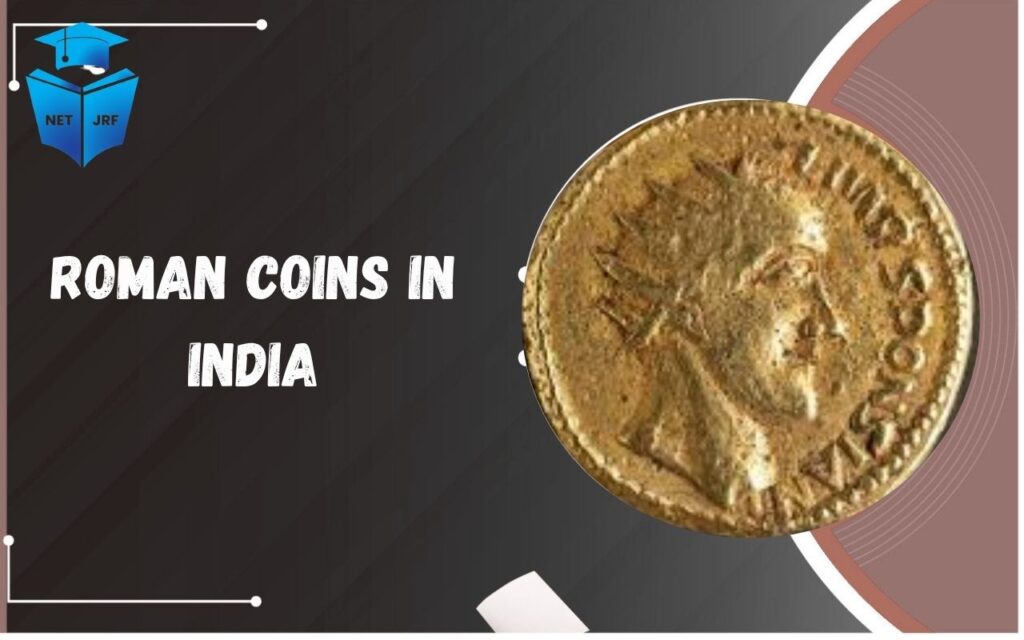

Roman coins in India provide strong proof of ancient trade connections between South India and the Roman world. These coins are not just pieces of metal; they tell a story of economic exchange, cultural contact, and global trade long before modern times.

Enroll UGC NET Online Coaching
Indo-Roman Trade
Before understanding Roman coins in India, it is important to know the trade context. During the Sangam Age, South India had active trade relations with the Roman Empire.
Key points
- Trade flourished between 1st century BCE to 3rd century CE
- Sea routes connected Indian ports with Roman Egypt
- Monsoon winds helped navigation
Merchants used ships to carry goods across the Arabian Sea. This made long-distance trade faster and more efficient.
Roman Coins in India as Historical Evidence
Roman coins in India serve as important archaeological evidence. Historians use these coins to understand trade patterns and economic conditions.
Why coins are important
- Show direct contact with Romans
- Help in dating trade activities
- Indicate wealth and prosperity
Coins have been found in large numbers, especially in South India.
Roman Coins Found in India
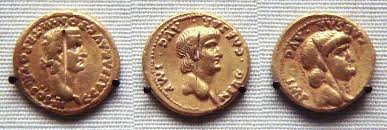
The discovery of Roman coins in South India is strong evidence of the flourishing Indo-Roman trade relations. These coins not only indicate economic exchanges but also help historians date trade connections and identify key Roman rulers involved.
Types of Coins by Metal
Gold Coins (Aurei)
- High-value coins used mainly for large transactions.
- Often carried by wealthy merchants and rulers.
- Signified the prosperity of Indo-Roman trade.
Silver Coins (Denarii)
- Widely circulated and used in regular trade.
- Popular for medium-value transactions.
- Many of these coins have inscriptions and images of Roman emperors.
Copper Coins
- Used for small everyday transactions.
- Indicate that even local markets in India were connected to Roman currency circulation.
Coins of Roman Emperors
Most coins discovered belong to famous Roman rulers, helping trace trade periods:
- Augustus (27 BCE–14 CE) – Initiated early trade contacts with India.
- Tiberius (14–37 CE) – His coins show continued commercial activity.
- Nero (54–68 CE) – Coin evidence indicates peak trade during his reign.
- Other emperors’ coins found show that Indo-Roman trade lasted for several centuries.
Significance of Roman Coins in India
- Economic Evidence: Coins confirm the use of Roman currency in India for trade.
- Chronological Marker: Help historians date trade activities and port developments.
- Cultural Exchange: Coins brought Roman images, symbols, and inscriptions, influencing local artisans.
- Integration with Local Trade: Coins circulated alongside local currency, showing smooth integration of international trade.
Roman coins in India key details
Roman coins found in India were of different metals and denominations
| Feature | Description |
| Roman coins in India time period | 1st century BCE to 3rd century CE |
| Metal types | Gold, silver, copper |
| Major regions found | Tamil Nadu, Kerala |
| Trade partners | Roman Empire |
| Purpose | Trade, wealth storage |
Major Discovery Sites of Roman Coins in India
Roman coins have been found across key trade centers of South India, highlighting the extensive reach of Indo-Roman trade during the Sangam period.
Key Locations:
- Arikamedu (near Puducherry): A major port city, coins show active maritime trade.
- Karur (Tamil Nadu): Inland trade hub connecting ports with villages; coins indicate circulation in local markets.
- Madurai (Tamil Nadu): Political and cultural center, coins suggest economic prosperity and royal involvement in trade.
- Coimbatore region (Tamil Nadu): Evidence of Roman coins shows connectivity with agricultural and textile production areas.
These sites were strategically important, acting as gateways for goods moving from interior regions to ports and eventually to the Roman world.
Role of Roman Coins in Economy and Trade
Roman coins were more than just currency; they shaped economic life in South India:
Economic Impact:
- Increase in Wealth: Coins brought precious metals into local economies, boosting wealth for kings, merchants, and artisans.
- Trade Promotion: Facilitated both local and long-distance trade, making transactions easier and more reliable.
- Urban Growth: Cities and port towns like Arikamedu and Muziris expanded due to trade influx.
- Medium of Exchange: While barter was still common, coins were increasingly used for high-value goods like spices, textiles, and luxury items.
Cultural and Social Significance:
- Roman coins also introduced foreign art, inscriptions, and symbols, influencing local crafts and cultural expressions.
- Their presence reflects the integration of India into global economic networks even during the early centuries CE.
Trade Goods Exchanged in Indo-Roman Trade
The presence of Roman coins in India reveals a bustling trade system where valuable goods flowed between India and the Roman Empire.
Indian Exports to Rome
Indian merchants exported a wide variety of goods highly valued in the Roman world:
- Spices: Pepper, cardamom, and other aromatic spices were in enormous demand.
- Pearls: Harvested mainly from the Gulf of Mannar, pearls were considered luxury items.
- Ivory: Used for art, ornaments, and luxury objects.
- Textiles: Fine cotton and silk fabrics, often dyed in bright colors, were sought after in Rome.
These exports made India a critical supplier of luxury and exotic goods to the Mediterranean world.
Roman Imports to India
Romans sent valuable items in exchange for Indian goods:
- Gold Coins: Most common form of payment, leading to a large influx of gold into South India.
- Wine: A popular luxury item among Indian elites.
- Glassware: Roman glass utensils and ornaments were imported for domestic use and trade.
Why Romans Sent Gold
- High Demand for Indian Goods: Spices, pearls, and textiles were rare and highly desirable in Rome.
- Limited Roman Exports: Rome had fewer goods that India needed, so payment was often in gold rather than trade items.
- Economic Impact: The inflow of gold enriched South Indian kingdoms and merchants.
Interesting Note: Roman writers of the time even complained that so much gold was leaving Rome to pay for Indian products, highlighting India’s importance in global trade.
Significance of Trade Goods and Coins
- Roman coins acted as proof of high-value trade and economic connectivity.
- Indian exports shaped local production, encouraging spice cultivation, pearl diving, and textile weaving.
- The trade fostered cultural exchange, as ideas, art, and luxury items traveled along with goods.
Role of Ports in Coin Circulation
Ports were the heart of Indo-Roman trade, acting as entry and exit points for both goods and Roman coins.
Important Ports:
- Muziris (Kerala): One of the busiest ports, connecting Indian spices and luxury goods with Roman markets.
- Korkai (Tamil Nadu): Famous for pearls, this port also received Roman coins as payment.
- Puhar (Kaveri delta): Center of trade and culture, linking inland trade with maritime routes.
How Ports Facilitated Coin Circulation:
- Roman ships brought gold, silver, and copper coins to India in exchange for local goods.
- Coins were distributed to inland markets via trade routes, connecting villages, towns, and cities.
- Ports acted as economic hubs, allowing merchants to convert goods into coins or other valuable items.
Uses of Roman Coins in India
Roman coins were flexible in their usage, adapting to local economic needs:
Stored as Wealth
- Gold and silver coins were treasured and accumulated by kings, merchants, and temples.
- Often kept as reserves for trade or as symbols of prestige.
Melted for Ornaments
- Coins were sometimes melted and reshaped into jewelry or decorative items.
- This shows how coins were integrated into local craftsmanship.
Used in Trade
- In some areas, coins functioned as medium of exchange, especially in high-value trade.
- Barter was still common, but coins facilitated larger transactions and long-distance trade.
Significance:
The circulation of Roman coins through ports reflects a highly adaptable economy, where international currency blended with local practices, enhancing trade, wealth, and cultural exchange.
Archaeological Importance of Roman Coins in India
Roman coins discovered across South India are treasures for historians and archaeologists, providing concrete evidence of trade, wealth, and cultural interactions during the Sangam age.
What They Reveal:
Trade Routes
- Coins indicate the flow of goods from India to the Roman world and vice versa.
- Help trace maritime routes through ports like Muziris, Korkai, and Puhar.
- Show connections between inland trade centers and coastal ports.
Economic Prosperity
- Large numbers of coins reveal active trade and wealth accumulation.
- Gold and silver coins reflect the importance of high-value goods such as spices, pearls, and textiles.
Cultural Exchange
- Coins serve as evidence of interaction between Indian and Roman societies.
- They suggest the exchange of artistic styles, luxury items, and even ideas.
Confirmation of Literary Sources
- Archaeological evidence from coins supports descriptions in Sangam literature about bustling ports and trade.
- Provides material proof for historical narratives that were only recorded in poems or texts.

Link with Sangam Literature
Sangam texts provide indirect references to Roman trade:
- Yavanas (foreigners): These texts mention merchants and travelers from distant lands, often interpreted as Romans.
- Busy Ports: Descriptions of ports filled with ships, goods, and merchants align with archaeological findings of coins and trade goods.
- Trade with Distant Lands: Sangam poems emphasize the exchange of spices, pearls, and textiles goods that Roman coins confirm were in high demand.
The combination of archaeological evidence and literary references gives a complete picture of South India’s trade, economy, and cultural life during the Sangam period. Roman coins are not just currency—they are historical documents frozen in metal, telling stories of ancient global connections.
Enroll UGC NET Offline Classes in Jaipur
Decline of Indo-Roman Trade
Indo-Roman trade, which flourished from the early centuries CE, gradually slowed down after the 3rd century CE, and Roman coins became less common in India.
Main Reasons for the Decline:
Fall of the Roman Empire
- Political instability in Rome reduced its capacity to trade overseas.
- Demand for Indian goods like spices, pearls, and textiles declined, which meant fewer Roman coins flowed into India.
Political Changes in India and Abroad
- Changes in local powers and kingdoms affected trade protection and regulation.
- Conflicts in the Mediterranean region disrupted maritime routes, making long-distance trade risky.
Shift in Trade Routes
- New maritime and overland routes emerged, reducing reliance on older ports like Muziris and Korkai.
- Over time, India’s trade with other regions like Southeast Asia increased, replacing Roman trade.
Impact of the Decline:
- Reduced inflow of gold and silver coins, affecting the economy.
- Decline of some port cities that depended heavily on Indo-Roman trade.
- Trade focus shifted more toward regional and Southeast Asian connections.

Conclusion:
The decline of Indo-Roman trade highlights how global political and economic events affected even distant regions like South India. Roman coins, once abundant, became rare archaeological evidence of this lost trade era.
Join UGC NET Coaching in Jaipur