

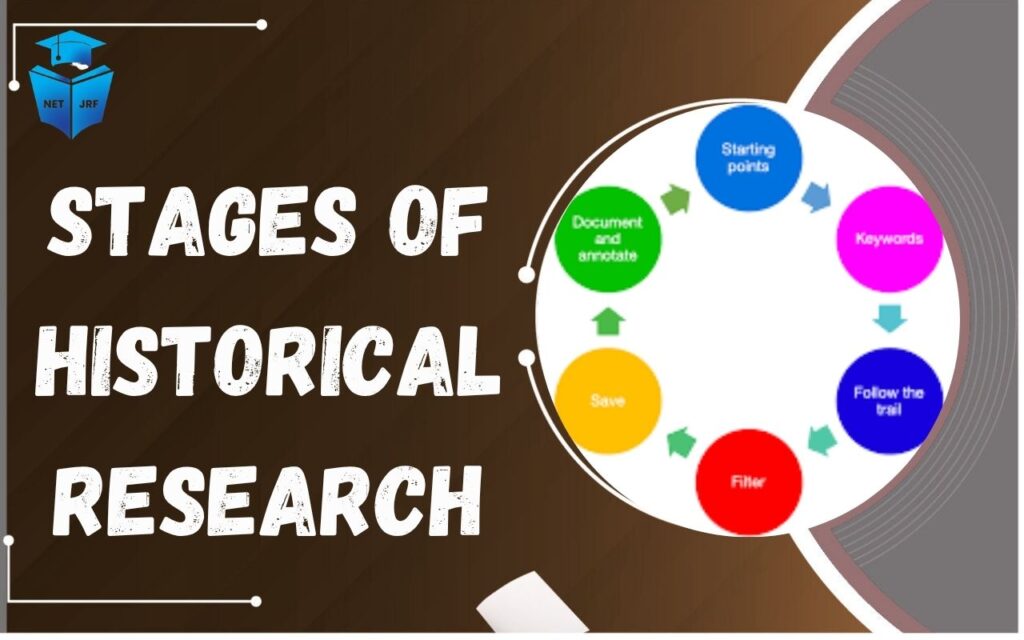
Stages of Historical Research form the backbone of historical methodology used by historians to study the past. In historiography, scholars follow a systematic process that allows them to collect evidence, verify authenticity, interpret information, and present historical narratives. This structured method helps historians produce reliable knowledge

Historical Research Meaning of Stages
The concept of Stages of Historical Research refers to the organized process used by historians to conduct research about past events. This method ensures that historical narratives rely on evidence rather than speculation.
Historians follow a sequence of intellectual activities. They begin by locating historical sources, then verify the authenticity of those sources, interpret their meaning, and finally present conclusions through written narratives.
Key Characteristics of Historical Research
Historical research follows certain essential principles:
- Systematic collection of historical sources
- Critical evaluation of evidence
- Logical interpretation of historical facts
- Structured presentation of historical narrative
These characteristics show why historical study follows a scientific approach.
Historical Research Stages
Historians divide the research process into several stages to maintain clarity and accuracy. Each stage performs a specific function in the study of history.
Major Steps
- Heuristics
- Source criticism
- Synthesis or interpretation
- Presentation or narration
These steps together constitute the Stages of Historical Research used in historiography.
Heuristics: Discovery of Historical Sources
Heuristics represents the first stage of research. In this stage historians search for historical sources that provide evidence about past events.
Since historians cannot directly observe the past, they depend on remains of human activity preserved in documents, monuments, inscriptions, or artifacts.
Types of Sources Used
Historians collect several types of sources during heuristic research.
Primary Sources
Primary sources originate from the historical period being studied.
Examples include:
- Inscriptions issued by rulers
- Contemporary manuscripts
- Official administrative records
- Personal letters or diaries
- Coins or artifacts
Primary sources provide direct information about past societies.
Secondary Sources
Secondary sources consist of works created later by historians who analyze historical evidence.
Examples include:
- History books
- Research papers
- Academic theses
- Historical interpretations
During the first stage of the Stages of Historical Research, historians identify and gather these materials for further analysis.
Join UGC NET Online Test Series
Criticism: Verification of Historical Evidence
The second stage of research involves examining the authenticity and reliability of sources.
Historians cannot accept every document as accurate evidence. Some records may contain errors, exaggerations, or deliberate distortions.
Types of Historical Criticism
Historians use two major types of criticism to evaluate sources.
External Criticism
External criticism focuses on the authenticity of a document.
Historians examine physical characteristics such as paper, ink, handwriting, language, and style to determine whether the document belongs to the claimed time period.
External analysis helps historians detect forged or altered documents.
Internal Criticism
Internal criticism evaluates the reliability of the information contained in the source.
Historians analyze:
- Author intention
- Accuracy of statements
- Possible bias
- Logical consistency
Through this process historians ensure that only trustworthy evidence becomes part of historical research.
The stage of criticism plays a crucial role within the Stages of Historical Research because it prevents misuse of unreliable sources.

Stages of Historical Research Process
This table summarizes the main structure of Stages of Historical Research used by historians.
| Stage | Main Function | Activity |
| Heuristics | Discovery of sources | Searching historical evidence |
| Criticism | Verification of sources | Testing authenticity |
| Synthesis | Interpretation of facts | Connecting information |
| Presentation | Writing history | Explaining conclusions |
Synthesis: Interpretation of Historical Evidence
After verifying the authenticity of sources, historians move to the next stage known as synthesis.
Synthesis involves organizing and interpreting historical facts to understand their meaning and relationships.
Historians combine information from different sources to reconstruct past events.
Best UGC NET Offline Classes in Jaipur
Key Activities in Synthesis
During synthesis historians perform several intellectual tasks:
- Organizing verified evidence
- Comparing multiple sources
- Identifying patterns or connections
- Explaining causes and consequences
Through these processes historians transform scattered information into meaningful historical explanations.
Synthesis represents an essential step in the Stages of Historical Research because it converts evidence into knowledge.
Presentation: Writing Historical Narrative
The final stage of research involves presenting the findings in the form of historical writing.
Historians communicate their conclusions through books, research papers, or academic articles.
Effective presentation requires clarity, logical structure, and evidence based arguments.
Important Elements of Historical Presentation
Historians follow certain principles while presenting research results.
- Clear organization of chapters
- Logical explanation of events
- Use of supporting evidence
- Balanced interpretation
This final stage completes the Stages of Historical Research process.
Importance of Stages of Historical Research in Historiography
The concept of Stages of Historical Research plays a major role in maintaining accuracy in historical studies.
Key Importance
- Ensures systematic research
Historians follow structured steps instead of random investigation.
- Improves reliability of historical knowledge
Verification of sources ensures that historical narratives rely on authentic evidence.
- Encourages scientific approach
The method resembles research processes used in other academic disciplines.
- Reduces bias in historical interpretation
Critical examination of evidence helps historians avoid subjective conclusions.
- Supports academic research
Universities and scholars rely on these stages while conducting historical studies.
Example of Historical Research Process
Historians studying the Mauryan Empire provide a good example of this research method.
Step One: Source Discovery
Researchers collect inscriptions of Ashoka, archaeological evidence, and Greek accounts such as those written by Megasthenes.
Step Two: Source Verification
Scholars analyze language, script, and historical context to confirm authenticity of inscriptions.
Step Three: Interpretation
Historians interpret information about administration, religion, and political organization of the Mauryan state.
Step Four: Historical Writing
Researchers publish studies explaining the development of Mauryan governance and society.
This example illustrates the practical application of the Stages of Historical Research.
Top UGC NET Coaching in Jaipur
Challenges in Historical Research
Although historians follow systematic methods, several difficulties still exist.
Common Challenges
- Incomplete historical records
- Destruction of documents during wars or disasters
- Language barriers in ancient texts
- Bias in historical narratives
Because of these challenges historians must apply the Stages of Historical Research carefully to produce reliable historical knowledge.
Historical knowledge does not emerge randomly. Historians follow a structured process that allows them to collect evidence, verify authenticity, interpret facts, and communicate conclusions effectively. The systematic method consisting of heuristics, criticism, synthesis, and presentation forms the foundation of historical scholarship.

Stages of Historical Research FAQs

2. What is heuristics in historical research?
Heuristics is the stage of discovering primary and secondary historical sources for evidence about past events.
3. How does criticism help in historical research?
Criticism verifies authenticity and reliability of sources through external and internal evaluation.
4. What is synthesis in historical research?
Synthesis involves interpreting verified evidence, connecting facts, identifying patterns, and explaining historical events.
5. What does the presentation stage involve?
Presentation involves writing research findings clearly with logical structure, evidence, and balanced interpretation.
6. Why are Stages of Historical Research important?
They ensure systematic methodology, improve reliability of findings, encourage scientific study, and reduce bias in historical interpretation.
7. Which sources are used in heuristics?
Primary sources include inscriptions, manuscripts, coins, letters, and artifacts, while secondary sources include history books and research papers.
8. What is external criticism?
External criticism examines the physical authenticity of documents, including paper, ink, handwriting, and style.
9. What is internal criticism?
Internal criticism analyzes content reliability, author intention, bias, and logical consistency of historical sources.
10. Can historical research produce accurate knowledge without these stages?
Without following these stages, historical knowledge risks inaccuracy, incomplete evidence, and biased interpretation.