

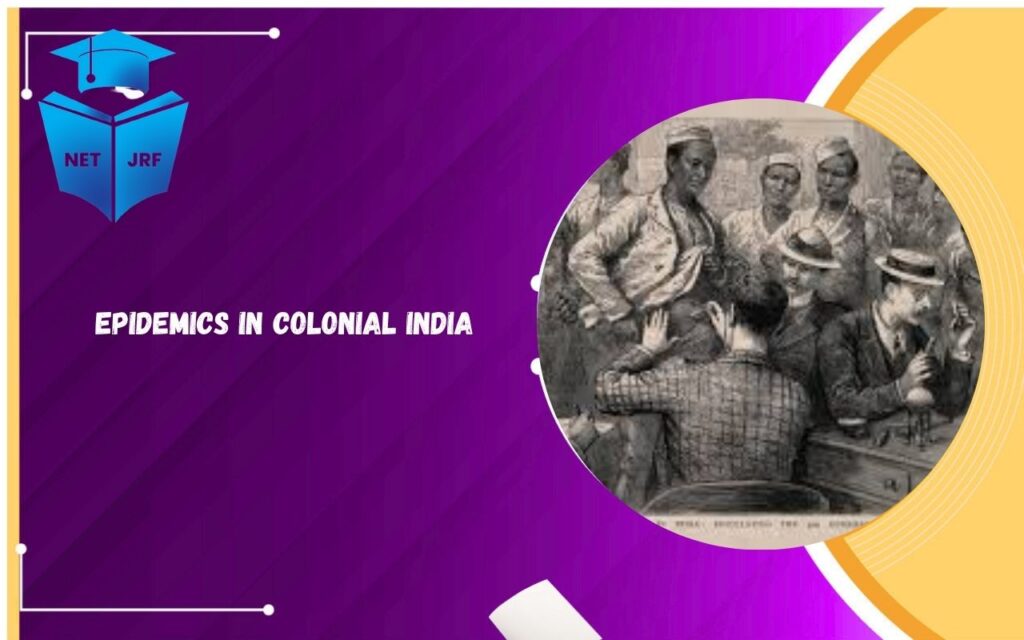
Epidemics played a major role in shaping social and demographic history during the colonial period in India. Disease outbreaks affected millions of people across villages and cities, often leading to high mortality and social disruption.
During the nineteenth and early twentieth centuries, India experienced several deadly disease outbreaks such as cholera, plague, malaria, and influenza. These diseases spread rapidly due to poor sanitation, overcrowded settlements, malnutrition, and weak medical infrastructure.

Meaning of Epidemics
Epidemics refer to sudden outbreaks of infectious diseases that spread rapidly among large populations within a particular region.
Such disease outbreaks often occur when sanitation systems are weak, medical knowledge is limited, or environmental conditions encourage the spread of infections.
Enroll UGC NET Mock Test Series
Key Characteristics
- Rapid spread of disease in a community
- High number of infected individuals
- Increased mortality rate
- Public health crisis
- Social and economic disruption
These characteristics made epidemic diseases one of the most serious threats to public health in colonial India.
Epidemics in Colonial India
Epidemics became frequent during British rule due to changing social, economic, and environmental conditions.
Rapid urbanization created crowded cities where sanitation facilities were inadequate. Large numbers of migrants lived in small houses without clean water or proper drainage systems.
These unhealthy conditions allowed disease-causing bacteria and viruses to spread quickly among populations.
Colonial administrative policies often prioritized trade and military interests rather than improving health conditions for ordinary people.
Enroll UGC NET Foundation Course
Major Epidemic Diseases in Colonial India
Several infectious diseases spread widely during the colonial period.
-
Cholera
-
-
- Cholera was one of the earliest and most widespread epidemic diseases in India. The disease spread through contaminated water and caused severe dehydration and death.
- Cholera outbreaks frequently occurred in crowded towns and pilgrimage centres.
-
-
Plague
-
-
- The bubonic plague outbreak began in Bombay in 1896 and quickly spread to other parts of India.
- This disease killed millions of people during the late nineteenth and early twentieth centuries.
-
-
Malaria
-
-
- Malaria remained one of the most persistent diseases in colonial India. Mosquitoes transmitted the infection in rural areas with stagnant water.
- Millions of people suffered from fever, weakness, and death due to malaria.
-
-
Influenza Pandemic (1918)
-
- The influenza outbreak of 1918 caused enormous loss of life across India.
- Historians estimate that millions of people died within a short period due to the rapid spread of the virus.
Major Epidemics in Colonial India
| Disease | Time Period | Impact |
| Cholera | 19th century | Widespread outbreaks |
| Bubonic Plague | 1896 onwards | Millions of deaths |
| Malaria | Continuous | Major rural health crisis |
| Influenza | 1918 | Massive mortality |
Causes of Epidemics
Several factors contributed to the spread of Epidemics in colonial India.
1. Poor Sanitation
Most cities lacked proper drainage systems, waste disposal methods, and clean water supply.
Dirty streets and contaminated water sources created ideal conditions for disease transmission.
2. Overcrowded Urban Settlements
Industrialization and trade attracted migrants to cities.
Large numbers of people lived in small houses with little ventilation.
3. Poverty and Malnutrition
Poor nutrition weakened the immune system of many people.
Malnourished populations became more vulnerable to infectious diseases.
4. Weak Medical Infrastructure
Medical services remained limited in colonial India.
Hospitals, trained doctors, and medicines were insufficient for large populations.
5. Famine Conditions
Food shortages weakened populations and increased vulnerability to diseases.
In many cases, Epidemics followed major famine events.

Social Impact of Epidemics
The social effects of Epidemics were severe and long-lasting.
Large numbers of people died within short periods, causing demographic changes in many regions.
Families lost breadwinners and struggled to survive economically.
Migration increased as people moved away from infected areas.
Major Social Consequences
- Population decline
- Family disruption
- Migration from affected areas
- Fear and social panic
These conditions changed everyday life in both villages and cities.
Enroll UGC NET Offline Classes in Jaipur
Economic Impact of Epidemics
Disease outbreaks created serious economic challenges.
Agricultural production declined because farmers fell sick or died.
Urban industries also suffered because workers could not continue their jobs.
Economic Consequences
- Reduction in labour supply
- Decline in agricultural output
- Disruption of trade activities
- Increased poverty levels
Economic instability often followed major epidemic disasters.
Colonial Government Response
The colonial government eventually recognized the need to control Epidemics through public health measures.
Authorities introduced several administrative policies to monitor disease outbreaks.
Public Health Measures
- Sanitation improvements
- Establishment of hospitals
- Vaccination programs
- Medical research initiatives
These measures helped reduce the spread of certain diseases but remained limited in many rural areas.
Epidemic Diseases Act of 1897
One of the most important legal measures introduced by the British government was the Epidemic Diseases Act of 1897.
This law allowed authorities to take emergency steps during disease outbreaks.
Government officials could isolate infected individuals, inspect houses, and enforce quarantine measures.
However, many people resisted these actions because they feared government interference in personal life.
Join UGC NET Coaching in Jaipur
Stepwise Spread of Epidemic Diseases
The spread of Epidemics usually followed a predictable pattern.
- Emergence of disease in a specific region
- Transmission through water, air, or insects
- Rapid infection among crowded populations
- High mortality due to weak medical support
- Gradual decline after intervention or immunity
Understanding this process helps historians analyze the impact of disease outbreaks.

Conclusion
Disease outbreaks significantly shaped the history of colonial India. Weak sanitation systems, poverty, overcrowded cities, and limited medical knowledge allowed infectious diseases to spread rapidly among populations.
Epidemics : Colonial India UGC NET FAQs

Why were epidemics common in colonial India?
Epidemics occurred frequently due to poor sanitation, overcrowded cities, poverty, and limited medical infrastructure.
Which diseases caused major epidemics in colonial India?
Cholera, bubonic plague, malaria, and the influenza pandemic of 1918 were among the most significant diseases.
What was the Epidemic Diseases Act of 1897?
It was a law that allowed the colonial government to take emergency measures such as quarantine and inspection to control disease outbreaks.
How did epidemics affect society?
They caused large population loss, migration, family disruption, and widespread fear among communities.
What role did sanitation play in epidemics?
Poor sanitation and contaminated water sources allowed infectious diseases to spread quickly in crowded settlements.
What are Epidemics in colonial history?
Epidemics describe widespread disease outbreaks that affected millions of people due to poor public health conditions during British rule.