

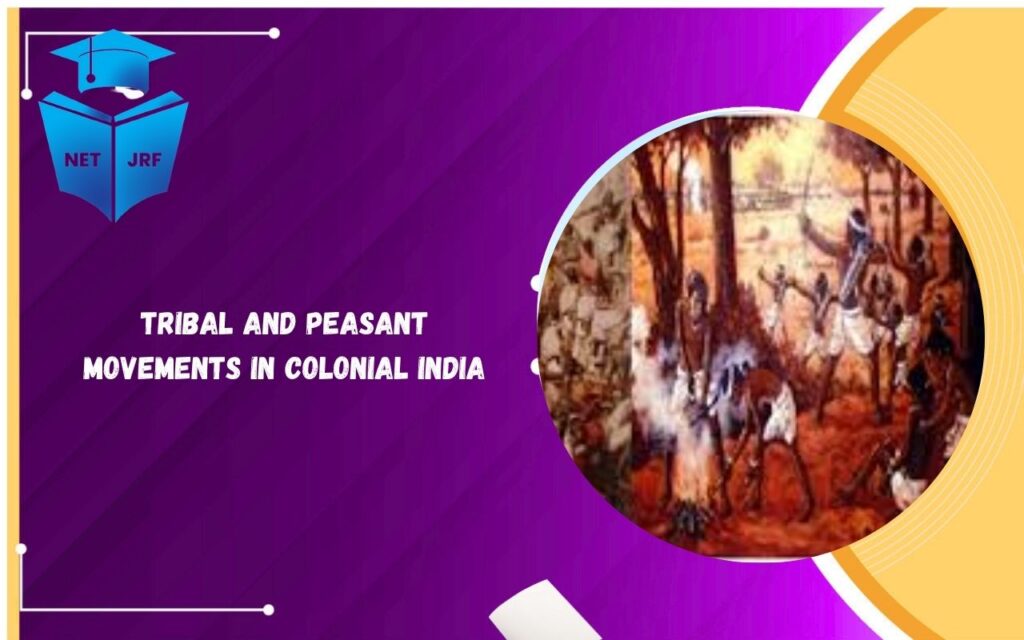
Tribal and Peasant Movements in Colonial India: Check Causes, Revolts and Agrarian Resistance

Tribal and Peasant Movements in Colonial India in this topic you learn how heavy taxation land dispossession debt exploitation cash crop policies and colonial interference triggered rural revolts and agrarian resistance during British rule

pawan

Tribal and Peasant Movements in Colonial India

Table of Contents

Tribal and Peasant Movements played an important role in the history of colonial India. These revolts emerged as reactions against economic exploitation, land dispossession, and oppressive colonial policies. During the nineteenth and early twentieth centuries, tribal communities and peasants organized protests, uprisings, and resistance movements against British authority, landlords, and moneylenders.

Study Planner

Tribal and Peasant Movements Meaning

Tribal and Peasant Movements refer to organized resistance actions taken by rural communities against injustice and exploitation.

Peasants protested against heavy taxation, high rents, and economic hardship. Tribal groups resisted policies that destroyed their traditional rights over forests and land.

Key Characteristics

  • Resistance against colonial authority
  • Demand for economic justice
  • Protection of traditional rights
  • Participation of rural communities
  • Leadership by local figures

These movements reflected the growing dissatisfaction of rural populations during colonial rule.

Enroll UGC NET Online Coaching

Tribal and Peasant Movements Causes 

The rise of Tribal and Peasant Movements resulted from several economic, social, and political factors.

  • Heavy Land Revenue

      • The British introduced new revenue systems such as the Permanent Settlement and Ryotwari system.
      • Farmers had to pay fixed taxes even during crop failures, which created deep financial hardship.
  • Exploitation by Moneylenders

      • Many peasants borrowed money to pay taxes or survive during poor harvests.
      • Moneylenders often charged extremely high interest rates, trapping peasants in debt.
  • Loss of Tribal Land

      • Colonial forest laws restricted tribal communities from using forests for hunting, farming, and gathering resources.
      • Tribal populations lost control over their traditional lands.
  • Forced Commercial Agriculture

      • British policies encouraged farmers to grow cash crops like indigo, cotton, and opium.
      • These crops often reduced food production and increased economic vulnerability.
  • Social and Cultural Disruption

    • Colonial rule interfered with traditional tribal customs and village institutions.
    • This disruption increased resentment among rural communities.

Tribal and Peasant Movements Major Causes

Several social, economic, and political factors led to the rise of tribal and peasant movements during colonial rule.

Cause Explanation
Heavy Revenue High taxes on agricultural land
Debt Exploitation by moneylenders
Land Loss Tribal displacement from forests
Cash Crops Shift away from food production
Social Change Weakening of traditional institutions

Enroll UGC NET Online Course

Major Tribal Movements in Colonial India

During colonial India, several tribal communities rose in revolt against economic exploitation, loss of land, and oppressive colonial policies. These movements reflected the tribes’ resistance to British expansion and interference in their traditional way of life.

1. Santhal Rebellion (1855–56)

The Santhal rebellion took place in present-day Jharkhand and Bihar. The Santhal tribes revolted against:

  • Exploitative landlords and moneylenders who imposed high debts.
  • Colonial officials who disrupted traditional governance and land ownership.
    The rebellion involved thousands of Santhals attacking administrative centers and landlords, demanding justice and protection of their lands. Although it was suppressed, it showed strong tribal opposition to economic and administrative oppression.

2. Munda Rebellion (1899–1900)

The Munda rebellion, led by Birsa Munda, was centered in Chotanagpur (present-day Jharkhand).

  • Tribals protested against the loss of ancestral lands due to British land policies like the zamindari system.
  • The movement demanded restoration of traditional land rights and protection from exploitation by landlords and moneylenders.
  • Birsa Munda emerged as a symbol of tribal resistance, uniting communities under the banner of justice and self-rule.

3. Kol Uprising (1831–32)

The Kol uprising occurred in Chotanagpur, where the Kol tribes revolted against:

  • British officials who interfered in tribal governance.
  • Outsiders who occupied tribal lands and forests.
    The rebellion was an expression of tribal resistance to both colonial intrusion and social exploitation, emphasizing the desire to protect traditional autonomy and resources.

App JRF Adda

Major Peasant Movements in Colonial India

During British rule, peasant revolts were widespread, primarily driven by economic exploitation, high taxes, forced cultivation, and indebtedness. These movements reflected growing agrarian unrest and resistance to colonial policies.

1. Indigo Revolt (1859–60)

The Indigo Revolt took place in Bengal, where farmers were forced by European planters to cultivate indigo instead of food crops.

  • Peasants protested by refusing to grow indigo and demanding fair treatment and relief from oppressive contracts
  • The revolt marked one of the earliest organized agricultural resistances against colonial economic exploitation.

2. Deccan Riots (1875)

In Maharashtra, peasants revolted against moneylenders who seized land due to unpaid debts.

  • Farmers attacked the houses of moneylenders and destroyed debt records, asserting their rights over land
  • The riots highlighted the agrarian distress caused by exploitative lending and high interest rates under colonial economic policies.

3. Bardoli Satyagraha (1928)

The Bardoli Satyagraha, led by Vallabhbhai Patel in Gujarat, was a non-violent protest against increased land revenue taxes.

  • Peasants refused to pay the excessive taxes, organizing collective resistance.
  • The movement succeeded in forcing the government to reduce taxes, showcasing the effectiveness of organized, non-violent protest in peasant struggles.

Enroll UGC NET Coaching in Jaipur

Overall

These peasant movements were driven by economic exploitation, oppressive taxation, forced cultivation, and indebtedness. They demonstrated grassroots resistance to colonial authority and laid the foundation for later nationalist and agrarian movements in India.

Role of Leadership in Rural Movements

Leadership played an important role in the success of Tribal and Peasant Movements.

Charismatic leaders organized communities, mobilized support, and articulated the grievances of rural populations.

Important Leaders

  • Birsa Munda
  • Sidhu Murmu
  • Kanhu Murmu
  • Vallabhbhai Patel

These leaders inspired rural populations to resist injustice.

Methods Used in Movements

Rural communities used various methods to protest against exploitation.

Common Forms of Resistance

  • Refusal to pay taxes
  • Attacks on moneylenders
  • Destruction of debt records
  • Mass protests and demonstrations
  • Non-cooperation with authorities

These strategies reflected both violent and non-violent resistance.

Development of Rural Resistance

The rise of Tribal and Peasant Movements followed a clear sequence.

  1. Economic hardship increases among rural communities
  2. Grievances develop against colonial policies
  3. Local leaders mobilize villagers and tribes
  4. Organized protests and revolts begin
  5. Government suppresses or negotiates with rebels

This process explains how rural revolts emerged during colonial rule.

Enroll UGC NET Offline Coaching in Jaipur

Impact on Colonial Policies

The spread of Tribal and Peasant Movements forced the colonial government to reconsider some of its policies.

Authorities sometimes introduced reforms to reduce tensions.

Examples of Policy Changes

  • Regulation of moneylending practices
  • Protection laws for tribal lands
  • Adjustments in revenue policies

The widespread tribal and peasant movements during colonial India compelled the British government to reconsider some of its policies to reduce social unrest. In response, authorities sometimes introduced reforms aimed at addressing rural grievances. Examples include regulating exploitative moneylending practices, enacting protection laws for tribal lands, and making adjustments in land revenue policies. Although these reforms were often limited in scope and poorly enforced, the persistent rural resistance clearly influenced colonial governance and policy-making.

JRF Adda Book

Conclusion

Rural resistance formed an important part of India’s struggle during the colonial period. Tribal communities fought to protect their traditional lands and way of life, while peasants protested against heavy taxation, debt exploitation, and forced cultivation policies.

Understanding Tribal and Peasant Movements helps explain how ordinary people challenged colonial authority and defended their economic and social rights. 

Read UGC NET Notes
1 Archaeological Sources for UGC NET Epigraphy – Study of Inscriptions Meaning of Historical Sources Archaeological
2 Meaning of Historical Sources Archaeological Sources for UGC NET Literary Sources in History Archaeological
3 Exploration in Archaeology Excavation Techniques in Archaeology Dating of Archaeological Sites Archaeological
4 Excavation Techniques in Archaeology Exploration in Archaeology Dating of Archaeological Sites Archaeological
5 Epigraphy – Study of Inscriptions Inscriptions in Reconstructing History Numismatics in History Archaeological
6 Inscriptions in Reconstructing History Epigraphy – Study of Inscriptions Archaeological Sources for UGC NET Archaeological
7 Numismatics in History Importance of Coins in History Epigraphy – Study of Inscriptions Archaeological
8 Importance of Coins in History Numismatics in History Archaeological Sources for UGC NET Archaeological
9 Dating of Archaeological Sites Excavation Techniques in Archaeology Dating Ancient Literary Sources Archaeological
10 Indigenous Literature Literary Sources in History Secular Literature as Historical Source Literary
11 Dating Ancient Literary Sources Literary Sources in History Dating of Archaeological Sites Literary
12 Literary Sources in History Indigenous Literature Foreign Accounts of India Literary
13 Foreign Accounts of India Greek Accounts on Ancient India Chinese Accounts on India Literary
14 Greek Accounts on Ancient India Foreign Accounts of India Chinese Accounts on India Literary
15 Secular Literature as Historical Source Literary Sources in History Indigenous Literature Literary
16 Role of Myths and Legends in Historical Reconstruction Literary Sources in History Secular Literature as Historical Source Literary
17 Chinese Accounts on India Foreign Accounts of India Greek Accounts on Ancient India Literary
18 Arabic Accounts on India Foreign Accounts of India Chinese Accounts on India Literary
19 Neolithic and Chalcolithic Phases Neolithic Revolution in India Chalcolithic Culture in India Neolithic
20 Hunting, Gathering & Food Production Neolithic Revolution in India Neolithic Settlements in India Neolithic
21 Neolithic Revolution in India Neolithic Settlements in India Tools and Technology in Neolithic Period Neolithic
22 Neolithic Settlements in India Distribution of Neolithic Cultures in India Neolithic Revolution in India Neolithic
23 Distribution of Neolithic Cultures in India Neolithic Settlements in India Tools and Technology in Neolithic Period Neolithic
24 Tools and Technology in Neolithic Period Neolithic Revolution in India Chalcolithic Culture in India Neolithic
25 Chalcolithic Culture in India Settlement Pattern & Economy in Chalcolithic Phase Trade & Exchange Networks in Chalcolithic Societies Neolithic
26 Settlement Pattern & Economy – Chalcolithic Phase Chalcolithic Culture in India Trade & Exchange Networks in Chalcolithic Societies Neolithic
27 Trade & Exchange Networks – Chalcolithic Societies Chalcolithic Culture in India IVC Internal & External Trade Neolithic
28 Indus Valley Civilization – UGC NET Major Sites of Indus Civilization Urban Planning in Harappan Civilization IVC
29 IVC Internal & External Trade Internal Trade – Harappan Civilization Craft Specialization in Harappan Civilization IVC
30 Political Organization – Harappan Civilization Social Structure – Indus Civilization Urban Planning in Harappan Civilization IVC
31 Major Sites of Indus Civilization Indus Valley Civilization – UGC NET Urban Planning in Harappan Civilization IVC
32 Urban Planning & Settlement – Harappan Civilization Architecture & Town Planning – Harappan Cities IVC as First Urbanization in India IVC
33 Architecture & Town Planning – Harappan Cities Urban Planning in Harappan Civilization Major Sites of Indus Civilization IVC
34 Craft Specialization & Industrial Activities – Harappan Agriculture & Food Economy – Harappans IVC Internal & External Trade IVC
35 Agriculture & Food Economy – Harappans Craft Specialization in Harappan Civilization Internal Trade – Harappan Civilization IVC
36 Internal Trade – Harappan Civilization IVC Internal & External Trade Craft Specialization in Harappan Civilization IVC
37 Religion & Beliefs – Indus Civilization Social Structure – Indus Civilization Indus Valley Civilization – UGC NET IVC
38 Social Structure – Indus Civilization Political Organization – Harappan Civilization Religion & Beliefs – Indus Civilization IVC
39 Decline of Indus Civilization Indus Valley Civilization – UGC NET IVC as First Urbanization in India IVC
40 IVC as First Urbanization in India Urban Planning in Harappan Civilization Second Urbanization in India IVC
41 Vedic & Later Vedic Periods – Aryan Varna System Early Vedic Society and Economy Later Vedic Society and Economy Vedic
42 Origin of Vedic Civilization Aryan Debate – Migration, Invasion & Indigenous Theories Early Vedic Society and Economy Vedic
43 Aryan Debate – Migration, Invasion & Indigenous Theories Origin of Vedic Civilization Early Vedic Society and Economy Vedic
44 Early Vedic Society and Economy Political Institutions – Early Vedic Period Social Structure – Early Vedic Period Vedic
45 Political Institutions – Early Vedic Period Early Vedic Society and Economy Monarchical States in Ancient India Vedic
46 Social Structure – Early Vedic Period Emergence of Varnas & Social Stratification Early Vedic Society and Economy Vedic
47 Later Vedic Society and Economy Emergence of Varnas & Social Stratification Impact of Iron Technology in India Vedic
48 Emergence of Varnas & Social Stratification Social Structure – Early Vedic Period Later Vedic Society and Economy Vedic
49 Emergence of Heterodox Sects in India Jainism, Buddhism & Ajivikas – Origins & Teachings Later Vedic Society and Economy Vedic
50 Impact of Iron Technology in India Later Vedic Society and Economy Agricultural Expansion & Economic Changes – Ancient India Vedic
51 Religious & Philosophical Vedic Ideas Emergence of Varnas & Social Stratification Emergence of Heterodox Sects in India Vedic
52 Megalithic Culture of South India Neolithic and Chalcolithic Phases Agricultural Expansion & Economic Changes General
53 State System in Ancient India Rise of Mahajanapadas Transition: Tribal Polities to Territorial States General
54 Transition: Tribal Polities to Territorial States Rise of Mahajanapadas Later Vedic Society and Economy General
55 Rise of Mahajanapadas Monarchical States in Ancient India Republican States (Gana-Sanghas) – Ancient India Magadha
56 Monarchical States in Ancient India Rise of Mahajanapadas Emergence of Magadha Magadha
57 Republican States (Gana-Sanghas) – Ancient India Rise of Mahajanapadas Monarchical States in Ancient India Magadha
58 Agricultural Expansion & Economic Changes – Ancient India Second Urbanization in India Impact of Iron Technology in India General
59 Second Urbanization in India IVC as First Urbanization in India Rise of Mahajanapadas General
60 Jainism, Buddhism & Ajivikas – Origins & Teachings Emergence of Heterodox Sects in India Ashoka’s Policy of Dhamma General
61 Emergence of Magadha Geographical Advantages of Magadha Early Rulers of Magadha Magadha
62 Geographical Advantages of Magadha Natural Resources & Economic Strength of Magadha Reasons for Success of Magadha Magadha
63 Natural Resources & Economic Strength of Magadha Geographical Advantages of Magadha Economic Policies of the Nandas Magadha
64 Early Rulers of Magadha Haryanka Dynasty – Rise of Magadha Emergence of Magadha Magadha
65 Haryanka Dynasty – Rise of Magadha Expansion Policy of Bimbisara Early Rulers of Magadha Magadha
66 Expansion Policy of Bimbisara Ajatashatru – Military Reforms Haryanka Dynasty – Rise of Magadha Magadha
67 Ajatashatru – Military Reforms Wars of Ajatashatru Expansion Policy of Bimbisara Magadha
68 Wars of Ajatashatru Ajatashatru – Military Reforms Udayin & Establishment of Pataliputra Magadha
69 Udayin & Establishment of Pataliputra Wars of Ajatashatru Shishunaga Dynasty Magadha
70 Shishunaga Dynasty Administrative Structure of the Shishunagas Nanda Dynasty Magadha
71 Administrative Structure of the Shishunagas Shishunaga Dynasty Central Administration Under Mauryas Magadha
72 Nanda Dynasty Mahapadma Nanda – Imperial Expansion Shishunaga Dynasty Magadha
73 Mahapadma Nanda – Imperial Expansion Military Strength of the Nandas Nanda Dynasty Magadha
74 Economic Policies of the Nandas Nanda Dynasty Taxation System – Mauryan State Magadha
75 Military Strength of the Nandas Mahapadma Nanda – Imperial Expansion Defeat of Nandas & Rise of Mauryan Empire Magadha
76 Reasons for Success of Magadha Geographical Advantages of Magadha Natural Resources & Economic Strength of Magadha Magadha
77 Mahajanapadas to Empire – Evolution & Rise of Magadha Rise of Mahajanapadas Emergence of Magadha Magadha
78 Mauryan Empire – Expansion Rise of Chandragupta Maurya Expansion of Mauryan Empire Maurya
79 Rise of Chandragupta Maurya Role of Chanakya in Rise of Mauryan Empire Defeat of Nandas & Rise of Mauryan Empire Maurya
80 Role of Chanakya in Rise of Mauryan Empire Rise of Chandragupta Maurya Defeat of Nandas & Rise of Mauryan Empire Maurya
81 Defeat of Nandas & Rise of Mauryan Empire Military Strength of the Nandas Rise of Chandragupta Maurya Maurya
82 Chandragupta Maurya – Seleucus Treaty & Diplomacy Expansion of Mauryan Empire Greek Accounts on Ancient India Maurya
83 Expansion of Mauryan Empire Chandragupta Maurya – Seleucus Treaty & Diplomacy Kalinga War Maurya
84 Administration of Chandragupta Maurya Central Administration Under Mauryas Mauryan Bureaucracy Maurya
85 Sources for Mauryan History Archaeological Sources for UGC NET Greek Accounts on Ancient India Maurya
86 Central Administration Under Mauryas Provincial Administration – Mauryan Empire Mauryan Bureaucracy Maurya
87 Provincial Administration – Mauryan Empire Local Administration – Mauryan Empire Central Administration Under Mauryas Maurya
88 Local Administration – Mauryan Empire Provincial Administration – Mauryan Empire Mauryan Bureaucracy Maurya
89 Mauryan Bureaucracy Central Administration Under Mauryas Espionage System – Mauryan Empire Maurya
90 Espionage System – Mauryan Empire Mauryan Bureaucracy Central Administration Under Mauryas Maurya
91 Ancient India – Trade and Commerce Trade and Commerce Under Mauryas Agrarian Economy – Mauryan Period Maurya
92 Agrarian Economy – Mauryan Period Taxation System – Mauryan State Trade and Commerce Under Mauryas Maurya
93 Trade and Commerce Under Mauryas Ancient India – Trade and Commerce Agrarian Economy – Mauryan Period Maurya
94 Taxation System – Mauryan State Agrarian Economy – Mauryan Period Economic Policies of the Nandas Maurya
95 Kalinga War Ashoka’s Policy of Dhamma Expansion of Mauryan Empire Maurya
96 Ashoka’s Policy of Dhamma Nature & Philosophy of Dhamma Kalinga War Maurya
97 Nature & Philosophy of Dhamma Ashoka’s Policy of Dhamma Jainism, Buddhism & Ajivikas Maurya

Tribal and Peasant Movements UGC NET 

Loader image

Peasant movements were protests by farmers against oppressive taxes, high rents, forced cultivation, and exploitation by landlords or moneylenders.Farmers organized rebellions or collective actions to protect their economic rights and challenge exploitative practices under colonial rule.These movements often involved both violent revolts and non-violent protests, depending on the leadership and region.

The Santhal Rebellion (1855–56) took place in present-day Jharkhand and Bihar.The Santhal tribes revolted against landlords, moneylenders, and British officials who exploited them economically.Thousands of Santhals attacked administrative centers and estates, demanding justice and protection of tribal lands.Though suppressed, the rebellion showed strong tribal resistance to colonial exploitation.

The Indigo Revolt (1859–60) occurred in Bengal because European planters forced farmers to cultivate indigo under unfair contracts.Farmers were paid very low prices and often had to borrow money at high interest to meet plantation demands.Peasants refused to grow indigo and demanded fair treatment, marking an early organized agricultural resistance against colonial exploitation.

Birsa Munda was a tribal leader who led the Munda Rebellion (1899–1900) in Chotanagpur (Jharkhand).He protested against the loss of tribal lands and exploitation by landlords and colonial authorities.Birsa Munda mobilized tribal communities to restore traditional land rights and resist colonial intrusion.He became a symbol of tribal resistance and leadership in colonial India.


Leave a Reply

Recent Posts
Aditi

Aditi Sharma, founder of JRFAdda, is a Computer Science educator with an MCA degree and JRF qualification (99.91 percentile, Dec 2019). Her experience includes roles as an SBI SO (DBA), work at Cognizant, and over 5 years of teaching online and offline. She has also served as a Government Computer Teacher in Rajasthan.