
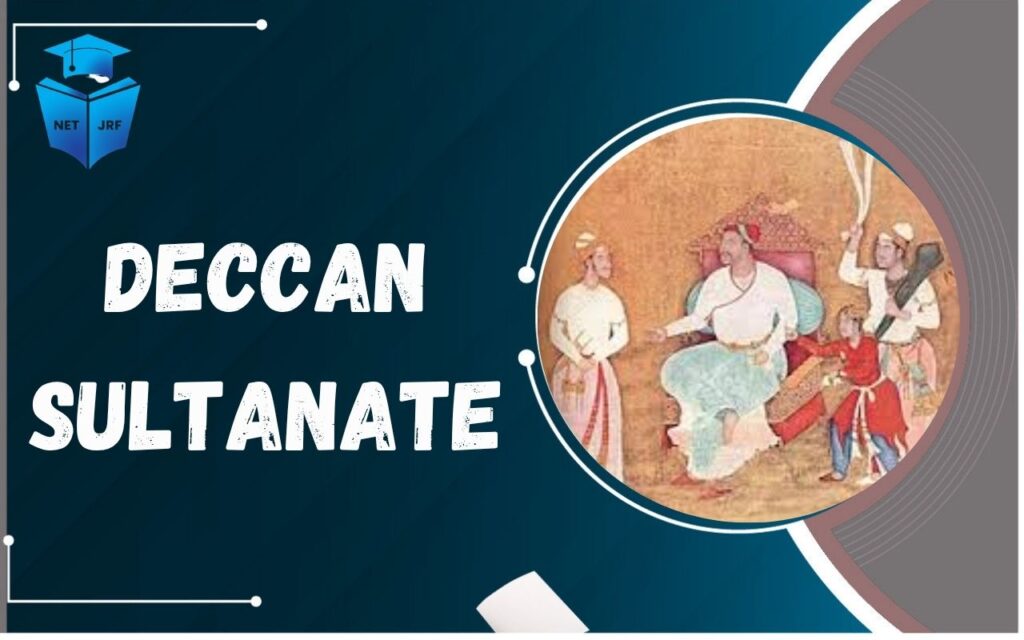

Deccan Sultanate refers to the five independent Muslim states that emerged in South-Central India following the collapse of the Bahmani Sultanate. These kingdoms thrived between the late 15th century and the late 17th century. They represent a golden era of cultural fusion, where Persian influences met local Indian traditions.

Studying the Deccan Sultanate provides essential insights into the political shift from the Bahmani era to Mughal dominance. These states controlled vast territories across the Deccan plateau. Their history involves intense rivalries, brilliant architecture, and unique literary developments like Dakhani Urdu.
Rise of Deccan Sultanate From Bahmani Ruins
The origins of the Deccan Sultanate lie in the slow disintegration of the Bahmani Sultanate during the 15th century. For years, the Bahmani rulers governed the Northern Deccan while the Vijayanagar Empire held the South. However, internal conflicts eventually tore the Bahmani state apart.
- Between 1490 and 1528, five provincial governors declared their independence. These leaders transformed their provinces into sovereign kingdoms.
- They established the Adil Shahi, Nizam Shahi, Imad Shahi, Qutb Shahi, and Barid Shahi dynasties.
- Each dynasty brought a unique flavour to the region. While they often fought each other, they shared a common Bahmani heritage.
- This heritage influenced their courtly manners, military strategies, and administrative styles.
- The fragmentation created a complex political map. These states had to balance their relationships with the powerful Vijayanagar Empire to the south and the growing Mughal threat to the north. Despite these pressures, the first century of their existence saw massive expansion and wealth.
Bijapur Sultanate and Adil Shahi Dynasty
The Bijapur branch of the Deccan Sultanate reached great heights under the Adil Shahi dynasty. Yusuf Adil Shah founded this state in 1490 after serving as a governor under the Bahmanis. His kingdom occupied the southwestern region of India, covering parts of modern-day Maharashtra and Karnataka.
- The Adil Shahis were famous for their military strength.
- They frequently engaged in battles with the Vijayanagar Empire over the fertile Raichur Doab region. In 1565, they joined forces with the other sultanates to win the Battle of Talikota, which permanently weakened Vijayanagar.
- Culturally, Bijapur became a hub for Indo-Islamic art. Rulers like Ibrahim Adil Shah II patronized music and painting.
- He even wrote the Kitab-i-Navras, a book on music. The state’s architecture remains some of the finest in India, blending Middle Eastern styles with local craft.
- However, the 17th century brought new challenges.
- The rising Maratha power under Chhatrapati Shivaji began capturing Bijapur’s territories. Eventually, the weakened state could not resist the Mughal emperor Aurangzeb. He finally annexed Bijapur in 1686, ending nearly two centuries of Adil Shahi rule.
Golconda Sultanate and Qutb Shahi Dynasty
Wealth defined the Golconda part of the Deccan Sultanate during its 171-year reign. Sultan Quli Qutb-ul-Mulk founded the Qutb Shahi dynasty in 1518. He originally migrated from Persia and served the Bahmanis before declaring independence.
- Golconda was world-famous for its diamond mines. This wealth allowed the sultans to build massive fortifications and beautiful monuments.
- In 1591, Muhammad Quli Qutb Shah founded the city of Hyderabad and built the iconic Charminar to mark the end of a plague.
- The Qutb Shahis also promoted the Telugu language and literature alongside Persian and Dakhani. Rulers like Muhammad Quli Qutb Shah were poets themselves.
- This cultural openness created a unique “Ganga-Jamuni” culture that still exists in Hyderabad today.
- Like its neighbors, Golconda faced constant Mughal aggression. Aurangzeb spent years trying to conquer the fortified city of Golconda.
- He finally succeeded in 1687 through a mix of military siege and internal betrayal. This victory marked the end of the last major Deccan sultanate.
Ahmadnagar Sultanate and Nizam Shahi Dynasty
- The Ahmadnagar line of the Deccan Sultanate fought bravely for its survival against northern invaders.
- Malik Ahmed Nizam Shah I established the dynasty in 1490 after defeating the Bahmani army. He later founded the city of Ahmednagar as his capital in 1494.
- This state held a strategic position between the sultanates of Gujarat and Bijapur.
- One of its most famous moments involved the heroic defense by Chand Bibi. She acted as regent and successfully repelled a massive Mughal attack in 1596.
- Despite such bravery, internal power struggles often weakened the state. Ministers like Malik Ambar tried to reorganize the administration and military to resist the Mughals.
- He even built the Janjira Fort in 1567 to protect the coastline from naval threats.
- The end came in 1636. Aurangzeb, serving as the Mughal viceroy of the Deccan at the time, finally overthrew the Nizam Shahi dynasty.
- The fall of Ahmednagar removed the first major barrier for the Mughals in their quest to dominate the South.
Top UGC NET Online Test Series
Bidar Sultanate and Barid Shahi Dynasty
Scholars view the Bidar portion of the Deccan Sultanate as the smallest but architecturally significant state. Qasim Barid I, a former Georgian slave, founded the Barid Shahi dynasty in 1528. He had previously acted as the de facto ruler of the dying Bahmani state.
- His son, Amir Barid, eventually became practically independent. Although small, Bidar participated in major regional events, including the Battle of Talikota in 1565. The rulers focused on creating intricate buildings within the Bidar Fort, such as the Rangin Mahal.
- Bidar also became famous for “Bidriware.” This unique metalwork involves inlaying silver and brass into a black zinc alloy. This craft still remains a prized traditional art form in India today.
- Bidar’s independence did not last long compared to its neighbors. The Bijapur Sultanate looked to expand its borders and eventually annexed Bidar in 1619. This annexation showed the intense rivalries that often existed between these five sister states.

Berar Sultanate and Imad Shahi Dynasty
The short-lived Berar state of the Deccan Sultanate ended early due to regional politics. Fathullah Imad-ul-Mulk founded the Imad Shahi dynasty in 1490. Interestingly, he was a kidnapped Kannadiga Hindu who rose to become a Bahmani governor before declaring independence.
- Berar faced constant pressure from its more powerful neighbor, Ahmednagar. While Alauddin Imad Shah sought help from the Sultan of Gujarat to resist attacks, the state remained vulnerable. Internal instability also plagued the dynasty after the death of Darya Imad Shah.
- In 1574, the Ahmednagar Sultanate finally annexed Berar. This made Berar the first of the five sultanates to lose its independence to another. Today, the Hauz Katora palace remains the only major surviving monument of this short-lived dynasty.
Deccan Sultanate Cultural and Architectural Achievements
Unique domes highlight the Deccan Sultanate: buildings and set them apart from Northern Mughal styles. These states developed a style called “Deccani Architecture.” It combined Persian elegance with the sturdy construction techniques of the South.
- Gol Gumbaz: Mohammed Adil Shah of Bijapur built this tomb. It features one of the largest unsupported domes in the world.
- Charminar: This “Four Minarets” structure in Hyderabad stands as a symbol of Qutb Shahi grandeur.
- Bidriware: Bidar artisans created this world-famous metalwork.
- Dakhani Urdu: This language evolved by blending Arabic, Persian, Marathi, Kannada, and Telugu. It became the literary voice of the region.
Literary growth in the Deccan Sultanate: produced famous poets like Muhammad Quli Qutb Shah. His work, the Kulliyat, explored themes of nature and love in the Dakhani language. This period also saw the flourish of Deccani miniature painting, which used vibrant colors and Persian influences.
The architectural legacy includes massive forts like Golconda and Ahmednagar. These forts used advanced water management systems and defensive walls. They show the engineering brilliance of the Deccani builders during this era.
Join UGC NET Offline Coaching in Jaipur
Founders of the Deccan Sultanate:
| Sultanate | Dynasty | Founder | Year Established |
| Bijapur | Adil Shahi | Yusuf Adil Shah | 1490 |
| Ahmednagar | Nizam Shahi | Malik Ahmed Nizam Shah I | 1490 |
| Berar | Imad Shahi | Fathullah Imad-ul-Mulk | 1490 |
| Golconda | Qutb Shahi | Sultan Quli Qutb-ul-Mulk | 1518 |
| Bidar | Barid Shahi | Qasim Barid I | 1528 |
Timeline Deccan Sultanate:
| Year | Event | Significance |
| 1490 | Independence of Bijapur, Ahmednagar, and Berar | Start of the multi-state Deccan system. |
| 1518 | Founding of Golconda Sultanate | Qutb Shahi dynasty begins its 171-year rule. |
| 1565 | Battle of Talikota | The Sultanates unite to defeat Vijayanagar. |
| 1574 | Annexation of Berar | Ahmednagar absorbs the Berar Sultanate. |
| 1591 | Completion of Charminar | Iconic monument built in Hyderabad. |
| 1619 | Annexation of Bidar | Bijapur absorbs the Bidar Sultanate. |
| 1636 | Fall of Ahmednagar | Mughals conquer the Nizam Shahi dynasty. |
| 1686 | Fall of Bijapur | Aurangzeb annexes the Adil Shahi dynasty. |
| 1687 | Fall of Golconda | Final major Sultanate falls to the Mughals. |
Deccan Sultanate Disintegration
Internal strife ruined the Deccan Sultanate from within before external enemies finished the job. Despite their 1565 victory at Talikota, the sultanates could never maintain a long-term alliance. They spent decades fighting each other for small pieces of land.
- Aurangzeb targeted the Deccan Sultanate for years during his long reign. He saw these states as obstacles to his goal of a unified Mughal India. Furthermore, the sultanates often supported the rising Maratha rebels, which angered the Mughal emperor.
- Weak governance and high taxes also played a role in the decline. Many sultanates suffered from economic hardship and could not pay their large armies. This made them easy targets for the well-organized Mughal military machine.
- By 1687, the map of the Deccan had changed forever. The independent sultanates disappeared, and the Mughals took direct control. However, this victory was short-lived as the Marathas soon began to challenge Mughal authority in the same region.
Important Facts for UGC NET Revision
the Deccan Sultanate: include several points that often appear in exams. Students should focus on these specific details for their preparation.
- The five sultanates collectively defeated the Vijayanagar Empire in 1565.
- Malik Ambar served as a famous prime minister of Ahmednagar.
- The Dakhani language served as a bridge between Northern and Southern cultures.
- Gol Gumbaz has one of the world’s largest unsupported domes.
- Aurangzeb personally led the campaigns against Bijapur and Golconda.
Deccan Sultanate help in fast recall during competitive tests.
- Smallest State: Bidar.
- First to fall: Berar (annexed by Ahmednagar).
- Famous female ruler: Chand Bibi of Ahmednagar.
- Major Trade: Diamonds from Golconda.
- Art Style: Deccani Miniature Painting.
Understanding the Deccan Sultanate remains vital for any student of Indian history. These five states created a bridge between the medieval and early modern periods. They fostered a unique culture that combined the best of Persian and Indian traditions. Their architecture, like the Gol Gumbaz and Charminar, continues to inspire awe today.
Enroll UGC NET Offline Classes in Jaipur
The rise of these kingdoms showed the strength of regional identity. While they eventually fell to the Mughal Empire, their influence never truly disappeared. They left a lasting mark on the language, art, and soul of the Deccan plateau. Their story teaches us about the power of cultural synthesis and the inevitable cycle of imperial rise and fall.