
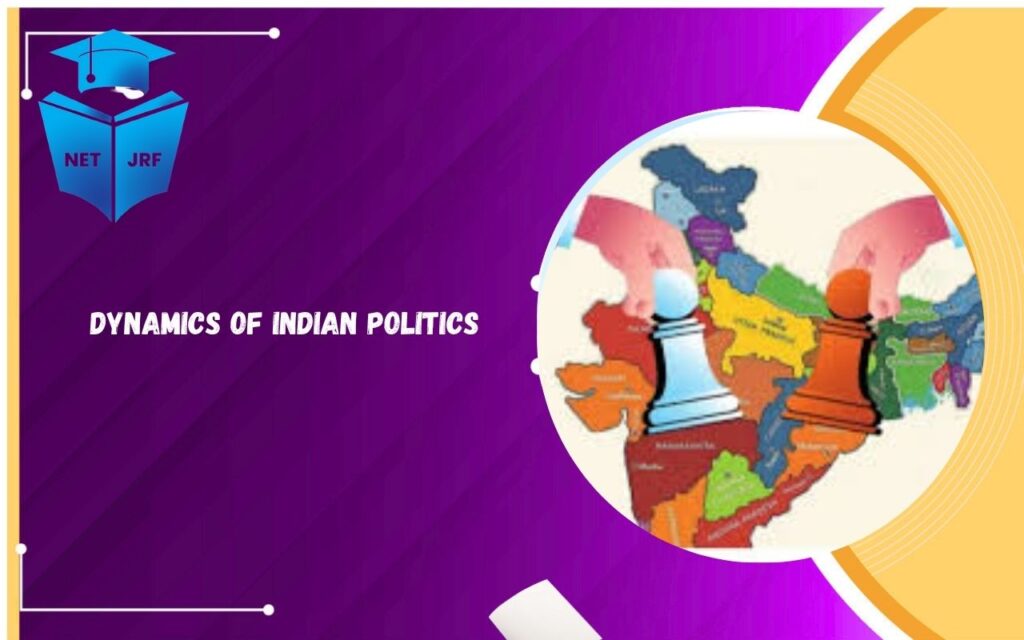
The Dynamics of Indian Politics covers how politics evolves with time, how different institutions and parties influence governance and how citizens shape and respond to political decisions. Indian politics is vibrant and complex due to its diversity, federal system, multiple parties, and coalition governments.

Political Structure of India
The Constitution and Political Framework
India is a federal republic where powers are divided between the central government and state governments. Each level has its own responsibilities under the Constitution.
- The President is the ceremonial head of state.
- The Prime Minister and Council of Ministers run the central government.
- State governments are led by Chief Ministers and councils.
- Local bodies like municipalities and panchayats handle grassroots governance.
This multi‑tier system assures that governance responds to national and local needs.
Enroll UGC NET Mock Test Series
Federalism
India’s federal structure gives states power to make decisions in many areas while the central government handles national issues. This balance means states have autonomy on issues like education and health, while national policies cover defence and foreign affairs. The relationship between the centre and states is key in the Dynamics of Indian Politics.
Election Commission Role
The Election Commission of India is an independent body that conducts free and fair elections at national, state and local levels. It sets rules for political campaigns, voter registration and election conduct. The body ensures democratic choice and competition among parties.
Party System in Indian Politics
Political parties are organized groups that compete in elections, offer policies to voters and form governments. They link citizens to the state and shape public debate. Parties recruit leaders, mobilize public support and formulate policy alternatives.
National and State Parties
India has a multi‑party system with parties of national and state importance.
Numbered List of Party Types:
- National Parties: Recognized in multiple states like BJP, Indian National Congress, BSP, CPI(M) and others.
- State Parties: Recognized within one state, like DMK in Tamil Nadu or Shiv Sena in Maharashtra.
- Unrecognised Parties: Registered with the Election Commission but without reserved symbols.
Political parties in India represent various social interests, regions, and ideologies reflecting the country’s diversity.
Major Political Parties
- Bharatiya Janata Party (BJP): A right‑leaning party based on nationalism and economic development; it follows a hierarchical organizational structure with national leadership and local committees.
- Indian National Congress (INC): One of the oldest parties with a centrist view and secular policies; it played a dominant role in early Indian politics and continues to be influential.
- Regional parties: Parties like DMK, AITC, and others represent local aspirations and have strong influence in their states.
Functions of Political Parties
- Run in elections and seek to win legislative seats.
- Form governments and make public policies.
- Recruit leaders and provide political leadership.
- Connect citizens with state policies and governance processes.
Enroll UGC NET Foundation Course
Electoral Politics and Campaigns
Elections are the backbone of Indian democracy. Political parties campaign across states to win support. They use manifestos to explain policy plans on jobs, welfare, education and security. Elections involve direct voting by citizens for representatives in the Lok Sabha (lower house) and state assemblies.

Coalition Politics
As India’s party system expanded, no single party often won clear majorities. This led to coalition governments where multiple parties work together to form the executive.
- Alliances like the National Democratic Alliance (NDA) led by BJP and the Indian National Developmental Inclusive Alliance (INDIA) led by Congress show how coalition politics influence governance.
- Coalitions require negotiation among diverse parties, which can affect policy outcomes and stability. Cooperation between central and regional parties has shaped governance since the 1990s.
Social Cleavages in Politics
India’s society is diverse with differences in caste, religion, language and region.
These social cleavages influence political behaviour and party strategies.
- Caste and religious identities often affect voting patterns and party alliances.
- Political parties mobilize voters based on these cleavages, leading to identity politics being a major feature of Indian elections. Understanding these dynamics is essential in the Dynamics of Indian Politics.
Governance and Policy Making
The Prime Minister leads the central government and advises the President. Ministers manage specific ministries like finance, health and education. Policies are made in the parliament and implemented by ministries.
-
Legislative Function
-
-
- The Parliament debates laws proposed by the government. Members of Parliament (MPs) discuss and vote on bills affecting citizens. Law‑making shapes national priorities.
-
-
Judicial Oversight
-
- The judiciary interprets the Constitution and reviews laws to protect rights. It acts as a check on the legislature and executive, ensuring rule of law.
Enroll UGC NET Offline Classes in Jaipur
Challenges in Indian Politics
Indian democracy faces several challenges that impact the Dynamics of Indian Politics:
- Dynastic Politics: Leadership often stays within political families, reducing internal party democracy.
- Fragmentation: Many small parties complicate governance and decision‑making.
- Caste and Religious Mobilization: Identity politics can divide voters and affect national unity.
- Coalition Instability: Alliances may shift, affecting government stability and long‑term planning.
Key Features of Indian Political System
| Feature | Explanation |
| Federal Structure | Power split between central and state governments |
| Multi‑Party System | Many political parties with national and regional roles |
| Election Commission | Independent body conducts elections |
| Coalition Politics | Parties form alliances to govern |
| Social Diversity Influence | Caste, religion shape political strategies |
Citizen Participation and Civil Society
Democracy thrives when citizens take part in politics. Civil society groups, youth organizations and student wings of parties influence public debate. Voter turnout and activism reflect how engaged citizens are in shaping policies and accountability.
Media and Politics
Mass media and social media shape public opinion, campaign messaging and political narratives. News outlets, debates, and campaign coverage affect how voters perceive parties and leaders.
Join UGC NET Coaching in Jaipur
Future of Indian Politics
The Dynamics of Indian Politics will continue evolving with changing demographics, economic priorities, youth participation, digital campaigning and shifting alliances. Emerging issues like employment, urbanisation, climate change and governance transparency will shape political debates in the coming decades.

Conclusion
In summary the Dynamics of Indian Politics reflects the ongoing interaction between society, parties, institutions and governance mechanisms. It shows how diverse voices compete for influence, how governments form, how policies are made, and how citizens shape the democratic process.
Dynamics of Indian Politics FAQs

How many types of political parties are there in India?
There are national parties, state parties and registered unrecognised parties as classified by the Election Commission.
What is coalition politics?
When multiple parties join forces to form a government due to no single party winning majority votes.
How does federalism shape politics in India?
Federalism splits power between central and state governments, creating negotiation in policy decisions.
Why is caste politics significant?
Caste identities influence voter preferences and party strategies during elections.
What role does the Election Commission play?
It conducts elections, sets rules for parties and oversees free and fair polling
How do citizens participate in politics?
Through voting, joining political movements, civil society groups and engaging in public debate.
What is a major challenge in Indian politics?
Internal party democracy often suffers due to dynastic leadership and lack of transparent selection.