
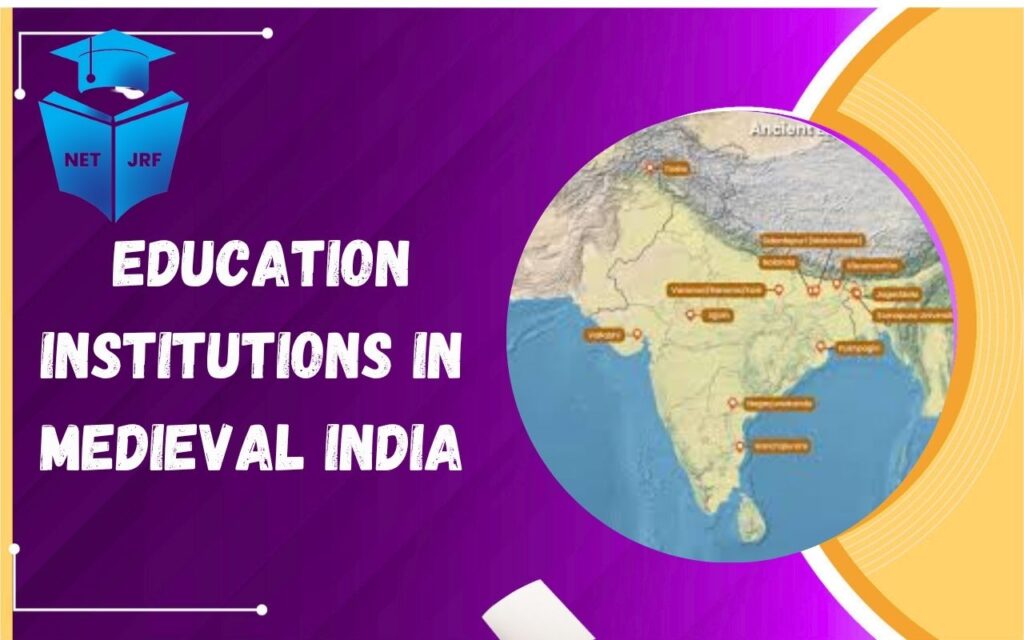

Education Institutions in Medieval India: Agraharas Mathas and Mahaviharas

Education institutions agraharas mathas and mahaviharas in this topic you learn how these centers functioned role of kings curriculum residential learning language growth and their impact on culture science and society in medieval India

vishal

Education Institutions in Medieval India

Table of Contents

Education and Educational Institutions Agraharas, Mathas and Mahaviharas as Centres of Education played a vital role in shaping the intellectual landscape of early medieval India. During this era, knowledge did not just live in books it lived in vibrant communities supported by kings and local leaders. These institutions served as the heartbeat of cultural and scientific progress. 

Study Planner
Early medieval India saw a shift from central empires to regional kingdoms. This change encouraged the growth of localized learning centers. Scholars taught subjects like grammar, philosophy, astronomy, and mathematics. These institutions did more than just teach religion; they acted as hubs for scientific advancement. 

Enroll UGC NET Online Coaching

Agraharas in Early Medieval India Definition and Role 

Agraharas represent one of the most important types of Education and Educational Institutions, Agraharas, Mathas and Mahaviharas. An Agrahara was essentially a village, or a piece of land, granted to Brahmins by kings. These grants allowed scholars to live without worrying about money. In return, these learned men dedicated their lives to teaching and performing religious duties.

  • In South India, the Chola and Pallava kings frequently established Agraharas. These settlements became centers of Vedic learning. Teachers focused on the Vedas, Upanishads, and Dharmashastras. 
  • However, the curriculum often included secular subjects like logic and medicine. Because the scholars lived together, they constantly debated new ideas, making the Agrahara a precursor to the modern residential university.
  • The impact of Agraharas reached beyond the classroom. They helped spread Brahminical traditions into remote areas. As these scholars interacted with local populations, a cultural exchange occurred. 
  • This interaction eventually helped regional identities grow stronger. Agraharas served as the foundation for the intellectual stability of the regional kingdoms in the Deccan and South India.

Mathas 

Mathas were another critical component of Education and Educational Institutions Agraharas, Mathas and Mahaviharas. Initially, Mathas functioned as monasteries for monks and ascetics. Over time, they evolved into powerful educational institutions. Different religious sects, such as Shaivites and Vaishnavites, established their own Mathas to spread their specific philosophies.

  • Famous philosophers like Shankaracharya, Ramanujacharya, and Madhavacharya established Mathas across the four corners of India. These centers did not just teach theology. 
  • They provided a space for students to study literature, grammar, and even statecraft. Unlike Agraharas, which were often exclusive to Brahmins, Mathas sometimes opened their doors to a wider range of students.
  • The Mathas acted as local schools for the community. They often sat within temple complexes, making them accessible to the public. These institutions provided free education, food, and shelter to students. 
  • This charitable aspect ensured that knowledge reached more people. The Mathas helped maintain the continuity of Indian philosophical thought during the rise and fall of various regional dynasties.

Mahaviharas

Mahaviharas stand out as the most organized part of Education Institutions. These were large Buddhist monasteries that functioned like modern international universities. The most famous example is Nalanda University in Bihar. These institutions attracted students from all over Asia, including China, Korea, and Tibet.

  • The Pala dynasty of Bengal and Bihar provided immense support to these Mahaviharas. Kings gave land and money to ensure these centers could house thousands of students and teachers. The curriculum at a Mahavihara was incredibly broad. 
  • While they focused on Buddhist philosophy, they also taught the Vedas, Hindu philosophy, logic, medicine, and astronomy.
  • A Mahavihara was a city of knowledge. It had massive libraries, lecture halls, and dormitories. 
  • Scholars like Xuanzang left detailed accounts of the rigorous entrance exams and the high level of debate found there. 
  • These centers proved that medieval India possessed a sophisticated and globalized education system. They remained the pinnacle of academic excellence until the late medieval period.

Enroll UGC NET Online Course

Educational Institutions Growth of Regional Languages

While Educational Institutions Agraharas, Mathas and Mahaviharas often used Sanskrit as the medium of instruction, they also paved the way for regional languages. 

  • As regional kingdoms emerged, local rulers wanted to promote their own culture. This led to a gradual shift away from the universal  language of Sanskrit toward languages like Tamil, Kannada, Telugu, and Bengali.
  • The Bhakti movement played a massive role in this linguistic shift. Saints and scholars began writing hymns and poems in the language of the common people. 
  • They wanted their religious messages to reach everyone, not just those who knew Sanskrit. This movement forced educational institutions to adapt. Mathas, in particular, became centers where regional literature flourished.
  • By the 10th century, we see a rich tradition of regional writing. The Pandyas fostered Tamil culture, while other dynasties supported the growth of Kannada and Marathi. 
  • This growth of regional languages allowed for a more inclusive education system. It made knowledge accessible to the masses and helped create the distinct cultural identities of modern Indian states.

App JRF Adda

Educational Institutions Exploring 

To truly understand Education and Educational Institutions Agraharas, Mathas and Mahaviharas, we must look at how they worked together. While Agraharas were small and rural, Mathas were community-focused, and Mahaviharas were international. 

  • Together, they created a layered system of learning that catered to different social and religious needs.
  • The administration of these centers was quite advanced. Most relied on land grants or “Dana.” This meant the institutions owned land and used the income from farming to pay for teachers and supplies. 
  • This economic independence allowed scholars to focus entirely on their research and teaching. This system ensured that education remained a priority even during times of political instability.
  • These institutions also influenced the social structure. They were often tied to the caste system, but they also provided a path for social mobility for some. 

Enroll UGC NET Coaching in Jaipur

Comparison Medieval Educational Institutions

Feature Agraharas Mathas Mahaviharas
Primary Focus Vedic Studies & Brahminical Rituals Religious Philosophy (Sectarian) Buddhist & Multi-disciplinary
Main Patronage Land grants to individuals Temple-based support Royal grants to monasteries
Student Base Mostly Brahmin students Monks & local community International & diverse
Key Example Ennayiram (South India) Sringeri Matha Nalanda, Vikramshila

Agraharas, Mathas and Mahaviharas as Centres of Education Timeline

The following table breaks down the timeline and features of these important centers.

Period Institutional Development Linguistic Shift
6th – 8th Century Rise of Agraharas under Pallavas/Chalukyas Sanskrit dominates official records
8th – 10th Century Growth of Mathas; Nalanda reaches peak Emergence of early regional literature
10th – 12th Century Decline of Mahaviharas; Rise of temple colleges Flowering of Tamil and Kannada Bhakti poetry

Key Features of Early Medieval Education

Most education took place within a religious framework, whether Hindu, Buddhist, or Jain.

  1. Royal Patronage: Kings provided land and wealth to sustain these institutions.
  2. Residential Learning: Students lived with their teachers in a Gurukula or monastic setting.
  3. Oral Tradition: Despite having large libraries, scholars still valued memorization and oral debate.
  4. Multi-disciplinary Curriculum: Institutions taught everything from grammar to astronomy and medicine.
  5. Economic Independence: Land grants ensured that education remained free for students.

JRF Adda Book

Conclusion

The study of Education and Educational Institutions Agraharas, Mathas and Mahaviharas reveals the brilliance of India’s medieval past. These centers were not just schools; they were the guardians of culture and science. They allowed various religious traditions to flourish and provided a stable environment for intellectual growth. The transition from Sanskrit to regional languages during this time laid the groundwork for the modern linguistic map of India.

Enroll UGC NET Offline Coaching in Jaipur

Read UGC NET Notes
1 Archaeological Sources for UGC NET Epigraphy – Study of Inscriptions Meaning of Historical Sources Archaeological
2 Meaning of Historical Sources Archaeological Sources for UGC NET Literary Sources in History Archaeological
3 Exploration in Archaeology Excavation Techniques in Archaeology Dating of Archaeological Sites Archaeological
4 Excavation Techniques in Archaeology Exploration in Archaeology Dating of Archaeological Sites Archaeological
5 Epigraphy – Study of Inscriptions Inscriptions in Reconstructing History Numismatics in History Archaeological
6 Inscriptions in Reconstructing History Epigraphy – Study of Inscriptions Archaeological Sources for UGC NET Archaeological
7 Numismatics in History Importance of Coins in History Epigraphy – Study of Inscriptions Archaeological
8 Importance of Coins in History Numismatics in History Archaeological Sources for UGC NET Archaeological
9 Dating of Archaeological Sites Excavation Techniques in Archaeology Dating Ancient Literary Sources Archaeological
10 Indigenous Literature Literary Sources in History Secular Literature as Historical Source Literary
11 Dating Ancient Literary Sources Literary Sources in History Dating of Archaeological Sites Literary
12 Literary Sources in History Indigenous Literature Foreign Accounts of India Literary
13 Foreign Accounts of India Greek Accounts on Ancient India Chinese Accounts on India Literary
14 Greek Accounts on Ancient India Foreign Accounts of India Chinese Accounts on India Literary
15 Secular Literature as Historical Source Literary Sources in History Indigenous Literature Literary
16 Role of Myths and Legends in Historical Reconstruction Literary Sources in History Secular Literature as Historical Source Literary
17 Chinese Accounts on India Foreign Accounts of India Greek Accounts on Ancient India Literary
18 Arabic Accounts on India Foreign Accounts of India Chinese Accounts on India Literary
19 Neolithic and Chalcolithic Phases Neolithic Revolution in India Chalcolithic Culture in India Neolithic
20 Hunting, Gathering & Food Production Neolithic Revolution in India Neolithic Settlements in India Neolithic
21 Neolithic Revolution in India Neolithic Settlements in India Tools and Technology in Neolithic Period Neolithic
22 Neolithic Settlements in India Distribution of Neolithic Cultures in India Neolithic Revolution in India Neolithic
23 Distribution of Neolithic Cultures in India Neolithic Settlements in India Tools and Technology in Neolithic Period Neolithic
24 Tools and Technology in Neolithic Period Neolithic Revolution in India Chalcolithic Culture in India Neolithic
25 Chalcolithic Culture in India Settlement Pattern & Economy in Chalcolithic Phase Trade & Exchange Networks in Chalcolithic Societies Neolithic
26 Settlement Pattern & Economy – Chalcolithic Phase Chalcolithic Culture in India Trade & Exchange Networks in Chalcolithic Societies Neolithic
27 Trade & Exchange Networks – Chalcolithic Societies Chalcolithic Culture in India IVC Internal & External Trade Neolithic
28 Indus Valley Civilization – UGC NET Major Sites of Indus Civilization Urban Planning in Harappan Civilization IVC
29 IVC Internal & External Trade Internal Trade – Harappan Civilization Craft Specialization in Harappan Civilization IVC
30 Political Organization – Harappan Civilization Social Structure – Indus Civilization Urban Planning in Harappan Civilization IVC
31 Major Sites of Indus Civilization Indus Valley Civilization – UGC NET Urban Planning in Harappan Civilization IVC
32 Urban Planning & Settlement – Harappan Civilization Architecture & Town Planning – Harappan Cities IVC as First Urbanization in India IVC
33 Architecture & Town Planning – Harappan Cities Urban Planning in Harappan Civilization Major Sites of Indus Civilization IVC
34 Craft Specialization & Industrial Activities – Harappan Agriculture & Food Economy – Harappans IVC Internal & External Trade IVC
35 Agriculture & Food Economy – Harappans Craft Specialization in Harappan Civilization Internal Trade – Harappan Civilization IVC
36 Internal Trade – Harappan Civilization IVC Internal & External Trade Craft Specialization in Harappan Civilization IVC
37 Religion & Beliefs – Indus Civilization Social Structure – Indus Civilization Indus Valley Civilization – UGC NET IVC
38 Social Structure – Indus Civilization Political Organization – Harappan Civilization Religion & Beliefs – Indus Civilization IVC
39 Decline of Indus Civilization Indus Valley Civilization – UGC NET IVC as First Urbanization in India IVC
40 IVC as First Urbanization in India Urban Planning in Harappan Civilization Second Urbanization in India IVC
41 Vedic & Later Vedic Periods – Aryan Varna System Early Vedic Society and Economy Later Vedic Society and Economy Vedic
42 Origin of Vedic Civilization Aryan Debate – Migration, Invasion & Indigenous Theories Early Vedic Society and Economy Vedic
43 Aryan Debate – Migration, Invasion & Indigenous Theories Origin of Vedic Civilization Early Vedic Society and Economy Vedic
44 Early Vedic Society and Economy Political Institutions – Early Vedic Period Social Structure – Early Vedic Period Vedic
45 Political Institutions – Early Vedic Period Early Vedic Society and Economy Monarchical States in Ancient India Vedic
46 Social Structure – Early Vedic Period Emergence of Varnas & Social Stratification Early Vedic Society and Economy Vedic
47 Later Vedic Society and Economy Emergence of Varnas & Social Stratification Impact of Iron Technology in India Vedic
48 Emergence of Varnas & Social Stratification Social Structure – Early Vedic Period Later Vedic Society and Economy Vedic
49 Emergence of Heterodox Sects in India Jainism, Buddhism & Ajivikas – Origins & Teachings Later Vedic Society and Economy Vedic
50 Impact of Iron Technology in India Later Vedic Society and Economy Agricultural Expansion & Economic Changes – Ancient India Vedic
51 Religious & Philosophical Vedic Ideas Emergence of Varnas & Social Stratification Emergence of Heterodox Sects in India Vedic
52 Megalithic Culture of South India Neolithic and Chalcolithic Phases Agricultural Expansion & Economic Changes General
53 State System in Ancient India Rise of Mahajanapadas Transition: Tribal Polities to Territorial States General
54 Transition: Tribal Polities to Territorial States Rise of Mahajanapadas Later Vedic Society and Economy General
55 Rise of Mahajanapadas Monarchical States in Ancient India Republican States (Gana-Sanghas) – Ancient India Magadha
56 Monarchical States in Ancient India Rise of Mahajanapadas Emergence of Magadha Magadha
57 Republican States (Gana-Sanghas) – Ancient India Rise of Mahajanapadas Monarchical States in Ancient India Magadha
58 Agricultural Expansion & Economic Changes – Ancient India Second Urbanization in India Impact of Iron Technology in India General
59 Second Urbanization in India IVC as First Urbanization in India Rise of Mahajanapadas General
60 Jainism, Buddhism & Ajivikas – Origins & Teachings Emergence of Heterodox Sects in India Ashoka’s Policy of Dhamma General
61 Emergence of Magadha Geographical Advantages of Magadha Early Rulers of Magadha Magadha
62 Geographical Advantages of Magadha Natural Resources & Economic Strength of Magadha Reasons for Success of Magadha Magadha
63 Natural Resources & Economic Strength of Magadha Geographical Advantages of Magadha Economic Policies of the Nandas Magadha
64 Early Rulers of Magadha Haryanka Dynasty – Rise of Magadha Emergence of Magadha Magadha
65 Haryanka Dynasty – Rise of Magadha Expansion Policy of Bimbisara Early Rulers of Magadha Magadha
66 Expansion Policy of Bimbisara Ajatashatru – Military Reforms Haryanka Dynasty – Rise of Magadha Magadha
67 Ajatashatru – Military Reforms Wars of Ajatashatru Expansion Policy of Bimbisara Magadha
68 Wars of Ajatashatru Ajatashatru – Military Reforms Udayin & Establishment of Pataliputra Magadha
69 Udayin & Establishment of Pataliputra Wars of Ajatashatru Shishunaga Dynasty Magadha
70 Shishunaga Dynasty Administrative Structure of the Shishunagas Nanda Dynasty Magadha
71 Administrative Structure of the Shishunagas Shishunaga Dynasty Central Administration Under Mauryas Magadha
72 Nanda Dynasty Mahapadma Nanda – Imperial Expansion Shishunaga Dynasty Magadha
73 Mahapadma Nanda – Imperial Expansion Military Strength of the Nandas Nanda Dynasty Magadha
74 Economic Policies of the Nandas Nanda Dynasty Taxation System – Mauryan State Magadha
75 Military Strength of the Nandas Mahapadma Nanda – Imperial Expansion Defeat of Nandas & Rise of Mauryan Empire Magadha
76 Reasons for Success of Magadha Geographical Advantages of Magadha Natural Resources & Economic Strength of Magadha Magadha
77 Mahajanapadas to Empire – Evolution & Rise of Magadha Rise of Mahajanapadas Emergence of Magadha Magadha
78 Mauryan Empire – Expansion Rise of Chandragupta Maurya Expansion of Mauryan Empire Maurya
79 Rise of Chandragupta Maurya Role of Chanakya in Rise of Mauryan Empire Defeat of Nandas & Rise of Mauryan Empire Maurya
80 Role of Chanakya in Rise of Mauryan Empire Rise of Chandragupta Maurya Defeat of Nandas & Rise of Mauryan Empire Maurya
81 Defeat of Nandas & Rise of Mauryan Empire Military Strength of the Nandas Rise of Chandragupta Maurya Maurya
82 Chandragupta Maurya – Seleucus Treaty & Diplomacy Expansion of Mauryan Empire Greek Accounts on Ancient India Maurya
83 Expansion of Mauryan Empire Chandragupta Maurya – Seleucus Treaty & Diplomacy Kalinga War Maurya
84 Administration of Chandragupta Maurya Central Administration Under Mauryas Mauryan Bureaucracy Maurya
85 Sources for Mauryan History Archaeological Sources for UGC NET Greek Accounts on Ancient India Maurya
86 Central Administration Under Mauryas Provincial Administration – Mauryan Empire Mauryan Bureaucracy Maurya
87 Provincial Administration – Mauryan Empire Local Administration – Mauryan Empire Central Administration Under Mauryas Maurya
88 Local Administration – Mauryan Empire Provincial Administration – Mauryan Empire Mauryan Bureaucracy Maurya
89 Mauryan Bureaucracy Central Administration Under Mauryas Espionage System – Mauryan Empire Maurya
90 Espionage System – Mauryan Empire Mauryan Bureaucracy Central Administration Under Mauryas Maurya
91 Ancient India – Trade and Commerce Trade and Commerce Under Mauryas Agrarian Economy – Mauryan Period Maurya
92 Agrarian Economy – Mauryan Period Taxation System – Mauryan State Trade and Commerce Under Mauryas Maurya
93 Trade and Commerce Under Mauryas Ancient India – Trade and Commerce Agrarian Economy – Mauryan Period Maurya
94 Taxation System – Mauryan State Agrarian Economy – Mauryan Period Economic Policies of the Nandas Maurya
95 Kalinga War Ashoka’s Policy of Dhamma Expansion of Mauryan Empire Maurya
96 Ashoka’s Policy of Dhamma Nature & Philosophy of Dhamma Kalinga War Maurya
97 Nature & Philosophy of Dhamma Ashoka’s Policy of Dhamma Jainism, Buddhism & Ajivikas Maurya

Education and Educational Institutions Agraharas, Mathas and Mahaviharas FAQs

Loader image

Students studied Buddhist philosophy, the Vedas, logic, grammar, medicine, and astronomy.

Agraharas were villages granted to scholars for Vedic living, while Mathas were specific monastic institutions focused on sect-based philosophy.

Regional languages grew because of the Bhakti movement and because local kings wanted to promote their unique cultural identities.

Yes, Nalanda is the most famous example of a Mahavihara and functioned as a global university.

The decline of central authority led to the rise of regional kingdoms, which patronized local institutions and languages.

The Pala dynasty is famous for its patronage of Buddhist institutions like Nalanda and Vikramshila.

Leave a Reply

Recent Posts
Aditi

Aditi Sharma, founder of JRFAdda, is a Computer Science educator with an MCA degree and JRF qualification (99.91 percentile, Dec 2019). Her experience includes roles as an SBI SO (DBA), work at Cognizant, and over 5 years of teaching online and offline. She has also served as a Government Computer Teacher in Rajasthan.