
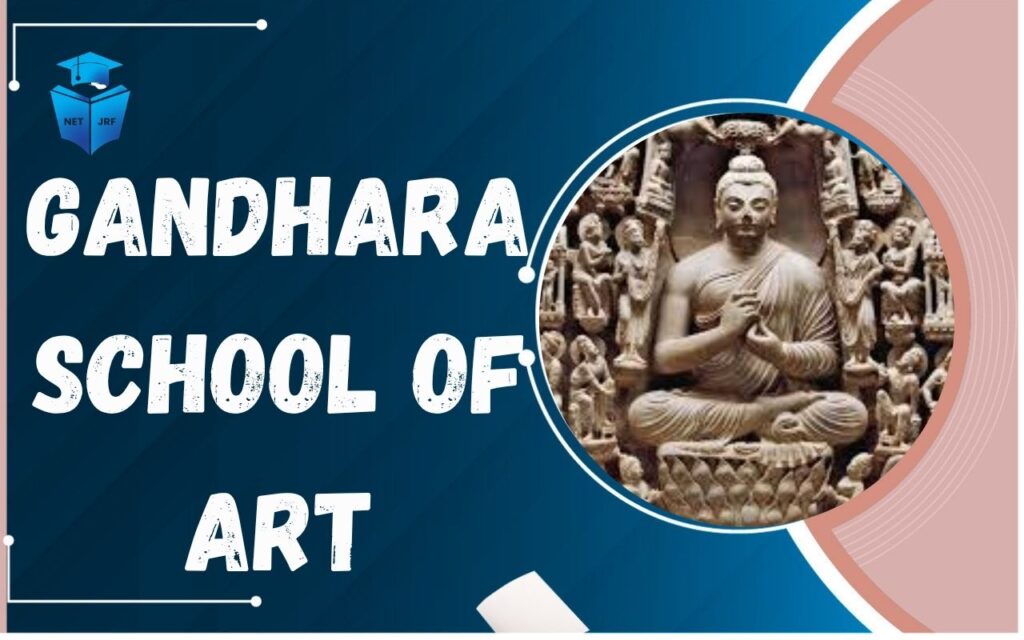

Gandhara school of art is one of the most fascinating topics in ancient Indian history because it shows how different cultures came together to create something unique. This art style developed in the northwestern region of the Indian subcontinent and became famous for its realistic sculptures of Buddha.

When we study Gandhara school of art, we notice a strong mix of Indian spiritual ideas with Greek and Roman artistic techniques.
Introduction to Gandhara Art Tradition
The Gandhara school of art developed in the ancient region of Gandhara, which included areas of present-day Pakistan and Afghanistan. Important centers like Taxila and Peshawar became major hubs of artistic activity.
This region was located on important trade routes, which allowed interaction between Indian, Greek, and Central Asian cultures. Because of this, the Gandhara school of art became a perfect example of cultural blending.
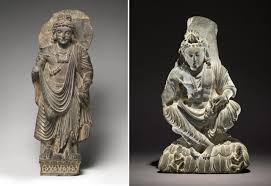
Historical Background of Gandhara Art
Kushan Period and Royal Patronage
The Gandhara school of art flourished mainly during the Kushan Empire between the 1st and 3rd century CE.
- King Kanishka played a major role in promoting Buddhism
- Artists received royal support
- Buddhist monasteries became centers of art
This period is considered the golden phase of the Gandhara school of art because of strong political support and economic growth.
Influence of Foreign Cultures
One of the most striking features of the Gandhara school of art is its foreign influence.
- Greek artists introduced realistic human figures
- Roman styles influenced drapery and decoration
- Persian elements appeared in design patterns
Because of these influences, the Gandhara school of art looks very different from other Indian art forms.
Key Features of Gandhara Art
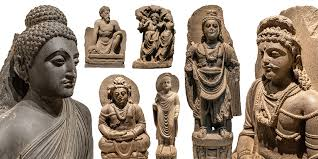
The Gandhara school of art has several unique features that make it easy to identify.
Material Used
Artists mainly used grey schist stone.
- This stone allowed fine carving
- It gave a smooth finish
- It helped in creating detailed sculptures
The use of this material became a defining feature of the Gandhara school of art.
Realistic Representation
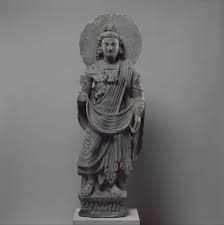
- Human body shown with proper proportion
- Muscles and facial expressions clearly visible
- Natural look instead of symbolic form
This realism clearly reflects the influence of Western art on the Gandhara school of art.
Drapery Style
- Clothes shown with deep folds
- Style looks similar to Roman dress
- Garments appear heavy and layered
This detailed drapery style is one of the most recognizable features of the Gandhara school of art.
Image of Buddha
One of the biggest contributions:
- Buddha shown in human form
- Calm face with spiritual expression
- Wavy hair and halo around head
Earlier, Buddha was represented through symbols, but the Gandhara school of art introduced the human image.
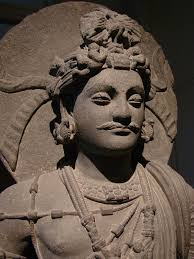
Gandhara school of art Overview
The Gandhara School of Art flourished between the 1st century BCE and 5th century CE in the region that now covers northwestern Pakistan and eastern Afghanistan. It is one of the most important early artistic expressions of Buddhism and is famous for combining Indian and Greco-Roman artistic traditions.
Join UGC NET Offline Classes in Jaipur
| Feature | Description |
| Gandhara school of art | Blend of Indian Greek Roman styles |
| Time Period | 1st to 3rd century CE |
| Region | Northwest India Pakistan Afghanistan |
| Material | Grey schist stone |
| Main Theme | Buddhism |
| Style | Realistic human figures |

Themes Depicted in Gandhara Art
The Gandhara school of art mainly focused on Buddhist themes.
Common Subjects
- Life events of Buddha
- Birth, enlightenment, and nirvana
- Jataka stories showing past lives
- Bodhisattvas as royal figures
These themes highlight the religious importance of the Gandhara school of art.
Important Sculptures and Figures
Buddha Sculptures
- Standing Buddha with calm expression
- Seated Buddha in meditation
- Reclining Buddha showing nirvana
Bodhisattva Figures
- Decorated with ornaments
- Wearing crowns and jewelry
- Represent compassion and help
These sculptures show the artistic excellence of the Gandhara school of art.
Comparison with Mathura School of Art
The Gandhara school of art is often compared with Mathura art to understand differences.
Key Differences
- Gandhara uses grey stone while Mathura uses red sandstone
- Gandhara shows foreign influence while Mathura shows Indian tradition
- Gandhara focuses on realism while Mathura focuses on symbolic style
- Gandhara Buddha has wavy hair while Mathura Buddha has simple hair
This comparison helps students clearly understand the identity of the Gandhara school of art.
Role of Trade and Cultural Interaction
Trade played a major role in shaping the Gandhara school of art.
How Trade Helped
- Silk Route connected many regions
- Traders brought new ideas and techniques
- Artists learned from foreign styles
Because of this interaction, the Gandhara school of art became a global art style.
Architecture and Monasteries
The Gandhara school of art was not limited to sculptures.
Architectural Features
- Buddhist monasteries called viharas
- Stupas decorated with sculptures
- Prayer halls with artistic carvings
These structures show how the Gandhara school of art influenced architecture as well.
Decline of Gandhara Art
The Gandhara school of art declined after the fall of the Kushan Empire.
Reasons for Decline
- Weak political control
- Decline in trade routes
- Reduced support for Buddhist institutions
Even after decline, the Gandhara school of art continued to influence other regions.
Legacy and Influence
The Gandhara school of art left a strong legacy.
Long Term Impact
- Spread of Buddha images across Asia
- Influence on Central Asian and Chinese art
- Development of Buddhist iconography
This lasting impact shows the importance of the Gandhara school of art in world history.
Best UGC NET Offline Classes in Jaipur
Conclusion
The Gandhara school of art represents a perfect example of cultural fusion in ancient India. It combined Indian religious ideas with Greek realism to create a new artistic tradition. This art form played a key role in shaping Buddhist imagery and spreading it across different regions.