
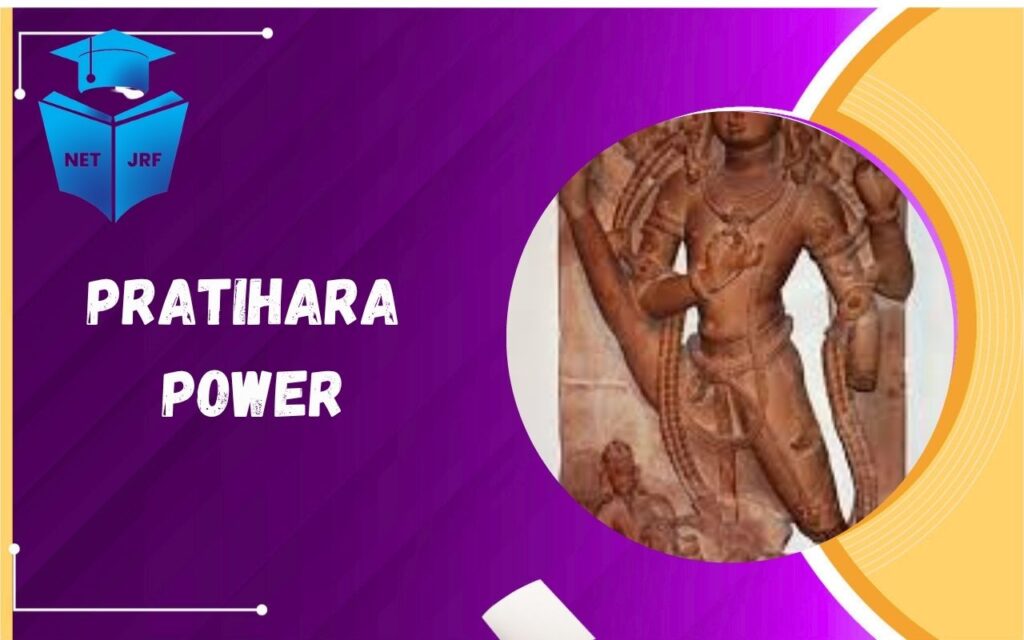

Nagabhata and Expansion of Pratihara Power: Tripartite Struggle, Military, Defense Systems

Nagabhata and expansion of Pratihara power in this topic you learn how Nagabhata built the Pratihara kingdom defeated Arab invasions expanded territory strengthened military administration economy and laid the base for imperial power in north India

vishal

Pratihara Power

Table of Contents

Nagabhata and expansion of Pratihara power marked the beginning of one of medieval India’s most influential empires, shaping politics, military defense, and cultural identity in northern India. The rise of the Pratiharas under Nagabhata I set the stage for a powerful dynasty that not only created a resilient kingdom but also defended India’s western frontiers against foreign invasions. 

Study Planner

Early Life Pratihara Dynasty

Nagabhata I, who ruled around 730 CE to 760 CE, is credited as the founder of the Imperial Gurjara‑Pratihara dynasty in northern India.

  • Scholars believe he ascended the throne around 730 CE in the region of Avanti (present‑day Malwa), which became the early power base of the Pratiharas.
  • The Gwalior inscription of his descendant Mihira Bhoja traces the dynasty’s legendary origin to the hero Lakshmana, but historical sources place Nagabhata as the first significant ruler. His family likely had roots in Ujjain and Avanti before consolidating their power. 
  • Nagabhata’s early rule saw the Pratiharas expand from a small kingdom into a regional power by defeating local rivals and establishing authority in central India. His military leadership and strategic alliances enabled him to unify surrounding territories, setting a strong foundation for future expansion.

Enroll UGC NET Offline Classes in Jaipur

Nagabhata and Expansion of Pratihara Power

Nagabhata and expansion of Pratihara power began with decisive military victories in key regions. 

  • One of his most significant achievements was repelling multiple Arab invasions from the northwest, particularly from Sindh, where Arab forces sought to push further into India. The Arab army, led by commanders like Junaid and Tamin, had made early inroads into Indian territory, but Nagabhata’s forces defeated them, securing stability in the region and stopping further advances. 
  • This victory was critical because it protected the Indian heartland from foreign domination and preserved cultural and political autonomy. 
  • His success earned the Pratiharas a reputation as the shield of north India against external threats. 

Territorial Expansion

  • Nagabhata expanded the Pratihara domain by conquering parts of Malwa and Gujarat, stretching his control east and south from Mandor. 
  • He established his authority over these prosperous regions, enhancing trade routes and strengthening agricultural production. 
  • Although he faced opposition from powerful neighbours like the Rashtrakutas, especially from their ruler Dantidurga, who briefly defeated him in Malwa, Nagabhata’s expansion laid the groundwork for future rulers. 
  • This early territorial gain set a precedent for further conquests under his successors. 

Nagabhata Consolidation of Administration

Nagabhata and expansion of Pratihara power was matched with administrative consolidation. As he extended his influence, he established a structured governance system that balanced local authority with centralized control.

  • Capital Establishment: Initially, the capital was in Ujjain and later moved strategically as new regions were controlled. 
  • Provincial Rule: Territories were governed by trusted nobles and officers who reported to the king, ensuring uniform governance across distant regions.
  • Military Officers: Commanders were appointed to oversee defense, especially in frontier zones threatened by invasions.

This structure helped stabilize Pratihara authority and maintain territorial integrity. Efficient governance systems allowed the dynasty to build wealth, conduct diplomacy, and sustain long‑term influence.

Join UGC NET Coaching in Jaipur

Tripartite Struggle 

Although Nagabhata I laid the foundations, his successors continued the expansion of Pratihara power and entered broader conflicts with contemporary dynasties. 

  • The most notable was the Tripartite Struggle, a prolonged power contest among the Pratiharas, the Palas of Bengal, and the Rashtrakuta Empire over the control of Kannauj. 
  • This struggle shaped medieval politics, as all three powers sought dominance over the fertile Indo‑Gangetic plains. 
  • While Nagabhata himself was not heavily involved in the later stages, his legacy and groundwork enabled his heirs to engage in these conflicts with confidence and resources. His successors like Nagabhata II and Mihira Bhoja further extended the empire and fought to maintain Pratihara dominance. 

App JRF Adda

Nagabhata Military and Defense Systems

Nagabhata and expansion of Pratihara power was deeply tied to strong military organization. His army comprised infantry, cavalry, and war elephants, which were vital in both defensive and offensive campaigns.

  • Strategic fortifications were constructed to protect key towns.
  • Frontier areas were constantly patrolled to prevent foreign incursions.
  • Alliances with local chieftains and warrior classes strengthened battlefield effectiveness.

This disciplined military was crucial in maintaining control over conquered territories and securing trade routes essential for economic prosperity.

Enroll UGC NET Mock Test Series

Nagabhata  Economic Foundations of Expansion

The growth of Pratihara power under Nagabhata was not only military but also economic. Fertile lands of Malwa, Gujarat, and later central India generated agricultural surplus which supported population growth and trade.

  • Agriculture: Surplus crops ensured food security and generated surplus tax revenue.
  • Trade: Internal and external trade routes flourished, connecting north India with western ports.
  • Taxation: Efficient tax systems funded defense, public works, and royal patronage.

This economic strength gave the Pratiharas resources to sustain long campaigns and support a large standing army, making expansion feasible and enduring.

Nagabhata  Social and Cultural Impact

Nagabhata and expansion of Pratihara power influenced society culturally as well. While details on cultural patronage during his reign are not abundant, the dynasty under his successors became known for supporting art, literature, and temple architecture.

  • The Pratihara rulers became patrons of Sanskrit literature and regional arts. 
  • Religious centers and temples gained support from royal grants, fostering cultural growth.
  • Integration of diverse communities into the kingdom helped in maintaining social harmony.

His victories against foreign forces also inspired confidence among local populations, reinforcing a sense of identity and continuity.

Nagabhata Early Pratihara Expansion

Nagabhata I was the founder of the Gurjara-Pratihara Dynasty and played a crucial role in laying the foundation of Pratihara power in early medieval India.

Phase Achievement Importance
Arab Resistance Defeated Arab incursions in Rajasthan area Secured northern frontier from foreign domination
Territorial Gains Controlled Malwa and parts of Gujarat Strengthened economic base and expanded influence
Administrative Setup Established centralized governance with provincial officers Maintained law, order, and stability
Military Organization Built trained army with forts, cavalry Protected kingdom and supported expansion
Foundation for Successors Laid groundwork for Tripartite Struggle participation Ensured future rulers could contest Kannauj

Nagabhata Successors

Towards the end of his reign, Nagabhata laid the foundation for his grandnephews and successors. Although his direct successors struggled initially, his achievements inspired future efforts to capture strategic centers like Kannauj and expand Pratihara influence across northern India. 

Nagabhata’s legacy lived on as later rulers like Nagabhata II revived the dynasty’s fortunes, fought against the Palas and Rashtrakutas, and helped establish the Pratiharas as a major power in the Indian subcontinent. 

Enroll UGC NET Online Test Series

JRF Adda Book

Conclusion

Nagabhata and expansion of Pratihara power laid the foundations of one of medieval India’s most significant empires. His military victories against foreign invasions, territorial consolidation, and administrative setup allowed his successors to build a thriving kingdom. By defending the northwestern frontier, strengthening economic systems, and preparing future leadership, Nagabhata ensured that the Pratihara dynasty would remain a central political force in Indian history. 

Read UGC NET Notes
1 Archaeological Sources for UGC NET Epigraphy – Study of Inscriptions Meaning of Historical Sources Archaeological
2 Meaning of Historical Sources Archaeological Sources for UGC NET Literary Sources in History Archaeological
3 Exploration in Archaeology Excavation Techniques in Archaeology Dating of Archaeological Sites Archaeological
4 Excavation Techniques in Archaeology Exploration in Archaeology Dating of Archaeological Sites Archaeological
5 Epigraphy – Study of Inscriptions Inscriptions in Reconstructing History Numismatics in History Archaeological
6 Inscriptions in Reconstructing History Epigraphy – Study of Inscriptions Archaeological Sources for UGC NET Archaeological
7 Numismatics in History Importance of Coins in History Epigraphy – Study of Inscriptions Archaeological
8 Importance of Coins in History Numismatics in History Archaeological Sources for UGC NET Archaeological
9 Dating of Archaeological Sites Excavation Techniques in Archaeology Dating Ancient Literary Sources Archaeological
10 Indigenous Literature Literary Sources in History Secular Literature as Historical Source Literary
11 Dating Ancient Literary Sources Literary Sources in History Dating of Archaeological Sites Literary
12 Literary Sources in History Indigenous Literature Foreign Accounts of India Literary
13 Foreign Accounts of India Greek Accounts on Ancient India Chinese Accounts on India Literary
14 Greek Accounts on Ancient India Foreign Accounts of India Chinese Accounts on India Literary
15 Secular Literature as Historical Source Literary Sources in History Indigenous Literature Literary
16 Role of Myths and Legends in Historical Reconstruction Literary Sources in History Secular Literature as Historical Source Literary
17 Chinese Accounts on India Foreign Accounts of India Greek Accounts on Ancient India Literary
18 Arabic Accounts on India Foreign Accounts of India Chinese Accounts on India Literary
19 Neolithic and Chalcolithic Phases Neolithic Revolution in India Chalcolithic Culture in India Neolithic
20 Hunting, Gathering & Food Production Neolithic Revolution in India Neolithic Settlements in India Neolithic
21 Neolithic Revolution in India Neolithic Settlements in India Tools and Technology in Neolithic Period Neolithic
22 Neolithic Settlements in India Distribution of Neolithic Cultures in India Neolithic Revolution in India Neolithic
23 Distribution of Neolithic Cultures in India Neolithic Settlements in India Tools and Technology in Neolithic Period Neolithic
24 Tools and Technology in Neolithic Period Neolithic Revolution in India Chalcolithic Culture in India Neolithic
25 Chalcolithic Culture in India Settlement Pattern & Economy in Chalcolithic Phase Trade & Exchange Networks in Chalcolithic Societies Neolithic
26 Settlement Pattern & Economy – Chalcolithic Phase Chalcolithic Culture in India Trade & Exchange Networks in Chalcolithic Societies Neolithic
27 Trade & Exchange Networks – Chalcolithic Societies Chalcolithic Culture in India IVC Internal & External Trade Neolithic
28 Indus Valley Civilization – UGC NET Major Sites of Indus Civilization Urban Planning in Harappan Civilization IVC
29 IVC Internal & External Trade Internal Trade – Harappan Civilization Craft Specialization in Harappan Civilization IVC
30 Political Organization – Harappan Civilization Social Structure – Indus Civilization Urban Planning in Harappan Civilization IVC
31 Major Sites of Indus Civilization Indus Valley Civilization – UGC NET Urban Planning in Harappan Civilization IVC
32 Urban Planning & Settlement – Harappan Civilization Architecture & Town Planning – Harappan Cities IVC as First Urbanization in India IVC
33 Architecture & Town Planning – Harappan Cities Urban Planning in Harappan Civilization Major Sites of Indus Civilization IVC
34 Craft Specialization & Industrial Activities – Harappan Agriculture & Food Economy – Harappans IVC Internal & External Trade IVC
35 Agriculture & Food Economy – Harappans Craft Specialization in Harappan Civilization Internal Trade – Harappan Civilization IVC
36 Internal Trade – Harappan Civilization IVC Internal & External Trade Craft Specialization in Harappan Civilization IVC
37 Religion & Beliefs – Indus Civilization Social Structure – Indus Civilization Indus Valley Civilization – UGC NET IVC
38 Social Structure – Indus Civilization Political Organization – Harappan Civilization Religion & Beliefs – Indus Civilization IVC
39 Decline of Indus Civilization Indus Valley Civilization – UGC NET IVC as First Urbanization in India IVC
40 IVC as First Urbanization in India Urban Planning in Harappan Civilization Second Urbanization in India IVC
41 Vedic & Later Vedic Periods – Aryan Varna System Early Vedic Society and Economy Later Vedic Society and Economy Vedic
42 Origin of Vedic Civilization Aryan Debate – Migration, Invasion & Indigenous Theories Early Vedic Society and Economy Vedic
43 Aryan Debate – Migration, Invasion & Indigenous Theories Origin of Vedic Civilization Early Vedic Society and Economy Vedic
44 Early Vedic Society and Economy Political Institutions – Early Vedic Period Social Structure – Early Vedic Period Vedic
45 Political Institutions – Early Vedic Period Early Vedic Society and Economy Monarchical States in Ancient India Vedic
46 Social Structure – Early Vedic Period Emergence of Varnas & Social Stratification Early Vedic Society and Economy Vedic
47 Later Vedic Society and Economy Emergence of Varnas & Social Stratification Impact of Iron Technology in India Vedic
48 Emergence of Varnas & Social Stratification Social Structure – Early Vedic Period Later Vedic Society and Economy Vedic
49 Emergence of Heterodox Sects in India Jainism, Buddhism & Ajivikas – Origins & Teachings Later Vedic Society and Economy Vedic
50 Impact of Iron Technology in India Later Vedic Society and Economy Agricultural Expansion & Economic Changes – Ancient India Vedic
51 Religious & Philosophical Vedic Ideas Emergence of Varnas & Social Stratification Emergence of Heterodox Sects in India Vedic
52 Megalithic Culture of South India Neolithic and Chalcolithic Phases Agricultural Expansion & Economic Changes General
53 State System in Ancient India Rise of Mahajanapadas Transition: Tribal Polities to Territorial States General
54 Transition: Tribal Polities to Territorial States Rise of Mahajanapadas Later Vedic Society and Economy General
55 Rise of Mahajanapadas Monarchical States in Ancient India Republican States (Gana-Sanghas) – Ancient India Magadha
56 Monarchical States in Ancient India Rise of Mahajanapadas Emergence of Magadha Magadha
57 Republican States (Gana-Sanghas) – Ancient India Rise of Mahajanapadas Monarchical States in Ancient India Magadha
58 Agricultural Expansion & Economic Changes – Ancient India Second Urbanization in India Impact of Iron Technology in India General
59 Second Urbanization in India IVC as First Urbanization in India Rise of Mahajanapadas General
60 Jainism, Buddhism & Ajivikas – Origins & Teachings Emergence of Heterodox Sects in India Ashoka’s Policy of Dhamma General
61 Emergence of Magadha Geographical Advantages of Magadha Early Rulers of Magadha Magadha
62 Geographical Advantages of Magadha Natural Resources & Economic Strength of Magadha Reasons for Success of Magadha Magadha
63 Natural Resources & Economic Strength of Magadha Geographical Advantages of Magadha Economic Policies of the Nandas Magadha
64 Early Rulers of Magadha Haryanka Dynasty – Rise of Magadha Emergence of Magadha Magadha
65 Haryanka Dynasty – Rise of Magadha Expansion Policy of Bimbisara Early Rulers of Magadha Magadha
66 Expansion Policy of Bimbisara Ajatashatru – Military Reforms Haryanka Dynasty – Rise of Magadha Magadha
67 Ajatashatru – Military Reforms Wars of Ajatashatru Expansion Policy of Bimbisara Magadha
68 Wars of Ajatashatru Ajatashatru – Military Reforms Udayin & Establishment of Pataliputra Magadha
69 Udayin & Establishment of Pataliputra Wars of Ajatashatru Shishunaga Dynasty Magadha
70 Shishunaga Dynasty Administrative Structure of the Shishunagas Nanda Dynasty Magadha
71 Administrative Structure of the Shishunagas Shishunaga Dynasty Central Administration Under Mauryas Magadha
72 Nanda Dynasty Mahapadma Nanda – Imperial Expansion Shishunaga Dynasty Magadha
73 Mahapadma Nanda – Imperial Expansion Military Strength of the Nandas Nanda Dynasty Magadha
74 Economic Policies of the Nandas Nanda Dynasty Taxation System – Mauryan State Magadha
75 Military Strength of the Nandas Mahapadma Nanda – Imperial Expansion Defeat of Nandas & Rise of Mauryan Empire Magadha
76 Reasons for Success of Magadha Geographical Advantages of Magadha Natural Resources & Economic Strength of Magadha Magadha
77 Mahajanapadas to Empire – Evolution & Rise of Magadha Rise of Mahajanapadas Emergence of Magadha Magadha
78 Mauryan Empire – Expansion Rise of Chandragupta Maurya Expansion of Mauryan Empire Maurya
79 Rise of Chandragupta Maurya Role of Chanakya in Rise of Mauryan Empire Defeat of Nandas & Rise of Mauryan Empire Maurya
80 Role of Chanakya in Rise of Mauryan Empire Rise of Chandragupta Maurya Defeat of Nandas & Rise of Mauryan Empire Maurya
81 Defeat of Nandas & Rise of Mauryan Empire Military Strength of the Nandas Rise of Chandragupta Maurya Maurya
82 Chandragupta Maurya – Seleucus Treaty & Diplomacy Expansion of Mauryan Empire Greek Accounts on Ancient India Maurya
83 Expansion of Mauryan Empire Chandragupta Maurya – Seleucus Treaty & Diplomacy Kalinga War Maurya
84 Administration of Chandragupta Maurya Central Administration Under Mauryas Mauryan Bureaucracy Maurya
85 Sources for Mauryan History Archaeological Sources for UGC NET Greek Accounts on Ancient India Maurya
86 Central Administration Under Mauryas Provincial Administration – Mauryan Empire Mauryan Bureaucracy Maurya
87 Provincial Administration – Mauryan Empire Local Administration – Mauryan Empire Central Administration Under Mauryas Maurya
88 Local Administration – Mauryan Empire Provincial Administration – Mauryan Empire Mauryan Bureaucracy Maurya
89 Mauryan Bureaucracy Central Administration Under Mauryas Espionage System – Mauryan Empire Maurya
90 Espionage System – Mauryan Empire Mauryan Bureaucracy Central Administration Under Mauryas Maurya
91 Ancient India – Trade and Commerce Trade and Commerce Under Mauryas Agrarian Economy – Mauryan Period Maurya
92 Agrarian Economy – Mauryan Period Taxation System – Mauryan State Trade and Commerce Under Mauryas Maurya
93 Trade and Commerce Under Mauryas Ancient India – Trade and Commerce Agrarian Economy – Mauryan Period Maurya
94 Taxation System – Mauryan State Agrarian Economy – Mauryan Period Economic Policies of the Nandas Maurya
95 Kalinga War Ashoka’s Policy of Dhamma Expansion of Mauryan Empire Maurya
96 Ashoka’s Policy of Dhamma Nature & Philosophy of Dhamma Kalinga War Maurya
97 Nature & Philosophy of Dhamma Ashoka’s Policy of Dhamma Jainism, Buddhism & Ajivikas Maurya

Nagabhata and Expansion of Pratihara Power FAQ

Loader image

Nagabhata I is believed to have ruled from around 730 CE to 760 CE, laying the dynasty’s foundations.

He successfully repelled Arab invasions from Sindh, protecting India’s northern regions.

He expanded power into Malwa and parts of Gujarat, consolidating the early Pratihara kingdom.

Agricultural surplus and trade revenue funded military and administrative systems vital for expansion.

Nagabhata I was succeeded by his nephews Kakustha and Devaraja, followed by powerful rulers like Vatsaraja.

It was a prolonged contest among the Pratiharas, Palas, and Rashtrakutas for control of Kannauj.

Central governance with provincial officers ensured law, tax collection, and stability across regions.


Leave a Reply

Recent Posts
Aditi

Aditi Sharma, founder of JRFAdda, is a Computer Science educator with an MCA degree and JRF qualification (99.91 percentile, Dec 2019). Her experience includes roles as an SBI SO (DBA), work at Cognizant, and over 5 years of teaching online and offline. She has also served as a Government Computer Teacher in Rajasthan.