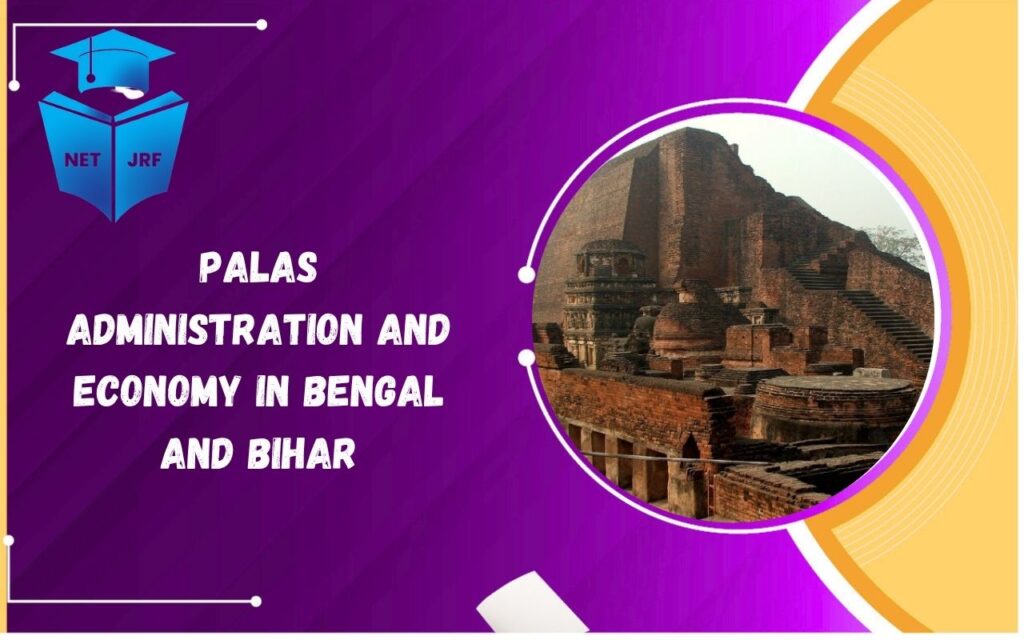
Palas, one of the major dynasties of medieval India, known for its strong governance and economic systems. The Palas ruled Bengal and Bihar from the 8th to 12th centuries CE, establishing a stable administration that combined centralized authority with regional autonomy. Their rule contributed significantly to cultural and economic development, leaving lasting marks in Indian history.

Historical Background of Palas
The Palas emerged after the decline of the Gupta Empire, around 750 CE, when Gopala was elected as the first king by regional chieftains of Bengal. This election marked the beginning of a dynasty that lasted nearly four centuries. The dynasty reached its peak under rulers like Dharmapala and Devapala, expanding influence across northern India and even into Nepal and Bihar. The Palas are also credited with supporting Buddhism, founding monasteries such as Nalanda and Vikramashila, which became centers of learning.
Enroll UGC NET Offline Classes in Jaipur
Key Features of Pala Rule
- Strong centralized administration with provincial governors
- Military campaigns to expand territory and protect borders
- Promotion of trade and agriculture
- Support for Buddhist institutions and culture
- Efficient tax and revenue system
Palas Administrative Structure
The administration under the Palas was hierarchical yet flexible, allowing local governance while maintaining central control. The emperor or maharaja was the supreme authority, overseeing key appointments and policies.
Central Administration
- Emperor (Maharaja): Head of state, commanded military, appointed governors
- Council of Ministers (Mantriparishad): Assisted in decision-making on finance, military, and judicial matters
- Chief Treasurer (Kosadhyaksha): Managed royal treasury and state finances
Provincial Administration
The empire was divided into Bhuktis (provinces) and Vishayas (districts). Governors (Uparikas) managed provinces and reported directly to the central authority. Local officers, such as the Vishayapati, oversaw villages and towns. This system ensured that taxation, law, and order could be maintained efficiently throughout the kingdom.
Administrative Hierarchy under Palas
| Level | Officer | Role |
| Central | Maharaja | Supreme ruler, military and administrative head |
| Central | Mantriparishad | Advisers on finance, law, foreign relations |
| Central | Kosadhyaksha | Treasury and revenue management |
| Provincial | Uparika | Governor of province, implements royal policies |
| District | Vishayapati | Administration of district, local taxation |
| Local | Gramika | Village head, collection of local taxes, dispute resolution |

Palas Judicial System
The Palas maintained a well-structured judiciary to ensure law, order, and social harmony across their vast empire.
Key Features:
- Local dispute resolution: Minor disputes were typically handled at the village (grama) or district (vishaya) level, often by village councils or local officials. This helped in resolving issues quickly without burdening higher authorities.
- Provincial and royal courts: Serious criminal or political cases were escalated to provincial courts or the royal court, ensuring centralized control over important matters.
- Influence of Dharma-shastras: Legal norms and punishments were guided by Dharma-shastras, which emphasized fairness, social duty, and the protection of community welfare.
- Role in stability: This judicial system contributed to political stability, as people trusted the state to resolve conflicts impartially, reducing chances of rebellion or unrest.
The Pala judicial system combined traditional legal principles with administrative efficiency, reflecting their ability to govern a large, diverse empire.
Palas Military Organization
The Pala army was central to both the security and expansion of the empire. A strong military allowed the Palas to defend borders, support allies, and maintain internal stability.
Key Features:
- Composition: The army included infantry, cavalry, and war elephants, making it flexible and formidable in battles.
- Strategic forts: Fortifications were built in key locations along trade routes and vulnerable borders to repel invasions and safeguard economic centers.
- Key threats: The army defended against major regional powers, including the Rashtrakutas, Gurjara-Pratiharas, and, in later years, challenges from southern kingdoms like the Cholas.
- Military leadership: Commanders were skilled in strategy, ensuring coordinated campaigns during expansions and defense operations.
The Pala military system was closely linked with their administration and economic resources, as land revenue and trade taxes funded army maintenance and logistics.
Enroll UGC NET Online Test Series
Economy under the Palas
The economic strength of the Palas was based on agriculture, trade, and revenue administration. Bengal’s fertile land allowed surplus production of rice, grains, and sugarcane, which fueled population growth and trade.
Revenue System
- Land Revenue (Bhaga): Collected in cash or kind, based on crop output
- Trade Taxes: Levied on markets and river ports
- Custom Duties: Imposed on imported and exported goods
- Village Taxes: Minor taxes collected by local officials
The state encouraged irrigation and land development to increase productivity. Grants and tax exemptions were often given to monasteries and temples, promoting cultural and educational activities.
Join UGC NET Coaching in Jaipur
Trade and Commerce
The Palas maintained extensive trade networks within India and abroad. Major exports included rice, silk, and metalware. They traded with Tibet, Southeast Asia, and the Middle East. River transport along the Ganges facilitated commerce efficiently.
Urban Centers
Cities like Pataliputra, Vikrampura, and Gaur became administrative and commercial hubs. Markets flourished, attracting artisans, merchants, and scholars. These urban centers also played a role in cultural diffusion, supporting education, arts, and religion.

Palas Cultural Contributions
Palas were great patrons of Buddhist art, architecture, and learning. They established and supported major centers such as:
- Nalanda University: Attracted scholars from China, Tibet, and Southeast Asia
- Vikramashila Monastery: Known for rigorous scholastic and tantric education
- Buddhist Art: Sculptures in bronze and stone flourished, especially the Pala School of Art
They also contributed to Hinduism, constructing temples and supporting Brahmanical rituals, demonstrating religious tolerance and synthesis.
Literature and Education
- Buddhist texts and commentaries flourished under Pala patronage
- Sanskrit literature expanded, with scholars like Atisha contributing significantly
- Monastic institutions doubled as centers for knowledge in medicine, astronomy, and philosophy
Decline of Palas
Despite their strengths, the Palas gradually weakened due to repeated invasions by the Cholas, Gurjara-Pratiharas, and internal conflicts among successors. By the 12th century, the dynasty was replaced by the Sena dynasty, marking the end of Pala dominance in Bengal.
Enroll UGC NET Mock Test Series
Palas Legacy
The Palas left a rich legacy in administration, economy, and culture. They established governance models that balanced central and local powers, supported trade and urbanization, and promoted education and art. Their influence extended into Southeast Asia through trade and religious connections.
- Effective administration combining central authority and local autonomy
- Strong agricultural and trade-based economy
- Military organized for defense and expansion
- Cultural patronage fostering Buddhism and art
- Foundations of urbanization and education in eastern India
Palas Administration, Economy FAQ

How did the Palas collect revenue?
Revenue was collected through land taxes, trade duties, village taxes, and customs on imports and exports.
Which cities were major economic centers under the Palas?
Pataliputra, Vikrampura, and Gaur were major commercial and administrative hubs.
How did the Palas support education?
They established and funded universities like Nalanda and Vikramashila, attracting scholars from across Asia.
What role did the military play in Pala governance?
The military protected borders, maintained internal stability, and enforced royal authority across provinces.