
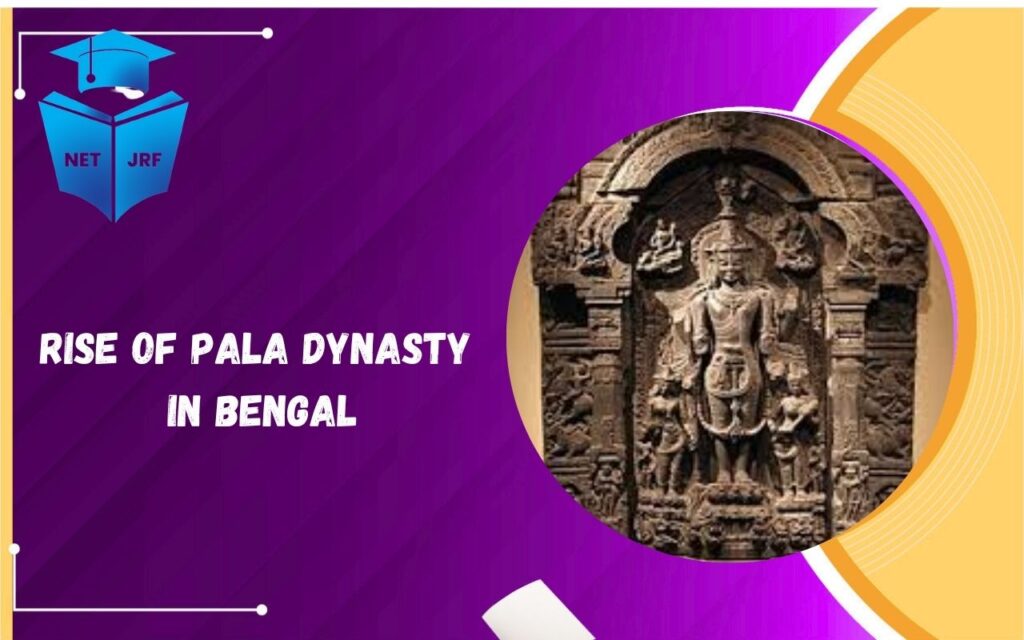
Rise of Pala Dynasty in Bengal: Territorial Expansion, Administrative, Structure, Economy, Trade

Rise of Pala Dynasty in Bengal In this topic you learn how Gopala founded the dynasty how rulers expanded territories built strong administration promoted Buddhism trade art education and shaped eastern Indian history for centuries.

vishal

Rise of Pala Dynasty in Bengal

Table of Contents

Rise of Pala dynasty in Bengal, which represents one of the most significant periods in eastern Indian history. The dynasty emerged in the mid-8th century, founded by Gopala, who rose to power during a time of political chaos. Over the next four centuries, the Palas established a strong, well-administered kingdom, promoting Buddhism, art, and education, leaving a lasting imprint on the region.

Study Planner

Origins Pala Dynasty

The Pala dynasty originated in the region of Bengal and parts of Bihar during a period of anarchy after the decline of local rulers.

  • Founder: Gopala (c. 750–770 CE) was elected by regional chieftains to restore order.
  • Background: Gopala was a local chieftain with limited initial resources but leveraged political alliances to consolidate power.
  • Significance: His election represents one of the early instances of democratic selection in Indian monarchies.

The rise of the Pala dynasty reflects the ability to unify smaller kingdoms and create a centralized administration during turbulent times.

Enroll UGC NET Online Course

Territorial Expansion under the Palas

The dynasty reached its peak under Dharmapala and Devapala.

  • Dharmapala (c. 770–810 CE): Expanded the kingdom significantly, controlling territories including Kannauj for a period.
  • Devapala (c. 810–850 CE): Conducted military expeditions in northern India, the Deccan, and the peninsula.
  • Mahipala I (c. 988–1038 CE): Restored Pala influence, extending power to Varanasi and strengthening administration.
  • Ramapala (c. 1077–1120 CE): Last significant ruler, extended influence to Assam and Orissa, featured in the Sanskrit epic Ramacarita.
Pala Ruler Reign (CE) Key Achievements Territories Controlled
Gopala 750–770 Established dynasty, restored order Bengal, parts of Bihar
Dharmapala 770–810 Expanded kingdom, controlled Kannauj Bengal, Bihar, parts of northern India
Devapala 810–850 Raids in north and Deccan Bengal, Bihar, Deccan
Mahipala I 988–1038 Restored Pala power Bengal, Varanasi region
Ramapala 1077–1120 Strengthened dynasty, expanded eastwards Bengal, Assam, Orissa

The dynasty’s expansion was strategic, blending military conquest with alliances and diplomacy to consolidate its authority.

Rise of Pala dynasty Administrative Structure

The Palas established an efficient administrative framework, balancing central authority with regional autonomy.

  • Central Administration: The king held supreme authority with ministers overseeing taxation, military, and justice.
  • Regional Governance: Provinces were managed by governors, often relatives or trusted nobles, ensuring loyalty and efficient control.
  • Revenue System: Land revenue was the primary source, supplemented by trade tariffs and tribute from vassal states.
  • Military Organization: Standing armies were maintained, with cavalry and elephant corps for large campaigns.

Rise of Pala Dynasty Cultural Contributions

The Palas are renowned for their cultural patronage, particularly in Buddhism and education.

  • Buddhism: Strong supporters of Mahayana Buddhism, they established monasteries and universities such as Nalanda and Vikramashila.
  • Art and Architecture: Pala art featured stone and metal sculptures with distinctive styles, influencing regions beyond Bengal.
  • Literature: Sanskrit literature flourished, with historical epics like Ramacarita celebrating rulers like Ramapala.
  • International Influence: Pala missionaries helped spread Buddhism to Tibet, Nepal, and Southeast Asia, creating enduring religious and cultural links.

Join UGC NET Online Course

Rise of Pala Dynasty Economy and Trade

The Pala economy was agrarian with active trade networks.

  • Agriculture: Fertile plains of Bengal allowed surplus production, ensuring stable revenues.
  • Crafts and Industry: Metalwork, sculpture, and textiles contributed to wealth.
  • Trade: Both inland and maritime trade flourished, connecting Bengal with northern India, the Deccan, and Southeast Asia.
  • Urban Centers: Towns like Pataliputra and Vikramapura became hubs of commerce, education, and cultural exchange.

Economic prosperity supported strong administration and patronage of art and religion.

App JRF Adda

Rise of Pala Dynasty Decline 

After Ramapala, the dynasty weakened due to internal strife and the rise of the Sena dynasty.

  • Loss of Territory: Palas lost control over northern Bengal and Bihar.
  • Internal Weakness: Succession disputes and decentralization undermined central authority.
  • External Pressure: Rise of the Senas gradually eclipsed Pala influence.
  • Survival: Minor Pala rulers continued to govern parts of southern Bihar for a few decades.

Despite decline, the Palas left a legacy of art, culture, and administration that influenced subsequent regional kingdoms.

Key Features of Pala Rule

  • Strong centralized authority balanced with provincial administration.
  • Promotion of Mahayana Buddhism and establishment of educational institutions.
  • Patronage of art, literature, and sculpture, creating a distinctive Pala style.
  • Strategic military campaigns that expanded territory and influence.
  • Prosperous agrarian economy with active trade networks.

Enroll UGC NET Offline Classes in Jaipur

JRF Adda Book

Legacy

The Pala dynasty shaped eastern India’s cultural and political history. Their contributions to education, religion, and art influenced Bengal, Bihar, and beyond for centuries.
The Rise of Pala dynasty in Bengal demonstrates how a local chieftain transformed a period of chaos into a strong, culturally rich kingdom. Their administration, patronage of Buddhism, flourishing art, and economic stability set a model for future kingdoms in eastern India.

Best UGC NET Offline Coaching in Jaipur

Read UGC NET Notes
1 Archaeological Sources for UGC NET Epigraphy – Study of Inscriptions Meaning of Historical Sources Archaeological
2 Meaning of Historical Sources Archaeological Sources for UGC NET Literary Sources in History Archaeological
3 Exploration in Archaeology Excavation Techniques in Archaeology Dating of Archaeological Sites Archaeological
4 Excavation Techniques in Archaeology Exploration in Archaeology Dating of Archaeological Sites Archaeological
5 Epigraphy – Study of Inscriptions Inscriptions in Reconstructing History Numismatics in History Archaeological
6 Inscriptions in Reconstructing History Epigraphy – Study of Inscriptions Archaeological Sources for UGC NET Archaeological
7 Numismatics in History Importance of Coins in History Epigraphy – Study of Inscriptions Archaeological
8 Importance of Coins in History Numismatics in History Archaeological Sources for UGC NET Archaeological
9 Dating of Archaeological Sites Excavation Techniques in Archaeology Dating Ancient Literary Sources Archaeological
10 Indigenous Literature Literary Sources in History Secular Literature as Historical Source Literary
11 Dating Ancient Literary Sources Literary Sources in History Dating of Archaeological Sites Literary
12 Literary Sources in History Indigenous Literature Foreign Accounts of India Literary
13 Foreign Accounts of India Greek Accounts on Ancient India Chinese Accounts on India Literary
14 Greek Accounts on Ancient India Foreign Accounts of India Chinese Accounts on India Literary
15 Secular Literature as Historical Source Literary Sources in History Indigenous Literature Literary
16 Role of Myths and Legends in Historical Reconstruction Literary Sources in History Secular Literature as Historical Source Literary
17 Chinese Accounts on India Foreign Accounts of India Greek Accounts on Ancient India Literary
18 Arabic Accounts on India Foreign Accounts of India Chinese Accounts on India Literary
19 Neolithic and Chalcolithic Phases Neolithic Revolution in India Chalcolithic Culture in India Neolithic
20 Hunting, Gathering & Food Production Neolithic Revolution in India Neolithic Settlements in India Neolithic
21 Neolithic Revolution in India Neolithic Settlements in India Tools and Technology in Neolithic Period Neolithic
22 Neolithic Settlements in India Distribution of Neolithic Cultures in India Neolithic Revolution in India Neolithic
23 Distribution of Neolithic Cultures in India Neolithic Settlements in India Tools and Technology in Neolithic Period Neolithic
24 Tools and Technology in Neolithic Period Neolithic Revolution in India Chalcolithic Culture in India Neolithic
25 Chalcolithic Culture in India Settlement Pattern & Economy in Chalcolithic Phase Trade & Exchange Networks in Chalcolithic Societies Neolithic
26 Settlement Pattern & Economy – Chalcolithic Phase Chalcolithic Culture in India Trade & Exchange Networks in Chalcolithic Societies Neolithic
27 Trade & Exchange Networks – Chalcolithic Societies Chalcolithic Culture in India IVC Internal & External Trade Neolithic
28 Indus Valley Civilization – UGC NET Major Sites of Indus Civilization Urban Planning in Harappan Civilization IVC
29 IVC Internal & External Trade Internal Trade – Harappan Civilization Craft Specialization in Harappan Civilization IVC
30 Political Organization – Harappan Civilization Social Structure – Indus Civilization Urban Planning in Harappan Civilization IVC
31 Major Sites of Indus Civilization Indus Valley Civilization – UGC NET Urban Planning in Harappan Civilization IVC
32 Urban Planning & Settlement – Harappan Civilization Architecture & Town Planning – Harappan Cities IVC as First Urbanization in India IVC
33 Architecture & Town Planning – Harappan Cities Urban Planning in Harappan Civilization Major Sites of Indus Civilization IVC
34 Craft Specialization & Industrial Activities – Harappan Agriculture & Food Economy – Harappans IVC Internal & External Trade IVC
35 Agriculture & Food Economy – Harappans Craft Specialization in Harappan Civilization Internal Trade – Harappan Civilization IVC
36 Internal Trade – Harappan Civilization IVC Internal & External Trade Craft Specialization in Harappan Civilization IVC
37 Religion & Beliefs – Indus Civilization Social Structure – Indus Civilization Indus Valley Civilization – UGC NET IVC
38 Social Structure – Indus Civilization Political Organization – Harappan Civilization Religion & Beliefs – Indus Civilization IVC
39 Decline of Indus Civilization Indus Valley Civilization – UGC NET IVC as First Urbanization in India IVC
40 IVC as First Urbanization in India Urban Planning in Harappan Civilization Second Urbanization in India IVC
41 Vedic & Later Vedic Periods – Aryan Varna System Early Vedic Society and Economy Later Vedic Society and Economy Vedic
42 Origin of Vedic Civilization Aryan Debate – Migration, Invasion & Indigenous Theories Early Vedic Society and Economy Vedic
43 Aryan Debate – Migration, Invasion & Indigenous Theories Origin of Vedic Civilization Early Vedic Society and Economy Vedic
44 Early Vedic Society and Economy Political Institutions – Early Vedic Period Social Structure – Early Vedic Period Vedic
45 Political Institutions – Early Vedic Period Early Vedic Society and Economy Monarchical States in Ancient India Vedic
46 Social Structure – Early Vedic Period Emergence of Varnas & Social Stratification Early Vedic Society and Economy Vedic
47 Later Vedic Society and Economy Emergence of Varnas & Social Stratification Impact of Iron Technology in India Vedic
48 Emergence of Varnas & Social Stratification Social Structure – Early Vedic Period Later Vedic Society and Economy Vedic
49 Emergence of Heterodox Sects in India Jainism, Buddhism & Ajivikas – Origins & Teachings Later Vedic Society and Economy Vedic
50 Impact of Iron Technology in India Later Vedic Society and Economy Agricultural Expansion & Economic Changes – Ancient India Vedic
51 Religious & Philosophical Vedic Ideas Emergence of Varnas & Social Stratification Emergence of Heterodox Sects in India Vedic
52 Megalithic Culture of South India Neolithic and Chalcolithic Phases Agricultural Expansion & Economic Changes General
53 State System in Ancient India Rise of Mahajanapadas Transition: Tribal Polities to Territorial States General
54 Transition: Tribal Polities to Territorial States Rise of Mahajanapadas Later Vedic Society and Economy General
55 Rise of Mahajanapadas Monarchical States in Ancient India Republican States (Gana-Sanghas) – Ancient India Magadha
56 Monarchical States in Ancient India Rise of Mahajanapadas Emergence of Magadha Magadha
57 Republican States (Gana-Sanghas) – Ancient India Rise of Mahajanapadas Monarchical States in Ancient India Magadha
58 Agricultural Expansion & Economic Changes – Ancient India Second Urbanization in India Impact of Iron Technology in India General
59 Second Urbanization in India IVC as First Urbanization in India Rise of Mahajanapadas General
60 Jainism, Buddhism & Ajivikas – Origins & Teachings Emergence of Heterodox Sects in India Ashoka’s Policy of Dhamma General
61 Emergence of Magadha Geographical Advantages of Magadha Early Rulers of Magadha Magadha
62 Geographical Advantages of Magadha Natural Resources & Economic Strength of Magadha Reasons for Success of Magadha Magadha
63 Natural Resources & Economic Strength of Magadha Geographical Advantages of Magadha Economic Policies of the Nandas Magadha
64 Early Rulers of Magadha Haryanka Dynasty – Rise of Magadha Emergence of Magadha Magadha
65 Haryanka Dynasty – Rise of Magadha Expansion Policy of Bimbisara Early Rulers of Magadha Magadha
66 Expansion Policy of Bimbisara Ajatashatru – Military Reforms Haryanka Dynasty – Rise of Magadha Magadha
67 Ajatashatru – Military Reforms Wars of Ajatashatru Expansion Policy of Bimbisara Magadha
68 Wars of Ajatashatru Ajatashatru – Military Reforms Udayin & Establishment of Pataliputra Magadha
69 Udayin & Establishment of Pataliputra Wars of Ajatashatru Shishunaga Dynasty Magadha
70 Shishunaga Dynasty Administrative Structure of the Shishunagas Nanda Dynasty Magadha
71 Administrative Structure of the Shishunagas Shishunaga Dynasty Central Administration Under Mauryas Magadha
72 Nanda Dynasty Mahapadma Nanda – Imperial Expansion Shishunaga Dynasty Magadha
73 Mahapadma Nanda – Imperial Expansion Military Strength of the Nandas Nanda Dynasty Magadha
74 Economic Policies of the Nandas Nanda Dynasty Taxation System – Mauryan State Magadha
75 Military Strength of the Nandas Mahapadma Nanda – Imperial Expansion Defeat of Nandas & Rise of Mauryan Empire Magadha
76 Reasons for Success of Magadha Geographical Advantages of Magadha Natural Resources & Economic Strength of Magadha Magadha
77 Mahajanapadas to Empire – Evolution & Rise of Magadha Rise of Mahajanapadas Emergence of Magadha Magadha
78 Mauryan Empire – Expansion Rise of Chandragupta Maurya Expansion of Mauryan Empire Maurya
79 Rise of Chandragupta Maurya Role of Chanakya in Rise of Mauryan Empire Defeat of Nandas & Rise of Mauryan Empire Maurya
80 Role of Chanakya in Rise of Mauryan Empire Rise of Chandragupta Maurya Defeat of Nandas & Rise of Mauryan Empire Maurya
81 Defeat of Nandas & Rise of Mauryan Empire Military Strength of the Nandas Rise of Chandragupta Maurya Maurya
82 Chandragupta Maurya – Seleucus Treaty & Diplomacy Expansion of Mauryan Empire Greek Accounts on Ancient India Maurya
83 Expansion of Mauryan Empire Chandragupta Maurya – Seleucus Treaty & Diplomacy Kalinga War Maurya
84 Administration of Chandragupta Maurya Central Administration Under Mauryas Mauryan Bureaucracy Maurya
85 Sources for Mauryan History Archaeological Sources for UGC NET Greek Accounts on Ancient India Maurya
86 Central Administration Under Mauryas Provincial Administration – Mauryan Empire Mauryan Bureaucracy Maurya
87 Provincial Administration – Mauryan Empire Local Administration – Mauryan Empire Central Administration Under Mauryas Maurya
88 Local Administration – Mauryan Empire Provincial Administration – Mauryan Empire Mauryan Bureaucracy Maurya
89 Mauryan Bureaucracy Central Administration Under Mauryas Espionage System – Mauryan Empire Maurya
90 Espionage System – Mauryan Empire Mauryan Bureaucracy Central Administration Under Mauryas Maurya
91 Ancient India – Trade and Commerce Trade and Commerce Under Mauryas Agrarian Economy – Mauryan Period Maurya
92 Agrarian Economy – Mauryan Period Taxation System – Mauryan State Trade and Commerce Under Mauryas Maurya
93 Trade and Commerce Under Mauryas Ancient India – Trade and Commerce Agrarian Economy – Mauryan Period Maurya
94 Taxation System – Mauryan State Agrarian Economy – Mauryan Period Economic Policies of the Nandas Maurya
95 Kalinga War Ashoka’s Policy of Dhamma Expansion of Mauryan Empire Maurya
96 Ashoka’s Policy of Dhamma Nature & Philosophy of Dhamma Kalinga War Maurya
97 Nature & Philosophy of Dhamma Ashoka’s Policy of Dhamma Jainism, Buddhism & Ajivikas Maurya

Rise of Pala Dynasty in Bengal  FAQs

Loader image

Gopala, a local chieftain elected by regional leaders around 750 CE, founded the Pala dynasty to restore order in Bengal.

At their peak, the Palas controlled Bengal, Bihar, parts of northern India, the Deccan, and later extended influence to Assam and Orissa.

The Palas had centralized authority under the king, provincial governors, and local officials managing revenue, law, and military affairs.

The economy was agrarian with fertile lands, supplemented by trade, crafts, taxes, and tribute from vassals, supporting strong administration.


They were patrons of Mahayana Buddhism, establishing monasteries and universities like Nalanda and Vikramashila, spreading Buddhist influence abroad.


They promoted art, literature, and architecture, producing distinctive stone and metal sculptures and Sanskrit literary works like Ramacarita.

Key rulers include Gopala (founder), Dharmapala (territorial expansion), Devapala (military campaigns), Mahipala I (restored power), and Ramapala (last strong ruler).

 Internal conflicts, succession disputes, loss of territory, and the rise of the Sena dynasty led to the gradual decline of Pala power.

The Palas left a lasting legacy in administration, Buddhist patronage, art, education, trade, and regional political stability in eastern India.

Leave a Reply

Recent Posts
Aditi

Aditi Sharma, founder of JRFAdda, is a Computer Science educator with an MCA degree and JRF qualification (99.91 percentile, Dec 2019). Her experience includes roles as an SBI SO (DBA), work at Cognizant, and over 5 years of teaching online and offline. She has also served as a Government Computer Teacher in Rajasthan.