

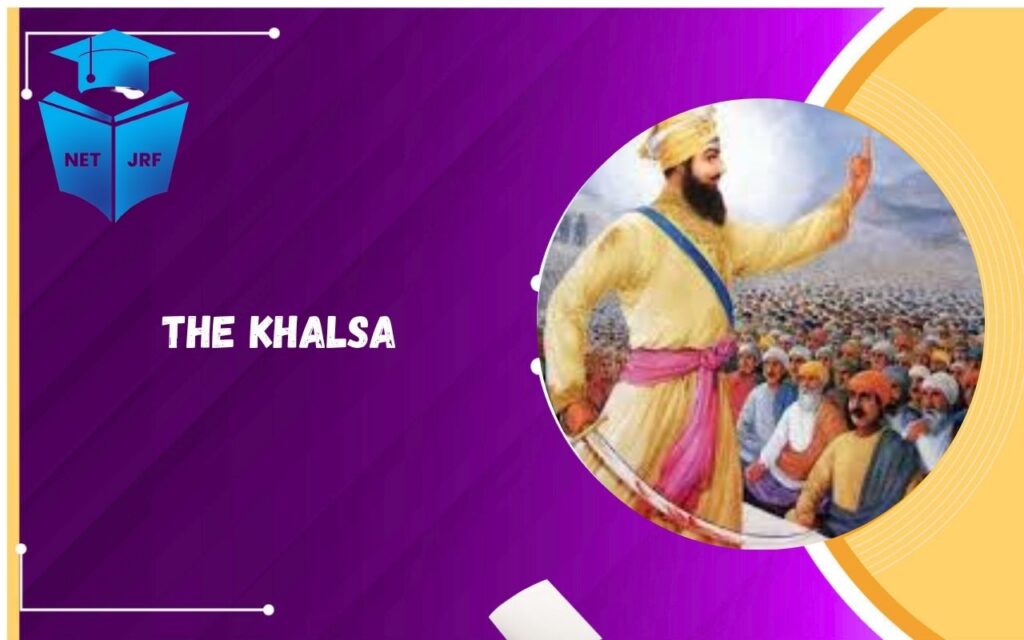
The Khalsa Foundation History Five Ks and Significance in Sikh Tradition

The Khalsa in this topic you learn how Guru Gobind Singh founded the Sikh warrior community in 1699 including Panj Pyare Five Ks Rahit Maryada equality Saint Soldier philosophy Anandpur Sahib ceremony Mughal resistance and the role of Khalsa in Sikh history

vishal

Table of Contents

The Khalsa changed the course of Indian history forever. In the late 17th century, the Sikh community faced intense pressure from the Mughal Empire. The Tenth Guru, Guru Gobind Singh, decided to create a disciplined group of warriors. He wanted to protect the innocent and uphold righteousness. 

Enroll UGC NET Coaching in Jaipur

Study Planner

Khalsa Meaning and Origin 

The term carries a deep spiritual and political meaning. Scholars like McLeod suggest the word comes from the Arabic or Persian word “Khalisa”. This word means “to be pure,” “to be clear,” or “to be free”. In a political sense, it refers to land under the direct control of the king. Similarly, the Khalsa refers to a community that maintains a direct link with the Guru without any middleman.

  • Guru Gobind Singh established this tradition in 1699. He chose the harvest festival of Vaisakhi for this grand event. 
  • Thousands of Sikhs gathered at Anandpur Sahib to hear their leader. They did not know that this day would redefine their identity. 
  • The Guru wanted to instill courage in the hearts of common people. He transformed them from simple farmers and workers into fierce Saint-Soldiers.
  • This transition was a watershed moment in medieval Indian history. When the Guru founded the Khalsa, he sought purity of mind and body. He demanded total commitment to the cause of justice. This new community replaced older, corrupt systems. It gave the Sikhs a clear political and theological vision for the future.

Historical Background and Mughal Persecution

To understand why the Guru created this group, we must look at the history of the Mughal Empire.

  •  During the 17th century, the rulers often persecuted Sikhs for their faith. In 1606, the Mughal Emperor Jahangir imprisoned and executed Guru Arjan Dev, the fifth Guru. 
  • This event showed the Sikhs that they needed to protect themselves.
  • Later, the ninth Guru, Guru Tegh Bahadur, faced similar challenges. The Mughal King Aurangzeb executed him in 1675. Guru Tegh Bahadur died because he fought for the religious freedom of non-Muslims. 
  • He refused to convert to Islam under pressure. His sacrifice left a deep impact on his son, Guru Gobind Singh.
  • The crowd watched as the Khalsa took shape under these historical pressures. The Guru saw that peaceful protests were not enough. 
  • He realized the community needed a military structure to survive. The execution of his father and his own children forced him to take a stand. He militarized the Sikhs to ensure no one could oppress them again.

Enroll UGC NET Offline Coaching in Jaipur

The Role of Earlier Gurus

The previous Gurus laid the spiritual foundation for the community. For example:

  • Guru Nanak: He founded the Sikh faith and taught equality.
  • Guru Arjan Dev: He compiled the Adi Granth, which is the primary scripture.
  • Guru Hargobind: He began the process of militarization by emphasizing spiritual and temporal power.

Adi Granth- The Khalsa 

Adi Granth and Khalsa are not the same. They refer to two completely different things in the Sikh tradition.

1. Adi Granth

  • It is the holy scripture of Sikhism.
  • Compiled in 1604 by Guru Arjan Dev.
  • It contains hymns of Sikh Gurus plus Bhakti and Sufi saints such as Kabir and Ravidas.
  • Later it became the final scripture called Guru Granth Sahib, which is considered the eternal Guru of Sikhism.

2. Khalsa

  • Khalsa is the sacred brotherhood of initiated Sikhs.
  • It was established in 1699 by Guru Gobind Singh.
    Members follow strict religious discipline and keep the Five K’s (Kesh, Kangha, Kara, Kachera, Kirpan).

Simple Difference

  • Adi Granth → Sacred religious book.
  • KhalsaCommunity of initiated Sikhs with a religious code.

App JRF Adda

 Anandpur Sahib Foundation Ceremony 

On April 13, 1699, Guru Gobind Singh summoned a massive gathering at Shri Anandpur Sahib. He stood before the crowd with a naked sword in his hand. He asked if anyone was ready to sacrifice their head for their faith. This request shocked the audience. One brave person stepped forward, and the Guru took him into a tent.

Enroll UGC NET Online Coaching

  • The Guru returned with a bloody sword and asked for another volunteer. He repeated this five times. Each time, a brave Sikh stepped forward. Eventually, the Guru revealed all five men were alive and well. 
  • He had only sacrificed goats to test their loyalty. Members of the Khalsa followed the code of total devotion from that day forward.
  • He called these five men the Panj Pyare, which means the Five Beloved Ones. They came from different castes and different parts of India. This act proved that equality was the core of the new order. 
  • The Guru then prepared a special nectar called Amrit. He used an iron basin and a double-edged sword to mix water and sugar while reciting prayers.

The Baptism of the Guru

After baptizing the Panj Pyare, something amazing happened. The Guru asked the five men to baptize him in return. This act showed that the Guru and his followers were equal. His name changed from Guru Gobind Rai to Guru Gobind Singh. This Amrit Sanskar ceremony became the standard way to join the community. The spirit of the Khalsa lives in the Panj Pyare and their legacy of bravery.

The Five Ks: Symbols of Faith

Every initiated member must wear five specific symbols. These are known as the “Five Ks.” They represent the identity and discipline of a Sikh warrior.

  1. Kesh (Uncut Hair): This symbolizes holiness and strength. It shows respect for God’s creation.
  2. Kangha (Wooden Comb): This represents cleanliness of both the body and the mind.
  3. Kara (Iron Bracelet): This serves as a reminder of an unbreakable bond with the Guru.
  4. Kirpan (Sword): This is a tool for self-defense and protecting the weak.
  5. Kachera (Short Breeches): This represents agility and self-control.

These symbols are not just for show. They have deep meanings for everyday life. For instance, the Kirpan teaches a Sikh to stand against injustice at all times. The Kesh reminds them to accept the natural will of God. Historians study the Khalsa for its social impact and how these symbols united a diverse group of people.

The Rahit Maryada: Code of Conduct

The Guru did not just give symbols; he gave a way of life. This code of conduct is called the Rahit 

Prohibited Acts

The Rahit prohibits several activities to maintain purity:

  • No Tobacco: Members must not use tobacco or any other intoxicants.
  • No Adultery: The code demands faithfulness to one’s spouse.
  • No Kutha Meat: Members cannot eat meat prepared according to Muslim ritual slaughter.
  • No Hair Cutting: Altering any hair on the body is strictly forbidden.

Daily Duties

A Sikh must live a life of truth and integrity. They must contemplate God every day. They must also treat every person as an equal. The Guru insisted that his followers should be ready for arms training. This was necessary because of the constant threat of persecution during the medieval era. The Guru gave the Khalsa its distinct identity through these strict but fair rules.

History and Features

To help you study for your exams, here are two structured tables summarizing the key information.

Timeline of Key Events

Year Event Significance
1606 Execution of Guru Arjan Dev First major Sikh martyrdom by Mughals
1675 Martyrdom of Guru Tegh Bahadur Ninth Guru dies for religious freedom
1699 Foundation of the Khalsa Guru Gobind Singh initiates the Panj Pyare
1892 Establishment of Khalsa College Leaders of Singh Sabha promote education

Key Features of the Khalsa

Feature Description Importance
Initiation Amrit Sanskar (Nectar Ceremony) Grants new identity and names (Singh/Kaur)
Leadership Abolition of Masand System Creates direct link between Guru and followers
Symbols The Five Ks (Kesh, Kangha, etc.) Provides a uniform and disciplined look
Social Rule Equality of Caste and Gender Removes social barriers and promotes unity
Philosophy Saint-Soldier Concept Combines spiritual devotion with military readiness

Abolishing the Masand System

Before the year 1699, the Sikh community used a system called the “Masand System”. The Gurus appointed local leaders, known as Masands, to manage groups and collect funds. Over time, many Masands became corrupt. They started keeping the money for themselves and acted like independent lords.

  • Guru Gobind Singh decided to end this corruption. He abolished the Masand system entirely. He instructed all Sikhs to deal directly with him. 
  • This move centralized the leadership of the community. It ensured that no middleman could exploit the common followers. By doing this, he strengthened the bond within the community.
  • This change also led to a division among Sikhs. Those who accepted the Guru’s call and took the Amrit became the initiated members. 
  • Others, who remained Sikhs but did not join the military order, were known as Nanak-panthis or Sahajdhari Sikhs. This plurality is a major topic in modern scholarly debates about Sikhism.

Enroll UGC NET Online Course

JRF Adda Book

Summary Five Beloved Ones (Panj Pyare)

The five men who stepped forward were:

  1. Bhai Daya Singh: A Khatri from Lahore.
  2. Bhai Dharam Singh: A Jat from Hastinapur.
  3. Bhai Himmat Singh: A water-carrier from Jagannath.
  4. Bhai Mohkam Singh: A washerman from Dwarka.
  5. Bhai Sahib Singh: A barber from Bidar.

Their different backgrounds proved that the new order rejected the caste system. They all drank from the same bowl during the initiation ceremony. This was a revolutionary act in 17th-century India. It united people who were previously separated by social rules.

Conclusion

The Khalsa remains a symbol of courage and equality in the modern world. Guru Gobind Singh created this order to fight against religious oppression and to empower the weak. He successfully united people from all walks of life into a single, disciplined brotherhood. This legacy of the Khalsa empowers millions of people today to stand for justice and truth.

Read UGC NET Notes
1 Archaeological Sources for UGC NET Epigraphy – Study of Inscriptions Meaning of Historical Sources Archaeological
2 Meaning of Historical Sources Archaeological Sources for UGC NET Literary Sources in History Archaeological
3 Exploration in Archaeology Excavation Techniques in Archaeology Dating of Archaeological Sites Archaeological
4 Excavation Techniques in Archaeology Exploration in Archaeology Dating of Archaeological Sites Archaeological
5 Epigraphy – Study of Inscriptions Inscriptions in Reconstructing History Numismatics in History Archaeological
6 Inscriptions in Reconstructing History Epigraphy – Study of Inscriptions Archaeological Sources for UGC NET Archaeological
7 Numismatics in History Importance of Coins in History Epigraphy – Study of Inscriptions Archaeological
8 Importance of Coins in History Numismatics in History Archaeological Sources for UGC NET Archaeological
9 Dating of Archaeological Sites Excavation Techniques in Archaeology Dating Ancient Literary Sources Archaeological
10 Indigenous Literature Literary Sources in History Secular Literature as Historical Source Literary
11 Dating Ancient Literary Sources Literary Sources in History Dating of Archaeological Sites Literary
12 Literary Sources in History Indigenous Literature Foreign Accounts of India Literary
13 Foreign Accounts of India Greek Accounts on Ancient India Chinese Accounts on India Literary
14 Greek Accounts on Ancient India Foreign Accounts of India Chinese Accounts on India Literary
15 Secular Literature as Historical Source Literary Sources in History Indigenous Literature Literary
16 Role of Myths and Legends in Historical Reconstruction Literary Sources in History Secular Literature as Historical Source Literary
17 Chinese Accounts on India Foreign Accounts of India Greek Accounts on Ancient India Literary
18 Arabic Accounts on India Foreign Accounts of India Chinese Accounts on India Literary
19 Neolithic and Chalcolithic Phases Neolithic Revolution in India Chalcolithic Culture in India Neolithic
20 Hunting, Gathering & Food Production Neolithic Revolution in India Neolithic Settlements in India Neolithic
21 Neolithic Revolution in India Neolithic Settlements in India Tools and Technology in Neolithic Period Neolithic
22 Neolithic Settlements in India Distribution of Neolithic Cultures in India Neolithic Revolution in India Neolithic
23 Distribution of Neolithic Cultures in India Neolithic Settlements in India Tools and Technology in Neolithic Period Neolithic
24 Tools and Technology in Neolithic Period Neolithic Revolution in India Chalcolithic Culture in India Neolithic
25 Chalcolithic Culture in India Settlement Pattern & Economy in Chalcolithic Phase Trade & Exchange Networks in Chalcolithic Societies Neolithic
26 Settlement Pattern & Economy – Chalcolithic Phase Chalcolithic Culture in India Trade & Exchange Networks in Chalcolithic Societies Neolithic
27 Trade & Exchange Networks – Chalcolithic Societies Chalcolithic Culture in India IVC Internal & External Trade Neolithic
28 Indus Valley Civilization – UGC NET Major Sites of Indus Civilization Urban Planning in Harappan Civilization IVC
29 IVC Internal & External Trade Internal Trade – Harappan Civilization Craft Specialization in Harappan Civilization IVC
30 Political Organization – Harappan Civilization Social Structure – Indus Civilization Urban Planning in Harappan Civilization IVC
31 Major Sites of Indus Civilization Indus Valley Civilization – UGC NET Urban Planning in Harappan Civilization IVC
32 Urban Planning & Settlement – Harappan Civilization Architecture & Town Planning – Harappan Cities IVC as First Urbanization in India IVC
33 Architecture & Town Planning – Harappan Cities Urban Planning in Harappan Civilization Major Sites of Indus Civilization IVC
34 Craft Specialization & Industrial Activities – Harappan Agriculture & Food Economy – Harappans IVC Internal & External Trade IVC
35 Agriculture & Food Economy – Harappans Craft Specialization in Harappan Civilization Internal Trade – Harappan Civilization IVC
36 Internal Trade – Harappan Civilization IVC Internal & External Trade Craft Specialization in Harappan Civilization IVC
37 Religion & Beliefs – Indus Civilization Social Structure – Indus Civilization Indus Valley Civilization – UGC NET IVC
38 Social Structure – Indus Civilization Political Organization – Harappan Civilization Religion & Beliefs – Indus Civilization IVC
39 Decline of Indus Civilization Indus Valley Civilization – UGC NET IVC as First Urbanization in India IVC
40 IVC as First Urbanization in India Urban Planning in Harappan Civilization Second Urbanization in India IVC
41 Vedic & Later Vedic Periods – Aryan Varna System Early Vedic Society and Economy Later Vedic Society and Economy Vedic
42 Origin of Vedic Civilization Aryan Debate – Migration, Invasion & Indigenous Theories Early Vedic Society and Economy Vedic
43 Aryan Debate – Migration, Invasion & Indigenous Theories Origin of Vedic Civilization Early Vedic Society and Economy Vedic
44 Early Vedic Society and Economy Political Institutions – Early Vedic Period Social Structure – Early Vedic Period Vedic
45 Political Institutions – Early Vedic Period Early Vedic Society and Economy Monarchical States in Ancient India Vedic
46 Social Structure – Early Vedic Period Emergence of Varnas & Social Stratification Early Vedic Society and Economy Vedic
47 Later Vedic Society and Economy Emergence of Varnas & Social Stratification Impact of Iron Technology in India Vedic
48 Emergence of Varnas & Social Stratification Social Structure – Early Vedic Period Later Vedic Society and Economy Vedic
49 Emergence of Heterodox Sects in India Jainism, Buddhism & Ajivikas – Origins & Teachings Later Vedic Society and Economy Vedic
50 Impact of Iron Technology in India Later Vedic Society and Economy Agricultural Expansion & Economic Changes – Ancient India Vedic
51 Religious & Philosophical Vedic Ideas Emergence of Varnas & Social Stratification Emergence of Heterodox Sects in India Vedic
52 Megalithic Culture of South India Neolithic and Chalcolithic Phases Agricultural Expansion & Economic Changes General
53 State System in Ancient India Rise of Mahajanapadas Transition: Tribal Polities to Territorial States General
54 Transition: Tribal Polities to Territorial States Rise of Mahajanapadas Later Vedic Society and Economy General
55 Rise of Mahajanapadas Monarchical States in Ancient India Republican States (Gana-Sanghas) – Ancient India Magadha
56 Monarchical States in Ancient India Rise of Mahajanapadas Emergence of Magadha Magadha
57 Republican States (Gana-Sanghas) – Ancient India Rise of Mahajanapadas Monarchical States in Ancient India Magadha
58 Agricultural Expansion & Economic Changes – Ancient India Second Urbanization in India Impact of Iron Technology in India General
59 Second Urbanization in India IVC as First Urbanization in India Rise of Mahajanapadas General
60 Jainism, Buddhism & Ajivikas – Origins & Teachings Emergence of Heterodox Sects in India Ashoka’s Policy of Dhamma General
61 Emergence of Magadha Geographical Advantages of Magadha Early Rulers of Magadha Magadha
62 Geographical Advantages of Magadha Natural Resources & Economic Strength of Magadha Reasons for Success of Magadha Magadha
63 Natural Resources & Economic Strength of Magadha Geographical Advantages of Magadha Economic Policies of the Nandas Magadha
64 Early Rulers of Magadha Haryanka Dynasty – Rise of Magadha Emergence of Magadha Magadha
65 Haryanka Dynasty – Rise of Magadha Expansion Policy of Bimbisara Early Rulers of Magadha Magadha
66 Expansion Policy of Bimbisara Ajatashatru – Military Reforms Haryanka Dynasty – Rise of Magadha Magadha
67 Ajatashatru – Military Reforms Wars of Ajatashatru Expansion Policy of Bimbisara Magadha
68 Wars of Ajatashatru Ajatashatru – Military Reforms Udayin & Establishment of Pataliputra Magadha
69 Udayin & Establishment of Pataliputra Wars of Ajatashatru Shishunaga Dynasty Magadha
70 Shishunaga Dynasty Administrative Structure of the Shishunagas Nanda Dynasty Magadha
71 Administrative Structure of the Shishunagas Shishunaga Dynasty Central Administration Under Mauryas Magadha
72 Nanda Dynasty Mahapadma Nanda – Imperial Expansion Shishunaga Dynasty Magadha
73 Mahapadma Nanda – Imperial Expansion Military Strength of the Nandas Nanda Dynasty Magadha
74 Economic Policies of the Nandas Nanda Dynasty Taxation System – Mauryan State Magadha
75 Military Strength of the Nandas Mahapadma Nanda – Imperial Expansion Defeat of Nandas & Rise of Mauryan Empire Magadha
76 Reasons for Success of Magadha Geographical Advantages of Magadha Natural Resources & Economic Strength of Magadha Magadha
77 Mahajanapadas to Empire – Evolution & Rise of Magadha Rise of Mahajanapadas Emergence of Magadha Magadha
78 Mauryan Empire – Expansion Rise of Chandragupta Maurya Expansion of Mauryan Empire Maurya
79 Rise of Chandragupta Maurya Role of Chanakya in Rise of Mauryan Empire Defeat of Nandas & Rise of Mauryan Empire Maurya
80 Role of Chanakya in Rise of Mauryan Empire Rise of Chandragupta Maurya Defeat of Nandas & Rise of Mauryan Empire Maurya
81 Defeat of Nandas & Rise of Mauryan Empire Military Strength of the Nandas Rise of Chandragupta Maurya Maurya
82 Chandragupta Maurya – Seleucus Treaty & Diplomacy Expansion of Mauryan Empire Greek Accounts on Ancient India Maurya
83 Expansion of Mauryan Empire Chandragupta Maurya – Seleucus Treaty & Diplomacy Kalinga War Maurya
84 Administration of Chandragupta Maurya Central Administration Under Mauryas Mauryan Bureaucracy Maurya
85 Sources for Mauryan History Archaeological Sources for UGC NET Greek Accounts on Ancient India Maurya
86 Central Administration Under Mauryas Provincial Administration – Mauryan Empire Mauryan Bureaucracy Maurya
87 Provincial Administration – Mauryan Empire Local Administration – Mauryan Empire Central Administration Under Mauryas Maurya
88 Local Administration – Mauryan Empire Provincial Administration – Mauryan Empire Mauryan Bureaucracy Maurya
89 Mauryan Bureaucracy Central Administration Under Mauryas Espionage System – Mauryan Empire Maurya
90 Espionage System – Mauryan Empire Mauryan Bureaucracy Central Administration Under Mauryas Maurya
91 Ancient India – Trade and Commerce Trade and Commerce Under Mauryas Agrarian Economy – Mauryan Period Maurya
92 Agrarian Economy – Mauryan Period Taxation System – Mauryan State Trade and Commerce Under Mauryas Maurya
93 Trade and Commerce Under Mauryas Ancient India – Trade and Commerce Agrarian Economy – Mauryan Period Maurya
94 Taxation System – Mauryan State Agrarian Economy – Mauryan Period Economic Policies of the Nandas Maurya
95 Kalinga War Ashoka’s Policy of Dhamma Expansion of Mauryan Empire Maurya
96 Ashoka’s Policy of Dhamma Nature & Philosophy of Dhamma Kalinga War Maurya
97 Nature & Philosophy of Dhamma Ashoka’s Policy of Dhamma Jainism, Buddhism & Ajivikas Maurya

FAQs

Loader image

The Khalsa was founded by Guru Gobind Singh in 1699. He created the Khalsa to strengthen the Sikh community and encourage Sikhs to defend justice and their faith.

Sikhs celebrate the creation of the Khalsa during the festival of Vaisakhi in April every year. The day marks the historic foundation of the Khalsa in 1699.

The Khalsa was established at Anandpur Sahib, where Guru Gobind Singh initiated the first members of the Khalsa during the Vaisakhi gathering.


After joining the Khalsa, men receive the name “Singh” (Lion) and women receive the name “Kaur” (Princess). This practice promotes equality and removes caste-based surnames.


Leave a Reply

Recent Posts
Aditi

Aditi Sharma, founder of JRFAdda, is a Computer Science educator with an MCA degree and JRF qualification (99.91 percentile, Dec 2019). Her experience includes roles as an SBI SO (DBA), work at Cognizant, and over 5 years of teaching online and offline. She has also served as a Government Computer Teacher in Rajasthan.