

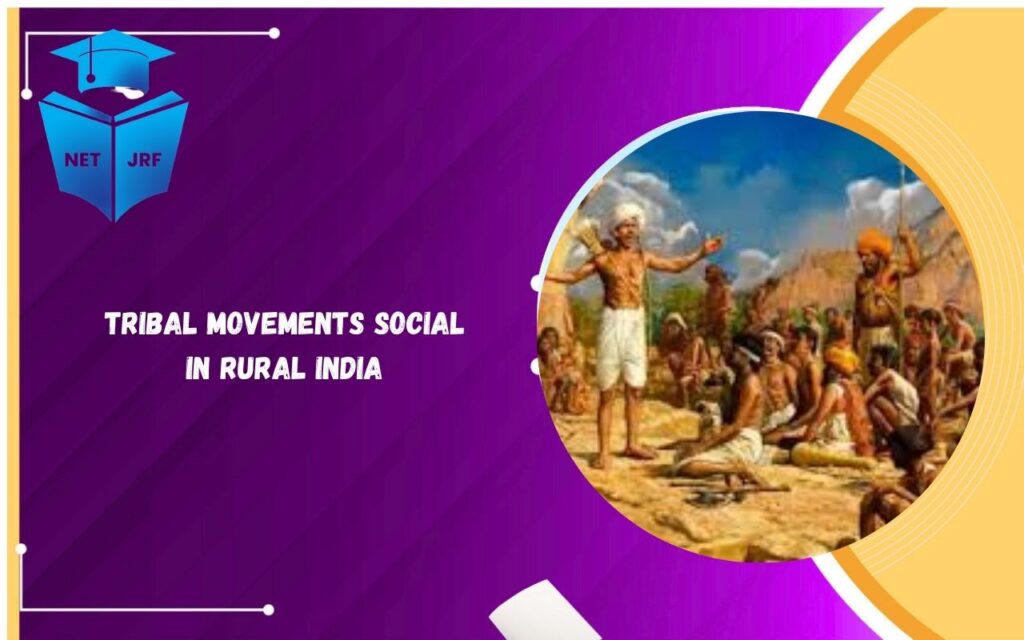
Tribal Movements Social in Rural India represent an important part of the history of colonial resistance. Tribal communities organized protests and revolts when colonial policies disrupted their traditional way of life.
During the nineteenth and early twentieth centuries, many tribal societies faced land alienation, forest restrictions, and economic exploitation. These conditions forced tribal communities to rise against colonial authorities and local landlords.

Meaning of Tribal Resistance
Tribal Movements Social in Rural India refer to organized struggles by tribal groups against colonial administration, landlords, and external exploiters.
These movements aimed to protect traditional land ownership, forest rights, and cultural autonomy.
Features
- Protection of traditional tribal land
- Resistance against colonial forest policies
- Opposition to economic exploitation
- Leadership from tribal communities
- Strong community participation
These features explain why tribal resistance became a powerful force in rural areas.
Enroll UGC NET Mock Test Series
Movements Social in Rural India Causes
Several factors contributed to the emergence of Tribal Movements Social in Rural India during colonial rule.
1. Land Alienation
Colonial land policies allowed outsiders such as landlords and moneylenders to take control of tribal lands.
This process disrupted traditional communal land systems.
2. Forest Laws
The British government introduced strict forest regulations.
These laws restricted hunting, grazing, and forest product collection, which were essential for tribal livelihoods.
3. Exploitation by Moneylenders
Many tribal families borrowed money during difficult times.
Moneylenders charged high interest rates, which resulted in loss of land and deep debt.
4. Forced Labour Practices
In many regions, tribal people had to perform unpaid labour for landlords and colonial officials.
This system created resentment among tribal communities.
5. Cultural Disruption
Colonial rule often ignored tribal customs and governance structures.
This interference created tension between tribal societies and colonial administration.

Major Tribal Uprisings in India
Many tribal revolts occurred across different parts of India during the colonial period.
Kol Uprising (1831–32)
The Kol tribes of the Chotanagpur region revolted against British rule and local landlords.
They opposed the entry of outsiders who took control of tribal land.
Enroll UGC NET Foundation Course
Santhal Rebellion (1855–56)
The Santhal revolt was one of the largest tribal uprisings in India.
Leaders Sidhu and Kanhu mobilized thousands of Santhal people against colonial authorities and moneylenders.
Munda Rebellion (1899–1900)
This movement was led by Birsa Munda.
The rebellion demanded restoration of traditional land rights and an end to exploitation by landlords.
Social Structure of Tribal Communities
Understanding Tribal Movements Social in Rural India requires examining the traditional structure of tribal societies.
Characteristics of Tribal Society
- Collective land ownership
- Strong community bonds
- Dependence on forests
- Local leadership systems
These social structures created unity among tribal populations during resistance movements.
Tribal Society vs Colonial Rural System
This comparison highlights the conflict between traditional tribal life and colonial economic policies.
| Feature | Tribal Society | Colonial Rural System |
| Land Ownership | Collective | Private ownership |
| Economic System | Subsistence economy | Revenue-based economy |
| Authority | Tribal chiefs | Colonial administrators |
| Resource Use | Forest dependence | Controlled exploitation |
Role of Leadership in Tribal Resistance
Strong leadership played an important role in Tribal Movements Social in Rural India.
Leaders mobilized communities and organized resistance against exploitation.
Important Tribal Leaders
- Birsa Munda
- Sidhu Murmu
- Kanhu Murmu
- Tirot Singh
These leaders became symbols of tribal resistance against colonial authority.
Enroll UGC NET Offline Coaching in Jaipur
Methods Used in Tribal Resistance
Communities used different strategies during Tribal Movements Social in Rural India.
Common Forms of Protest
- Armed uprisings against colonial officials
- Refusal to pay taxes
- Destruction of exploitative records
- Attacks on moneylenders
These methods reflected strong determination to defend tribal rights.
Government Response
Colonial authorities responded strongly to Tribal Movements Social in Rural India.
In many cases, the government used military force to suppress revolts.
However, continued resistance forced authorities to introduce some reforms.
Policy Changes
- Tribal land protection laws
- Regulation of moneylending practices
- Administrative reforms in tribal areas
These measures aimed to reduce conflicts between tribal communities and the colonial government.

Impact on Rural Society
The influence of Tribal Movements Social in Rural India extended beyond immediate revolts.
These movements created awareness about exploitation and encouraged broader resistance.
Enroll UGC NET Offline Classes in Jaipur
Major Impacts
- Protection of tribal identity
- Awareness of economic rights
- Development of resistance culture
- Contribution to anti-colonial struggle
Such impacts strengthened the political consciousness of rural communities.
The history of tribal resistance shows how marginalized communities defended their land, culture, and economic rights during colonial rule. Tribal revolts emerged due to land alienation, forest restrictions, and economic exploitation.
Understanding Tribal Movements Social in Rural India helps students analyze the social dynamics of colonial India and the struggles faced by tribal societies
FAQs

Why did tribal revolts occur?
Tribal revolts occurred due to land alienation, forest restrictions, economic exploitation, and interference in tribal customs.
Who led the Santhal rebellion?
The Santhal rebellion was led by Sidhu Murmu and Kanhu Murmu in 1855–56.
What was the Munda rebellion?
The Munda rebellion was led by Birsa Munda against landlords and colonial authorities in the Chotanagpur region.
Why were forests important for tribal communities?
Forests provided food, fuel, grazing land, and economic resources essential for tribal livelihoods.
What methods did tribal communities use in resistance?
Tribal communities used protests, armed revolts, refusal to pay taxes, and attacks on exploitative institutions.
What are Tribal Movements Social in Rural India?
Tribal Movements Social in Rural India refer to resistance struggles by tribal communities against colonial exploitation and loss of traditional rights.