Women’s Question in Colonial India: Nationalist Discourse and Gender Roles

Womens Question in Colonial India in this topic you learn how social reforms education nationalist discourse legal changes gender roles and women participation in public life shaped modern Indian society during colonial rule.

gunjan

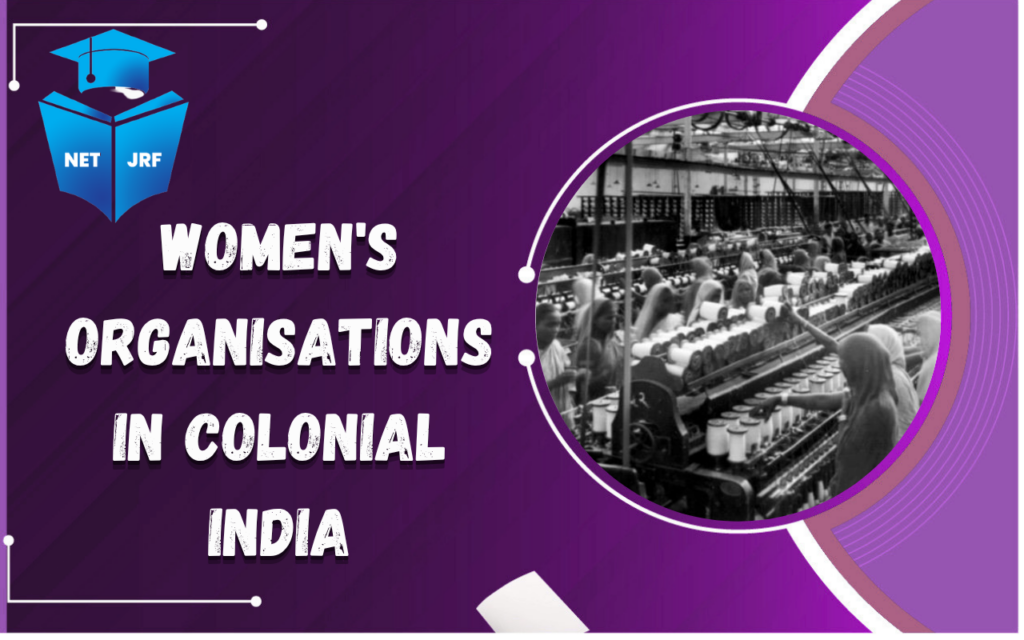
Women's Organisations in Colonial India.

Table of Contents

Women’s Question in Colonial India emerged as a central social debate during the nineteenth and early twentieth centuries. It referred to discussions about women’s rights, education, social status, and their role in society under colonial rule. British officials, Indian reformers, and nationalist leaders all addressed this issue in different ways.

Enroll UGC NET Online Course

The debate around Women’s Question in Colonial India focused on problems such as child marriage, widow remarriage, female education, property rights, and participation in public life. Reformers argued that improving the condition of women was essential for social progress. Nationalist leaders also believed that women’s status reflected the moral strength of Indian society.

Study Planner

Historical Background

Before the colonial period, the status of women in many parts of India was shaped by social customs and patriarchal traditions. Practices such as child marriage, purdah, limited property rights, and lack of education restricted women’s opportunities.

During the nineteenth century, colonial rule brought new debates about social reform. Western ideas of equality and liberalism influenced Indian intellectuals. As a result, discussions on Women’s Question in Colonial India began to appear in newspapers, reform movements, and public debates.

Indian reformers believed that improving women’s status was necessary for building a modern nation. These debates gradually transformed social attitudes and led to legal reforms.

Women’s Question in Colonial India in Nationalist Discourse

Nationalist leaders developed their own interpretation of Women’s Question in Colonial India. They believed that women symbolized the moral and spiritual strength of the nation.

Many nationalist thinkers divided society into two spheres:

  • Home (Ghar) – considered spiritual, cultural, and feminine
  • World (Bahir) – associated with politics, economics, and masculine roles

Women were expected to protect cultural traditions within the home while men engaged with the outside world. This idea helped nationalists preserve cultural identity while adopting modern political ideas. 

At the same time, education for women was encouraged so they could become ideal mothers and responsible citizens. However, their public role remained limited within nationalist ideology.

Major Social Reform Movements

Several reform movements addressed Women’s Question in Colonial India by challenging harmful social practices.

Key Reform Issues

  1. Abolition of Sati
  2. Widow remarriage
  3. Female education
  4. Prevention of child marriage
  5. Women’s legal rights

Indian reformers believed that education and legal reforms would improve the social condition of women.

Major Social Reform Laws Related to Women

In modern Indian history, the condition of women became a major concern for social reformers and the colonial administration. During the 19th and early 20th centuries, several important laws were introduced to remove harmful social practices and improve the social status of women. 

Reform Law Year Impact
Abolition of Sati 1829 Outlawed the practice of sati
Widow Remarriage Act 1856 Allowed widows to remarry legally
Age of Consent Act 1891 Raised the age of marriage
Child Marriage Restraint Act 1929 Attempted to reduce child marriage

These reforms formed an important part of the debate around Women’s Question in Colonial India.

Role of Education in Women’s Empowerment

Education became one of the most important aspects of Women’s Question in Colonial India. Reformers believed that education would help women become active members of society.

Schools for girls gradually emerged in the nineteenth century. Missionaries and Indian reformers supported female education.

Key goals of women’s education included:

  • Literacy and basic knowledge
  • Moral education
  • Household management skills
  • Awareness about social rights

However, nationalist leaders often supported limited education for women that preserved traditional values. 

Enroll UGC NET Mock Test Series

App JRF Adda

Emergence of the New Woman

The debate on Women’s Question in Colonial India led to the idea of the New Woman.

Characteristics of the New Woman included:

  • Educated and literate
  • Aware of national issues
  • Supportive of family values
  • Capable of participating in public activities when required

This concept attempted to balance modern education with traditional cultural identity.

Colonial vs Nationalist Views on Women

This comparison explains how Women’s Question in Colonial India became a complex debate between colonial policies and nationalist ideas.

Aspect Colonial Perspective Nationalist Perspective
Women’s Role Social reform needed Cultural guardians
Education Western education for progress Limited education within tradition
Public Participation Encouraged gradually Restricted to certain roles
Cultural Identity Influenced by Western values Protection of Indian traditions


Women’s Participation in National Movement

Women eventually moved beyond symbolic roles and actively participated in nationalist politics.

Major forms of participation included:

  • Political protests
  • Boycott movements
  • Civil disobedience campaigns
  • Social welfare work
  • Support for revolutionary groups

Women joined protests, organized meetings, and supported nationalist leaders. 

Prominent leaders also encouraged women’s participation in the freedom struggle.

Cultural Representation of Women

Women played an important role in literature, poetry, and journalism during the nationalist movement.

Many writers expressed nationalist ideas through literature and cultural works.

Examples include:

  • Poetry supporting freedom struggle
  • Novels depicting social reform
  • Articles discussing women’s rights

Literature helped spread awareness about Women’s Question in Colonial India among educated society.

Enroll UGC NET Offline Coaching in Jaipur

Contradictions in Nationalist Gender Ideology

Despite support for women’s participation, nationalist ideology contained contradictions.

Key contradictions included:

  • Promotion of education but restriction of freedom
  • Encouragement of political participation but emphasis on domestic roles
  • Idealization of motherhood while limiting independence

These tensions shaped debates around gender roles in colonial India.

JRF Adda Book

Social Impact of Women’s Question

The debate on Women’s Question in Colonial India produced several long-term social changes.

Major impacts included:

  • Expansion of women’s education
  • Greater public awareness about gender equality
  • Women’s participation in nationalist politics
  • Emergence of women’s organizations

These developments gradually improved women’s status in Indian society.

Enroll UGC NET Offline Classes in Jaipur

Conclusion

The debate surrounding Women’s Question in Colonial India played a major role in shaping modern Indian society. Reform movements challenged social practices, expanded educational opportunities, and encouraged women to participate in public life. Nationalist discourse also redefined gender roles by presenting women as symbols of cultural identity while gradually allowing their political participation

Read UGC NET Notes
1 Archaeological Sources for UGC NET Epigraphy – Study of Inscriptions Meaning of Historical Sources Archaeological
2 Meaning of Historical Sources Archaeological Sources for UGC NET Literary Sources in History Archaeological
3 Exploration in Archaeology Excavation Techniques in Archaeology Dating of Archaeological Sites Archaeological
4 Excavation Techniques in Archaeology Exploration in Archaeology Dating of Archaeological Sites Archaeological
5 Epigraphy – Study of Inscriptions Inscriptions in Reconstructing History Numismatics in History Archaeological
6 Inscriptions in Reconstructing History Epigraphy – Study of Inscriptions Archaeological Sources for UGC NET Archaeological
7 Numismatics in History Importance of Coins in History Epigraphy – Study of Inscriptions Archaeological
8 Importance of Coins in History Numismatics in History Archaeological Sources for UGC NET Archaeological
9 Dating of Archaeological Sites Excavation Techniques in Archaeology Dating Ancient Literary Sources Archaeological
10 Indigenous Literature Literary Sources in History Secular Literature as Historical Source Literary
11 Dating Ancient Literary Sources Literary Sources in History Dating of Archaeological Sites Literary
12 Literary Sources in History Indigenous Literature Foreign Accounts of India Literary
13 Foreign Accounts of India Greek Accounts on Ancient India Chinese Accounts on India Literary
14 Greek Accounts on Ancient India Foreign Accounts of India Chinese Accounts on India Literary
15 Secular Literature as Historical Source Literary Sources in History Indigenous Literature Literary
16 Role of Myths and Legends in Historical Reconstruction Literary Sources in History Secular Literature as Historical Source Literary
17 Chinese Accounts on India Foreign Accounts of India Greek Accounts on Ancient India Literary
18 Arabic Accounts on India Foreign Accounts of India Chinese Accounts on India Literary
19 Neolithic and Chalcolithic Phases Neolithic Revolution in India Chalcolithic Culture in India Neolithic
20 Hunting, Gathering & Food Production Neolithic Revolution in India Neolithic Settlements in India Neolithic
21 Neolithic Revolution in India Neolithic Settlements in India Tools and Technology in Neolithic Period Neolithic
22 Neolithic Settlements in India Distribution of Neolithic Cultures in India Neolithic Revolution in India Neolithic
23 Distribution of Neolithic Cultures in India Neolithic Settlements in India Tools and Technology in Neolithic Period Neolithic
24 Tools and Technology in Neolithic Period Neolithic Revolution in India Chalcolithic Culture in India Neolithic
25 Chalcolithic Culture in India Settlement Pattern & Economy in Chalcolithic Phase Trade & Exchange Networks in Chalcolithic Societies Neolithic
26 Settlement Pattern & Economy – Chalcolithic Phase Chalcolithic Culture in India Trade & Exchange Networks in Chalcolithic Societies Neolithic
27 Trade & Exchange Networks – Chalcolithic Societies Chalcolithic Culture in India IVC Internal & External Trade Neolithic
28 Indus Valley Civilization – UGC NET Major Sites of Indus Civilization Urban Planning in Harappan Civilization IVC
29 IVC Internal & External Trade Internal Trade – Harappan Civilization Craft Specialization in Harappan Civilization IVC
30 Political Organization – Harappan Civilization Social Structure – Indus Civilization Urban Planning in Harappan Civilization IVC
31 Major Sites of Indus Civilization Indus Valley Civilization – UGC NET Urban Planning in Harappan Civilization IVC
32 Urban Planning & Settlement – Harappan Civilization Architecture & Town Planning – Harappan Cities IVC as First Urbanization in India IVC
33 Architecture & Town Planning – Harappan Cities Urban Planning in Harappan Civilization Major Sites of Indus Civilization IVC
34 Craft Specialization & Industrial Activities – Harappan Agriculture & Food Economy – Harappans IVC Internal & External Trade IVC
35 Agriculture & Food Economy – Harappans Craft Specialization in Harappan Civilization Internal Trade – Harappan Civilization IVC
36 Internal Trade – Harappan Civilization IVC Internal & External Trade Craft Specialization in Harappan Civilization IVC
37 Religion & Beliefs – Indus Civilization Social Structure – Indus Civilization Indus Valley Civilization – UGC NET IVC
38 Social Structure – Indus Civilization Political Organization – Harappan Civilization Religion & Beliefs – Indus Civilization IVC
39 Decline of Indus Civilization Indus Valley Civilization – UGC NET IVC as First Urbanization in India IVC
40 IVC as First Urbanization in India Urban Planning in Harappan Civilization Second Urbanization in India IVC
41 Vedic & Later Vedic Periods – Aryan Varna System Early Vedic Society and Economy Later Vedic Society and Economy Vedic
42 Origin of Vedic Civilization Aryan Debate – Migration, Invasion & Indigenous Theories Early Vedic Society and Economy Vedic
43 Aryan Debate – Migration, Invasion & Indigenous Theories Origin of Vedic Civilization Early Vedic Society and Economy Vedic
44 Early Vedic Society and Economy Political Institutions – Early Vedic Period Social Structure – Early Vedic Period Vedic
45 Political Institutions – Early Vedic Period Early Vedic Society and Economy Monarchical States in Ancient India Vedic
46 Social Structure – Early Vedic Period Emergence of Varnas & Social Stratification Early Vedic Society and Economy Vedic
47 Later Vedic Society and Economy Emergence of Varnas & Social Stratification Impact of Iron Technology in India Vedic
48 Emergence of Varnas & Social Stratification Social Structure – Early Vedic Period Later Vedic Society and Economy Vedic
49 Emergence of Heterodox Sects in India Jainism, Buddhism & Ajivikas – Origins & Teachings Later Vedic Society and Economy Vedic
50 Impact of Iron Technology in India Later Vedic Society and Economy Agricultural Expansion & Economic Changes – Ancient India Vedic
51 Religious & Philosophical Vedic Ideas Emergence of Varnas & Social Stratification Emergence of Heterodox Sects in India Vedic
52 Megalithic Culture of South India Neolithic and Chalcolithic Phases Agricultural Expansion & Economic Changes General
53 State System in Ancient India Rise of Mahajanapadas Transition: Tribal Polities to Territorial States General
54 Transition: Tribal Polities to Territorial States Rise of Mahajanapadas Later Vedic Society and Economy General
55 Rise of Mahajanapadas Monarchical States in Ancient India Republican States (Gana-Sanghas) – Ancient India Magadha
56 Monarchical States in Ancient India Rise of Mahajanapadas Emergence of Magadha Magadha
57 Republican States (Gana-Sanghas) – Ancient India Rise of Mahajanapadas Monarchical States in Ancient India Magadha
58 Agricultural Expansion & Economic Changes – Ancient India Second Urbanization in India Impact of Iron Technology in India General
59 Second Urbanization in India IVC as First Urbanization in India Rise of Mahajanapadas General
60 Jainism, Buddhism & Ajivikas – Origins & Teachings Emergence of Heterodox Sects in India Ashoka’s Policy of Dhamma General
61 Emergence of Magadha Geographical Advantages of Magadha Early Rulers of Magadha Magadha
62 Geographical Advantages of Magadha Natural Resources & Economic Strength of Magadha Reasons for Success of Magadha Magadha
63 Natural Resources & Economic Strength of Magadha Geographical Advantages of Magadha Economic Policies of the Nandas Magadha
64 Early Rulers of Magadha Haryanka Dynasty – Rise of Magadha Emergence of Magadha Magadha
65 Haryanka Dynasty – Rise of Magadha Expansion Policy of Bimbisara Early Rulers of Magadha Magadha
66 Expansion Policy of Bimbisara Ajatashatru – Military Reforms Haryanka Dynasty – Rise of Magadha Magadha
67 Ajatashatru – Military Reforms Wars of Ajatashatru Expansion Policy of Bimbisara Magadha
68 Wars of Ajatashatru Ajatashatru – Military Reforms Udayin & Establishment of Pataliputra Magadha
69 Udayin & Establishment of Pataliputra Wars of Ajatashatru Shishunaga Dynasty Magadha
70 Shishunaga Dynasty Administrative Structure of the Shishunagas Nanda Dynasty Magadha
71 Administrative Structure of the Shishunagas Shishunaga Dynasty Central Administration Under Mauryas Magadha
72 Nanda Dynasty Mahapadma Nanda – Imperial Expansion Shishunaga Dynasty Magadha
73 Mahapadma Nanda – Imperial Expansion Military Strength of the Nandas Nanda Dynasty Magadha
74 Economic Policies of the Nandas Nanda Dynasty Taxation System – Mauryan State Magadha
75 Military Strength of the Nandas Mahapadma Nanda – Imperial Expansion Defeat of Nandas & Rise of Mauryan Empire Magadha
76 Reasons for Success of Magadha Geographical Advantages of Magadha Natural Resources & Economic Strength of Magadha Magadha
77 Mahajanapadas to Empire – Evolution & Rise of Magadha Rise of Mahajanapadas Emergence of Magadha Magadha
78 Mauryan Empire – Expansion Rise of Chandragupta Maurya Expansion of Mauryan Empire Maurya
79 Rise of Chandragupta Maurya Role of Chanakya in Rise of Mauryan Empire Defeat of Nandas & Rise of Mauryan Empire Maurya
80 Role of Chanakya in Rise of Mauryan Empire Rise of Chandragupta Maurya Defeat of Nandas & Rise of Mauryan Empire Maurya
81 Defeat of Nandas & Rise of Mauryan Empire Military Strength of the Nandas Rise of Chandragupta Maurya Maurya
82 Chandragupta Maurya – Seleucus Treaty & Diplomacy Expansion of Mauryan Empire Greek Accounts on Ancient India Maurya
83 Expansion of Mauryan Empire Chandragupta Maurya – Seleucus Treaty & Diplomacy Kalinga War Maurya
84 Administration of Chandragupta Maurya Central Administration Under Mauryas Mauryan Bureaucracy Maurya
85 Sources for Mauryan History Archaeological Sources for UGC NET Greek Accounts on Ancient India Maurya
86 Central Administration Under Mauryas Provincial Administration – Mauryan Empire Mauryan Bureaucracy Maurya
87 Provincial Administration – Mauryan Empire Local Administration – Mauryan Empire Central Administration Under Mauryas Maurya
88 Local Administration – Mauryan Empire Provincial Administration – Mauryan Empire Mauryan Bureaucracy Maurya
89 Mauryan Bureaucracy Central Administration Under Mauryas Espionage System – Mauryan Empire Maurya
90 Espionage System – Mauryan Empire Mauryan Bureaucracy Central Administration Under Mauryas Maurya
91 Ancient India – Trade and Commerce Trade and Commerce Under Mauryas Agrarian Economy – Mauryan Period Maurya
92 Agrarian Economy – Mauryan Period Taxation System – Mauryan State Trade and Commerce Under Mauryas Maurya
93 Trade and Commerce Under Mauryas Ancient India – Trade and Commerce Agrarian Economy – Mauryan Period Maurya
94 Taxation System – Mauryan State Agrarian Economy – Mauryan Period Economic Policies of the Nandas Maurya
95 Kalinga War Ashoka’s Policy of Dhamma Expansion of Mauryan Empire Maurya
96 Ashoka’s Policy of Dhamma Nature & Philosophy of Dhamma Kalinga War Maurya
97 Nature & Philosophy of Dhamma Ashoka’s Policy of Dhamma Jainism, Buddhism & Ajivikas Maurya

Frequently Asked Questions

Loader image

Colonial modernization and reform movements created awareness about social inequality. Reformers and intellectuals argued that improving women's condition was essential for building a modern society.

Nationalist leaders viewed women as protectors of cultural traditions while encouraging limited participation in public activities during the freedom struggle.

Women faced challenges such as child marriage, lack of education, limited property rights, and social restrictions on mobility.

Women joined protests, civil disobedience campaigns, boycotts, and social welfare activities. Many leaders inspired women to participate actively in nationalist politics.

Education helped women gain literacy, social awareness, and the ability to participate in reform movements and political activities.

The New Woman represented an educated Indian woman who combined modern awareness with traditional cultural values.
Leave a Reply

Recent Posts
Aditi

Aditi Sharma, founder of JRFAdda, is a Computer Science educator with an MCA degree and JRF qualification (99.91 percentile, Dec 2019). Her experience includes roles as an SBI SO (DBA), work at Cognizant, and over 5 years of teaching online and offline. She has also served as a Government Computer Teacher in Rajasthan.