

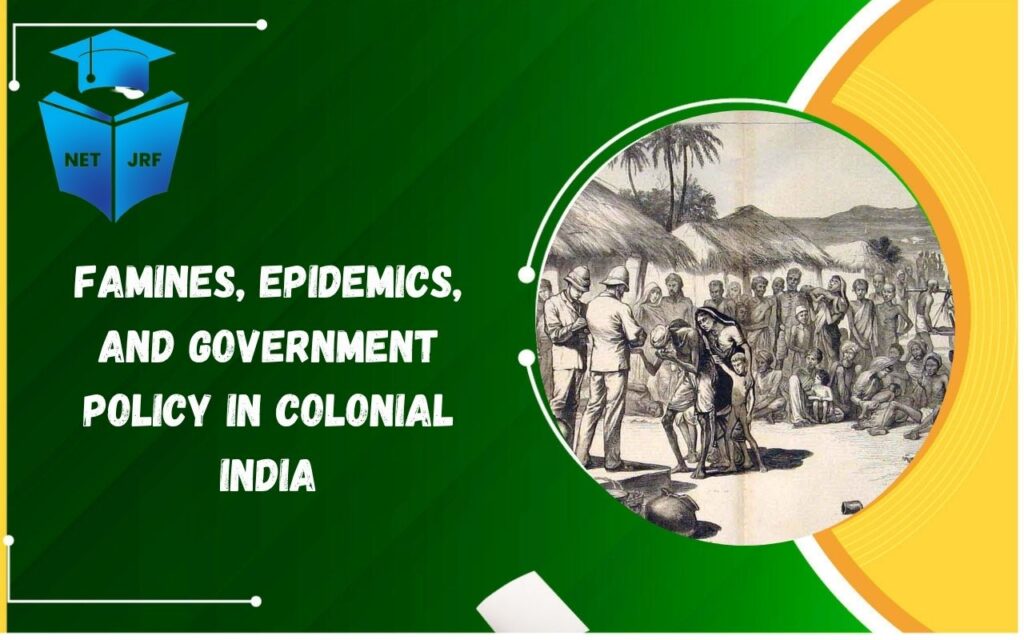
Famines, epidemics and the Government Policy became central issues in colonial India because recurring food shortages and disease outbreaks caused widespread suffering among the population. During the nineteenth and early twentieth centuries, several major famines and epidemics devastated large parts of the country.
The interaction between food scarcity, disease outbreaks, and administrative responses shaped the history of Famines, Epidemics and the Government Policy under British rule. While natural factors like drought contributed to these crises, colonial economic policies, inadequate relief systems, and poor public health infrastructure intensified the impact.

Meaning and Historical Context
The phrase Famines, Epidemics and the Government Policy refers to the relationship between food crises, disease outbreaks, and administrative actions taken by colonial authorities to manage these disasters.
- Famine refers to severe food shortages that lead to starvation and high mortality.
- Epidemic refers to the rapid spread of infectious diseases among a large population.
- Government policy refers to the strategies adopted by colonial authorities to manage or respond to these crises.
During colonial rule, these crises became frequent due to environmental challenges combined with economic changes.
Major Famines in Colonial India
Several devastating famines occurred during British rule.
Important Famines
- Bengal Famine (1770)
- Chalisa Famine (1783–84)
- Orissa Famine (1866)
- Great Famine (1876–78)
- Indian Famine (1899–1900)
These events demonstrate the severity of Famines, Epidemics and the Government Policy challenges during colonial governance.
Major Famines in Colonial India
These disasters highlight how Famines, Epidemics and the Government Policy became major historical concerns.
| Famine | Year | Region Affected | Impact |
| Bengal Famine | 1770 | Bengal | Massive population loss |
| Orissa Famine | 1866 | Eastern India | Administrative failure |
| Great Famine | 1876–78 | South India | Millions of deaths |
| Indian Famine | 1899–1900 | Western India | Large scale distress |
Causes of Famines in Colonial India
Many factors contributed to famine conditions.
Major Causes
1. Failure of Monsoon Rains
Agriculture in India depended heavily on monsoon rainfall.
- Droughts or insufficient rains led to crop failure, reducing food availability.
- Regions dependent on single-season crops were especially vulnerable.
2. Colonial Revenue Policies
British revenue systems, such as high land taxes, forced farmers to pay taxes even in years of poor harvests.
- This left farmers with little food for themselves, worsening famine conditions.
3. Commercialization of Agriculture
Farmers were encouraged to grow cash crops like cotton, indigo, and jute for export instead of food crops.
- Reduced food production for local consumption made populations more vulnerable to famine
4. Poor Transportation in Early Periods
Before railways and good roads, it was difficult to transport food to affected areas quickly.
- Regions with crop failure could not easily receive grain from surplus areas, increasing starvation.
5. Lack of Food Storage Systems
India lacked large-scale granaries or storage facilities.
- Without proper storage, surplus grains could not be saved for emergencies, leading to food shortages during famines.
Although drought triggered food shortages, economic policies worsened the crisis. These conditions intensified Famines, Epidemics and the Government Policy debates among historians.
Economic Policies and Famine Vulnerability
British economic policies changed agricultural patterns.
Important Economic Factors
1. Expansion of Cash Crops
Farmers were encouraged to grow cash crops like cotton, indigo, and jute for export.
- This reduced land available for food crops, leaving people dependent on market prices.
2. Reduction of Food Crop Cultivation
Focus on cash crops caused food scarcity locally, making populations more vulnerable when crops failed.
3. Heavy Land Revenue Demands
British land revenue systems required high taxes from farmers, even in years of poor harvests.
- Farmers had less grain to store or consume, increasing famine risk.
4. Export of Food Grains During Shortages
Even during food shortages, grains were often exported to Britain or other regions, worsening local famine conditions.
These factors increased rural vulnerability and contributed to Famines, Epidemics and the Government Policy failures.
Enroll UGC NET Foundation Course
Spread of Epidemics During Colonial Period
Food shortages often weakened public health, making populations vulnerable to disease outbreaks.
Major Epidemics
- Cholera outbreaks in the nineteenth century
- Plague epidemic in the 1890s
- Influenza pandemic in 1918
These disease outbreaks demonstrate the close relationship between famine conditions and Famines, Epidemics and the Government Policy challenges.

Government Response to Famines
Colonial authorities introduced several administrative measures.
Important Relief Measures
The British government introduced several administrative and relief measures to manage famines in India, though these were often limited in effectiveness:
1. Establishment of Famine Commissions
The government set up famine commissions to investigate causes of famines and recommend policies.
- These commissions studied rainfall patterns, crop production, and economic factors to predict and prevent future famines.
2. Development of Famine Relief Works
Authorities organized relief works, such as road construction, canal digging, and other public projects, where famine-affected people could earn wages and buy food.
- These works provided employment and limited income, helping people survive during food shortages.
3. Distribution of Limited Food Aid
In extreme cases, the government distributed grains, rice, or other food supplies to famine-stricken populations.
- However, the aid was often insufficient, delayed, or concentrated in specific areas, leaving many still vulnerable.
4. Creation of Famine Codes
By the late 19th century, the British introduced famine codes—official guidelines for famine management.
These measures formed the basis of Famines, Epidemics and the Government Policy reforms during the late nineteenth century.
Famine Commissions
The British government created several commissions to study famine causes.
Major Famine Commissions
- Famine Commission of 1880
- Later famine commissions during the early twentieth century
These commissions recommended administrative guidelines for famine relief. Their reports influenced Famines, Epidemics and the Government Policy frameworks.
Famine Codes
Famine codes established rules for managing food crises.
Key Provisions
- Identification of famine conditions
- Organization of relief works
- Food distribution programs
- Employment schemes for affected populations
Although these policies attempted to address famine conditions, critics argued that Famines, Epidemics and the Government Policy responses remained inadequate.
Public Health Policies and Epidemic Control
British authorities introduced some measures to control epidemics.
Public Health Measures
- Sanitation reforms in cities
- Quarantine measures
- Medical inspections in ports
- Establishment of hospitals
Despite these efforts, the colonial health system remained limited, which affected the success of Famines, Epidemics and the Government Policy strategies.
Join UGC NET Offline Coaching in Jaipur
Criticism by Nationalist Leaders
Indian nationalists strongly criticized colonial responses to famine and epidemics.
Major Criticisms
- The government prioritized revenue collection over relief.
- Food exports continued during famine periods.
- Relief programs were insufficient.
These criticisms highlighted failures in Famines, Epidemics and the Government Policy under colonial rule.

Social Impact of Famine and Epidemics
These crises had deep social consequences.
Social Effects
- Large population loss
- Migration from affected regions
- Increased poverty in rural areas
- Decline in agricultural productivity
The social consequences further emphasize the importance of studying Famines, Epidemics and Government Policy in Indian history.
The history of Famines, Epidemics and the Government Policy in colonial India reflects the complex interaction between environmental challenges and colonial economic structures. While drought and disease triggered crises, colonial policies related to taxation, agriculture, and trade often intensified their impact.
Famines, Epidemics and Government Policy in Colonial India FAQs

2. Why were famines frequent in colonial India?
Famines occurred frequently due to a combination of natural and man-made factors:
Droughts and crop failures caused by irregular monsoon rains.Heavy taxation under British land revenue policies, which left farmers with little food.Commercialization of agriculture, where farmers grew cash crops like cotton or indigo instead of food crops.
Poor early transportation and storage systems, which made it hard to move food to affected areas.These factors together made millions of people vulnerable to starvation.
3. What were famine codes?
Famine codes were administrative guidelines issued by the British government to manage famines.
They outlined early warning measures, such as monitoring rainfall and crop production.
They specified relief works, like public employment projects, and rationing or food distribution methods.Famine codes aimed to reduce mortality, but their implementation was often limited and delayed, especially in rural Indian areas.
4. Which epidemic caused major deaths in colonial India?
The influenza pandemic of 1918, also known as the Spanish flu, caused millions of deaths in India.Poor nutrition and malnourishment due to famines worsened the impact.Crowded cities and lack of proper healthcare facilities made the disease spread rapidly.
5. How did famine influence epidemic outbreaks?
Famines weakened the population in multiple ways: Starvation and malnutrition reduced the body’s natural immunity.Malnourished people were more vulnerable to infectious diseases like cholera, malaria, and influenza. Famines also forced people to migrate or gather in relief camps, which increased the risk of disease transmission.