

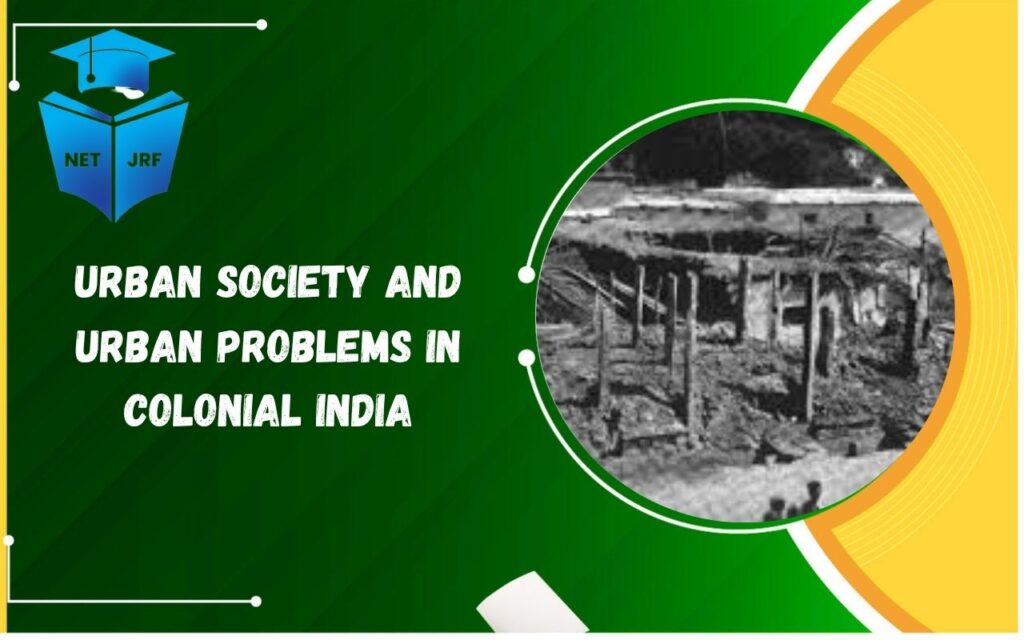
Urban Society and Urban Problems represent an important theme in the study of city development, social structure, planning systems, and urban life. Cities attract people due to employment opportunities, trade networks, administrative centres, and cultural activities.
In many historical periods, towns served as centres of power, trade, crafts, and administration. Urban areas developed complex social groups such as rulers, merchants, artisans, administrators, and labourers.

Urban Society and Its Problems
Urban Society and Urban Problems refer to the social structure, lifestyle, institutions, and challenges that exist within cities.
Urban society includes diverse groups such as traders, officials, craftsmen, migrants, and service providers. Urban problems arise due to rapid population growth, poor planning, inequality, and lack of infrastructure.
Key Characteristics of Urban Society
-
High Population Density
-
-
- Cities had dense populations, with both Indian residents and European officials living in separate areas.
-
-
Diverse Occupations
-
-
- Urban society included a mix of traders, artisans, clerks, government officials, and laborers, reflecting economic diversity.
-
-
Complex Social Relations
-
-
- There were interactions across different social, ethnic, and occupational groups, leading to intricate social networks and hierarchies.
-
-
Organized Administration
-
-
- Cities were administratively planned, with municipal offices, courts, police, and health services, ensuring governance and control.
-
-
Developed Infrastructure
-
- Urban areas had roads, drainage systems, bridges, railway stations, and markets, supporting trade and daily life.
Economic Focus
- Many towns and cities were designed to serve trade, commerce, and colonial economic interests, linking production centers with ports and markets.
- Urban centres often reflect economic growth but also generate new social challenges.
Urban Life and Issues in Historical Cities
Early cities developed as centres of political authority, economic exchange, and cultural life. Towns depended on agricultural surplus from surrounding villages.
- In many empires, urban centres contained palaces, markets, religious institutions, craft workshops, and administrative offices. Rulers, nobles, artisans, and traders formed the main urban population.
- These towns required organized planning systems such as roads, drainage networks, housing areas, and marketplaces.
- Urban life created opportunities but also produced problems related to housing, sanitation, and social inequality.
Town Planning in Early Cities
Urban planning played a crucial role in managing cities. Ancient civilizations developed organized layouts to ensure efficient movement, sanitation, and security.
Many cities followed grid-based planning systems where streets intersected at right angles and divided cities into rectangular blocks.
Urban planners built houses along streets, connected them with drainage networks, and designed public spaces for community activities.
Enroll UGC NET Foundation Course
Features of Early Urban Planning
- Grid street pattern
- Drainage systems
- Residential areas
- Public buildings
- Storage facilities
These features reveal the advanced planning knowledge of early societies.

Urban Transformation in Colonial Cities
The rise of colonial rule introduced new forms of city planning and urban development.
- Colonial powers transformed port towns such as Bombay, Calcutta, and Madras into major economic centres. These cities became hubs for trade, administration, and military control.
- Colonial authorities built forts, government buildings, roads, railways, and administrative offices.
- They also introduced new planning systems to maintain control over urban spaces.
- However, these changes also produced social divisions within cities.
Racial Segregation in Colonial Cities
Urban planning during colonial rule often separated European populations from Indian residents.
Cities developed two major zones:
- White Town – Residential areas for Europeans
- Black Town – Crowded areas where Indians lived
This segregation reflected racial hierarchy and colonial social control.
Features of Colonial Urban Segregation
- Wide streets in European areas
- Large bungalows with gardens
- Poor sanitation in Indian settlements
- Unequal access to infrastructure
Urban segregation became one of the major aspects of Urban Society and Urban Problems in colonial India.
Enroll UGC NET Offline Classes in Jaipur
Public Spaces in Urban Society
Urban centres created new public spaces that encouraged social interaction and cultural activities.
Examples include:
- Parks and gardens
- Theatre halls
- Cinema halls
- Clubs and recreational spaces
These places allowed people from different social groups to meet and exchange ideas. Public discussions and debates became common in urban areas.
Urban culture therefore played an important role in shaping modern social life.
Major Urban Problems in Cities
Rapid urbanization often creates serious social and infrastructural challenges.
Housing Shortage
As urban areas grew, especially due to migration from rural areas for jobs and trade, cities could not keep up with the housing demand.
- Rapid population growth led to overcrowded neighborhoods.
- Many poor families had to live in slums or informal settlements without proper walls, roofs, or basic facilities.
- Lack of planning and affordable housing worsened living conditions, increasing vulnerability to health and safety hazards.
Sanitation Issues
Poor sanitation has been a major urban problem both in colonial and post-colonial India.
- Many urban areas lacked proper drainage, sewage systems, and garbage disposal.
- Waste often accumulated near living areas, leading to unhygienic conditions.
- This caused the spread of diseases like cholera, malaria, and typhoid, especially among the poor.
- Even planned colonial areas sometimes focused sanitation improvements only in European quarters, neglecting Indian settlements.
Traffic Congestion
Growing urban populations put pressure on roads, streets, and public transport.
- Increases in carts, carriages, and later motor vehicles caused traffic jams and slow movement.
- Congestion contributed to air and noise pollution, particularly in commercial centers.
- Commuters faced delays, and city planning often failed to anticipate the rapid growth of transport needs.
Social Inequality
Urban society in colonial and modern India often shows sharp social and economic divisions.
- Wealthy neighborhoods, planned during colonial times or post-independence, contrast sharply with slums and informal settlements.
- This segregation reflects differences in income, occupation, and access to resources.
- Inequality can lead to social tensions, reduced social mobility, and limited access to education, healthcare, and employment for poorer residents.
Key Factors Responsible for Urban Problems
Several factors contribute to urban difficulties.
Rapid Migration
Large numbers of people move from villages to cities in search of jobs, education, and better opportunities.
- Sudden population growth puts pressure on housing, roads, and public services.
- Many migrants are forced to live in overcrowded slums due to lack of affordable housing.
Poor Planning
Unplanned urban growth leads to chaotic construction and irregular settlements.
- Narrow streets, unregulated buildings, and lack of zoning rules create congestion and unsafe living conditions.
- Colonial-era city designs sometimes favored administrative or European areas, leaving Indian neighborhoods neglected.

Limited Infrastructure
Many cities lack adequate water supply, sewage systems, roads, and sanitation facilities.
- Insufficient infrastructure worsens health risks, traffic congestion, and public inconvenience.
- Overcrowded areas face frequent water shortages, drainage problems, and waste accumulation.
Join UGC NET Offline Coaching in Jaipur
Economic Inequality
Large differences in wealth and income create sharp social divisions.
- Wealthy neighborhoods are well-planned and maintained, while poor areas remain neglected and overcrowded.
- Economic inequality increases social tensions and restricts access to education, healthcare, and jobs.
Cities have played a crucial role in shaping social, economic, and political life throughout history. Urban centres provided opportunities for trade, cultural interaction, and administrative organization.
At the same time, rapid population growth, unequal resource distribution, and weak planning created many challenges for city life. Understanding Urban Society and Urban Problems therefore helps students analyze how urbanization transforms societies.
Urban Society and Urban Problems FAQs

2. What are urban problems?
Urban problems include housing shortage, traffic congestion, sanitation issues, pollution, and social inequality caused by rapid city growth.
3. Why do cities develop rapidly?
Cities grow due to employment opportunities, industrial development, trade networks, and administrative importance.
4. How did colonial cities develop?
Colonial powers developed cities mainly for trade, administration, and military control. Ports and trading centres became major urban hubs.
5. What is racial segregation in colonial cities?
Racial segregation refers to the separation of European residents and Indian populations into different urban zones such as White Town and Black Town.